There will be 13 full moons in 2026 — and one of them might welcome people back
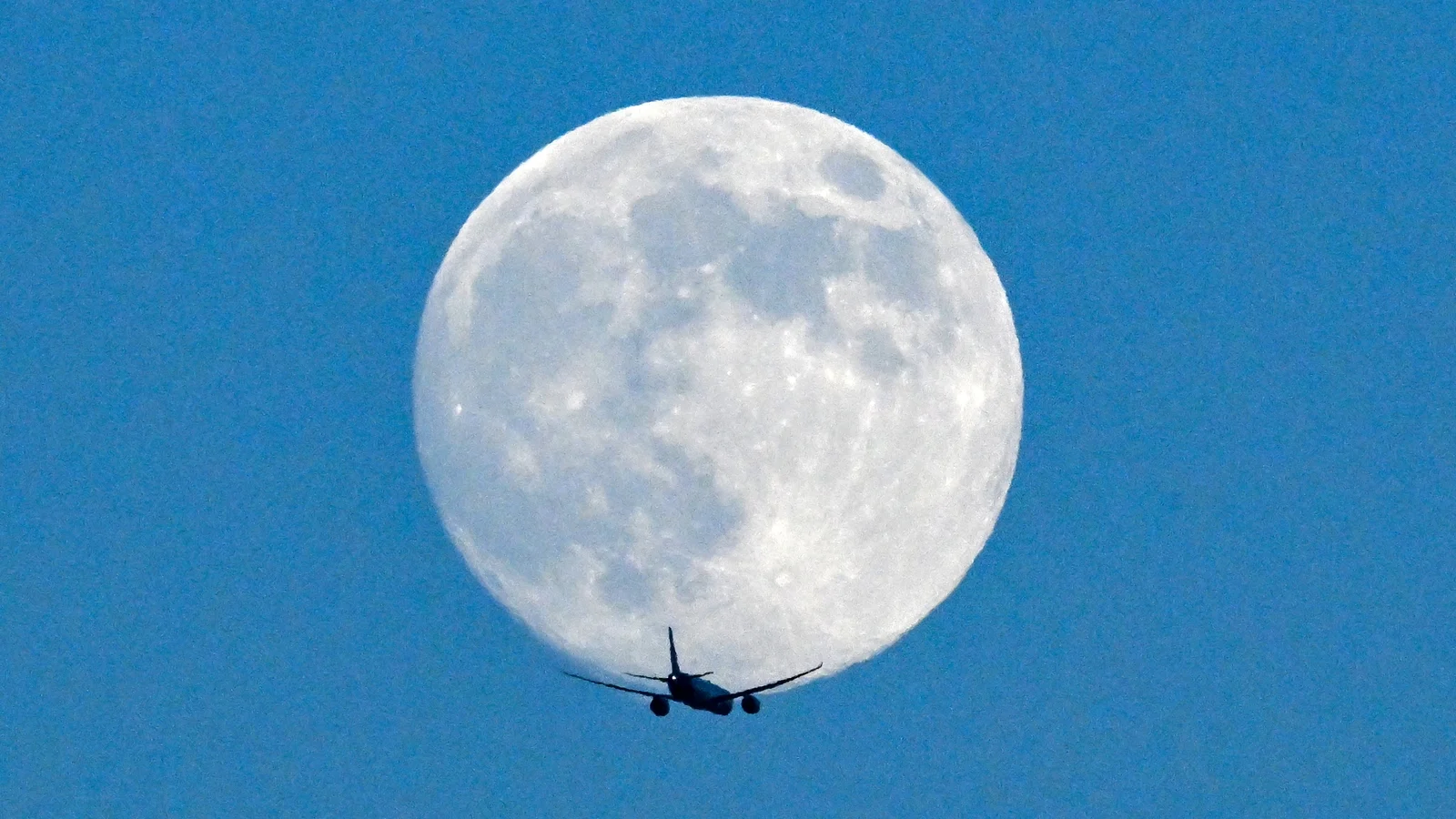
On a cold January night, a family in a small town in Ireland pulled their chairs onto the porch, wrapped in wool blankets, and watched a silver coin rise above bare oak branches. The moon looked impossibly close, a bright witness to their laughter and to the neighbor’s dog barking at nothing. “It felt like a lantern for all of us,” the neighbor later said, voice soft and full of wonder. “You can’t help but think of stories—wolves howling, sailors navigating, lovers keeping secrets under its face.”
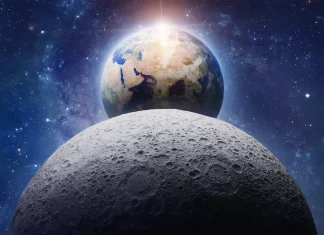
Stories are how humans have lived with the Moon for millennia. In 2026, those stories feel oddly modern and urgent: there will be 13 full moons this year, and for the first time in more than half a century, we are planning to send people back toward the lunar surface. What does it mean when a celestial body that shaped myths now becomes the scaffold of our next leap into the cosmos?
Names, seasons and a Blue Moon in May
Every full moon carries a name stitched from seasons and survival—labels born of farming calendars, hunting cycles and natural rhythms. In traditional Anglo and Native American calendars, January’s full moon is the “Wolf Moon,” February’s the “Snow Moon,” March the “Worm Moon,” and so on through the year.
- January – Wolf Moon
- February – Snow Moon
- March – Worm Moon
- April – Pink Moon
- May – Flower Moon (and in 2026, a second ‘Blue Moon’)
- June – Strawberry Moon
- July – Buck Moon
- August – Sturgeon Moon
- September – Corn Moon
- October – Hunter’s Moon
- November – Beaver Moon
- December – Cold Moon
Some of those names carry the scent of soil and harvest; others carry the bite of winter. “They are practical names,” explains Dr. Mira Santos, a cultural astronomer based in Lisbon. “They told people when to sow, when to fish, when to hunt. But they also held emotion—anticipation of spring, the mythic hush before winter. A society’s moon names are its calendar and its poetry.”
Because the lunar cycle is about 29.5 days, most years produce 12 full moons; occasionally, the timing shifts enough to gift us a thirteenth. That second full moon in a single month is the colloquial “Blue Moon” (no, not actually blue). In 2026 it falls in May—an extra chance to look skyward and remember that rhythms are not always neat, and neither are our stories.
Different faces and many myths
Look across the world and the Moon becomes a different image. Where some Western folklore talks about a man in the Moon, East Asian traditions often see a rabbit—the jade rabbit pounding herbs beside the moon goddess, Chang’e. In parts of Africa, the Moon is a grandmother; in Pacific islands, a navigator; in city skylines, a soft-backed lamp that makes neon less angry.
“The Moon is unavoidable,” says Akiko Yamamoto, a Tokyo schoolteacher who takes her class outside on clear nights. “Children in different neighborhoods notice the same disk and invent their own stories. It’s an early, gentle science—observing and storytelling at once.”
Back to the future: Artemis, habitats and a lunar village
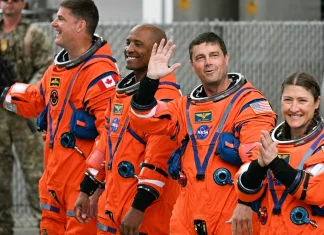
For many, 2026 will be the year when myth meets machinery. NASA’s Artemis program—named after the twin of Apollo—has been billed as humanity’s return to lunar operations and as the first step toward living beyond Earth. Artemis II, a crewed mission that will carry astronauts into lunar orbit, has already stirred imaginations; the plan, if timeline and rails hold, is for Artemis III to attempt a crewed lunar landing soon after.
“Apollo was a sprint,” notes Dr. Laura Chen, a planetary scientist at the Lunar Research Institute. “Artemis is trying to build a relay. The aim isn’t just to plant flags and leave—this time the goal is sustainability: habitats, resource use, longer stays.”
The talk of a “lunar village” is no longer science fiction. Engineers, architects and planetary geologists are sketching settlements made of domes, buried modules and 3D-printed structures using regolith—the Moon’s powdery soil. Why use local materials? Because hauling tons of building material from Earth costs billions, and because local resources offer a lesson in resilience.
“Imagine a house built from bricks made of powdered lunar rock,” says Dr. Chen. “We’re testing prototypes on Earth now. The regolith can be sintered—melted and fused—or combined with binders to make structural elements. It could be the difference between a temporary outpost and a community.”
Problems that are purely human and purely cosmic
But building on the Moon is a different kind of architecture. Lunar settlements must shield inhabitants from cosmic radiation and micrometeoroids; they must withstand temperature swings from blistering sunlight to lunar-night cold. Earth’s atmosphere provides radiation protection and a gravitational cup that slows down tiny debris—on the Moon, there is no such luxury.
To cope, scientists are considering several strategies: burying habitats beneath meters of regolith, using lava tubes—natural caverns carved by ancient flows—as ready-made shelters, and designing electromagnetic or layered physical shields that reduce radiation exposure. Even then, staying long-term will require medical planning and new life-support systems. “We’ll need to solve chronic radiation exposure, not just acute events,” Dr. Chen says. “It’s about risk management over months and years.”
From Moon to Mars: the ladder to another planet
Why the Moon, if Mars is the ultimate prize? Think of the Moon as a test-bed. It is close—on average about 384,400 km away—and a trip takes roughly three days with current propulsion systems. Mars, by contrast, is a seven- to nine-month voyage at minimum, with far more complex resupply and emergency scenarios.
“You can practice life support, resource extraction, and planetary surface operations on the Moon in ways you can’t on a spacecraft,” says Dr. Samuel Okonkwo, an aerospace systems engineer. “If we can learn to live on, and rely on, lunar resources—for water, oxygen, and fuel—then we can export those lessons to Mars.”
That ambition folds into larger questions: Why explore at all? For many scientists and policymakers, exploration is practical (scientific knowledge, technology spin-offs, economic development) and existential (a species learning to expand beyond a single biosphere). For others, it is cultural—a new frontier for art, for stories, for redefining what it means to be human.
What will you do under the next full moon?
As the calendar gives us a bonus full moon this year, as space agencies prepare harbors in lunar orbit and sketch villages of domes and regolith bricks, we might ask ourselves what return to the Moon should mean. Is it a vanity project for nations? A test laboratory? A practical step toward survival? Or a mirror—forcing us to look at the Earth and see what needs fixing here before we export our mistakes into space?
On a coastal night, a fisherman in Nova Scotia told me: “The moon has always told us the tide’s story. Now it will tell a new story—people’s. I hope we bring our humility with us.”
Humility, ingenuity, curiosity—these are the human supplies that travel better than metals and fuel. Whether you see the Moon as a storybook, a science lab, or a future neighborhood, 2026 is giving us a rare, poetic overlap: more full moons to admire, and a serious plan to go back. Look up, and ask yourself: what will you carry with you when we walk beneath that familiar light again?