Smoke Over the Bay: How a Single Raid Shook a Nation
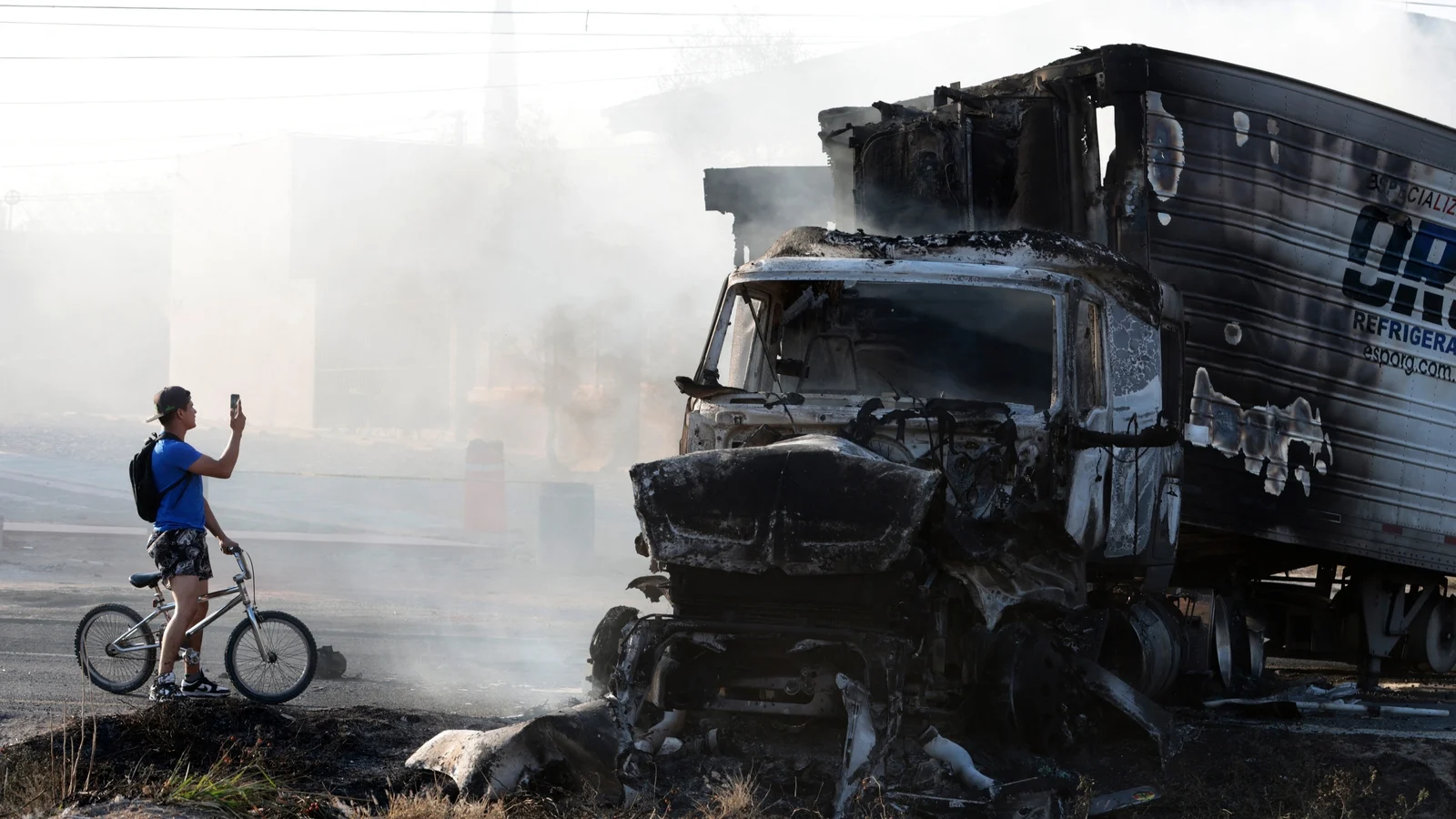
When the sky above Puerto Vallarta turned the color of old newspaper, locals and tourists alike mistook it for fog at first — then the acrid tang reached their noses and the phones began to buzz. Videos of black plumes rising over the bay lit up social media: bumper-to-bumper traffic, abandoned cars, the silhouettes of people running along the malecon. For a few frantic hours, a sun-drenched resort felt unnervingly small and fragile, as if violence itself had wandered into the postcard.
That violence had a name: Nemesio Oseguera, known everywhere as “El Mencho,” the architect of the Jalisco New Generation Cartel (CJNG). Mexican authorities say he was wounded during a special forces operation in the mountain town of Tapalpa and died en route to Mexico City. The death of a man the U.S. had targeted with a $15 million reward has set off reverberations across the country — a grim reminder that the map of Mexico is not only panels of tidy states and tourist zones, but also a shifting patchwork of power, fear and retribution.
The Immediate Fallout
Within hours of official confirmation, chaos followed. Mexico’s security minister reported that at least 25 members of the National Guard and one security guard were killed in cartel attacks linked to the capture and death of Oseguera. Omar García Harfuch, speaking at the president’s daily briefing, described “27 cowardly attacks” in Jalisco alone — incidents that included roadblocks, burning vehicles and the targeted assault of authorities. He added that 30 cartel operatives had been killed and roughly 70 people arrested across seven states.
“We are closely monitoring for any kind of reaction or restructuring within the cartel that could lead to violence,” García Harfuch said, his voice worn by the weight of another day of bad news. The Defense Ministry confirmed that a romantic partner of Oseguera provided intelligence that led to the raid, and the body was flown to the capital under heavy National Guard escort.
Scenes from the Ground
“I saw the smoke from our balcony and thought there was a bonfire,” said Ana Ruiz, who runs a small seafood stand in Puerto Vallarta. “Then the sirens started and people were asking if we should close. Customers ran. I haven’t slept.”
In Guadalajara, a taxi driver named Miguel López described the streets as “paralyzed.” “Usually by nine in the morning the city is alive,” he said. “Today it felt like the heart had been squeezed.” Schools in several states cancelled classes; airports rerouted flights and dozens were canceled as U.S. and Canadian carriers paused services to affected destinations.
CJNG: From Local Gang to Transnational Actor
Once a regional outfit rooted in Jalisco, the CJNG morphed into one of Mexico’s most formidable criminal empires under El Mencho’s direction. Formerly a police officer turned capo, he oversaw not only drug trafficking but a sprawling portfolio of criminal activities — fuel theft, extortion, human smuggling, and sophisticated financial schemes.
Under his watch, the cartel pioneered the use of weaponized drones and mobile, military-style tactics against rivals and, at times, civilians. Analysts point out that the CJNG’s diversification made it more resilient: money flowed through multiple channels, and power was enforced with a ruthless, showy violence that doubled as intimidation and marketing.
“This isn’t just about drugs anymore,” said Carlos Olivo, a former senior Agent with the U.S. Drug Enforcement Administration. “The CJNG operates like a hybrid enterprise — criminal, paramilitary and corporate in its reach. Removing one leader doesn’t erase the network. We’ll likely see violent skirmishes among factions for control, and those spasms can last years.”
International Ripples: Diplomacy, Warnings and Flights
The United States acknowledged providing intelligence support and praised the Mexican military’s operation. On social media, U.S. political leaders hailed the development as a win in the long, costly campaign against transnational organized crime. At the same time, American and Canadian consulates told their citizens in parts of Mexico to shelter in place amid roadblocks and unrest.
Flights were among the most visible disruptions: major U.S. carriers and Canadian airlines canceled service to Puerto Vallarta, Guadalajara and Manzanillo, stranding travelers and rattling local businesses that rely on tourism. Southwest Airlines said several flights were forced to return mid-air, an unsettling demonstration of how quickly instability can ripple into the global travel network.
Key facts at a glance
- $15 million: U.S. reward reportedly offered for information leading to El Mencho’s arrest.
- 25+ National Guard personnel and 1 security guard: initial casualty toll from cartel attacks after the operation.
- 70 arrests across seven states, and at least 30 cartel operatives killed, according to officials.
- Since 2006: official tallies place the death toll of Mexico’s drug war in the hundreds of thousands, with tens of thousands still missing.
The Human Toll Behind the Headlines
Numbers can harden into abstractions if we let them. Behind every statistic is a mother who couldn’t sleep because her son, a highway patrolman, didn’t come home. There is the small-vendor whose entire week’s sales evaporated when tourists were escorted back to shelters. There are children who saw flames licking at the horizon and will carry that image for the rest of their lives.
“We don’t want the world to forget us,” said Rosa, an elementary schoolteacher in a town outside Guadalajara. “We teach children to be proud of where they are from, and then they see tanks in the streets and they ask if it’s war.” Her eyes filled when she said it. “They are still children.”
What Comes Next?
Oseguera’s death will almost certainly unsettle the CJNG — but not necessarily heal what is broken. Cracks in a cartel’s leadership can create a vacuum filled by ambitious lieutenants, splinter groups or rival organizations. The U.S. is right to push for disruption of trafficking lines, especially as fentanyl floodwaters continue to reach millions north of the border; yet law enforcement actions alone will not address the political, economic and social conditions that allow these networks to flourish.
So what do we ask of our governments? More coordination, yes. Better intelligence sharing, yes. But also long-term investments in communities that have been starved of opportunities and services, where recruitment into criminal economies becomes a bleak inevitability.
As the smoke clears over Puerto Vallarta and the convoy carrying a notorious figure slips back into the capital, the real question remains: can Mexico and its partners translate a tactical victory into a strategic future where children learn without sirens and fishermen sell catch instead of counting losses? If we care about lives on both sides of the border, that is the work that must follow the headlines.