Cliffside silence: 29 lives lost when an An‑26 slammed into Crimea’s rocks
By evening, the peninsula’s mountains had already begun to turn the colour of old brass. Winds off the Black Sea smelled of salt and pine. Then a routine military flight — one of the many that criss-cross this contentious strip of land — simply vanished from the sky.
Russian authorities later said a military An‑26 transport lost communication at about 18:00 local time and was found smashed into a cliff on the Crimean spine. The defence ministry, citing a preliminary technical malfunction, reported 29 dead: six crew and 23 passengers. Local news agencies relayed the bare facts; rescue teams sifted through twisted metal where the aircraft met rock.
“It sounded like thunder but there was no storm,” a woman in a nearby village told me. “We saw smoke, we heard something fall. Then silence. People gathered… we all knew.” Her name is Elena; she asked to be identified only by her first name. Her voice carried that strange mixture of disbelief and resigned familiarity that small communities often carry after a sudden catastrophe.
The An‑26: workhorse with a long shadow
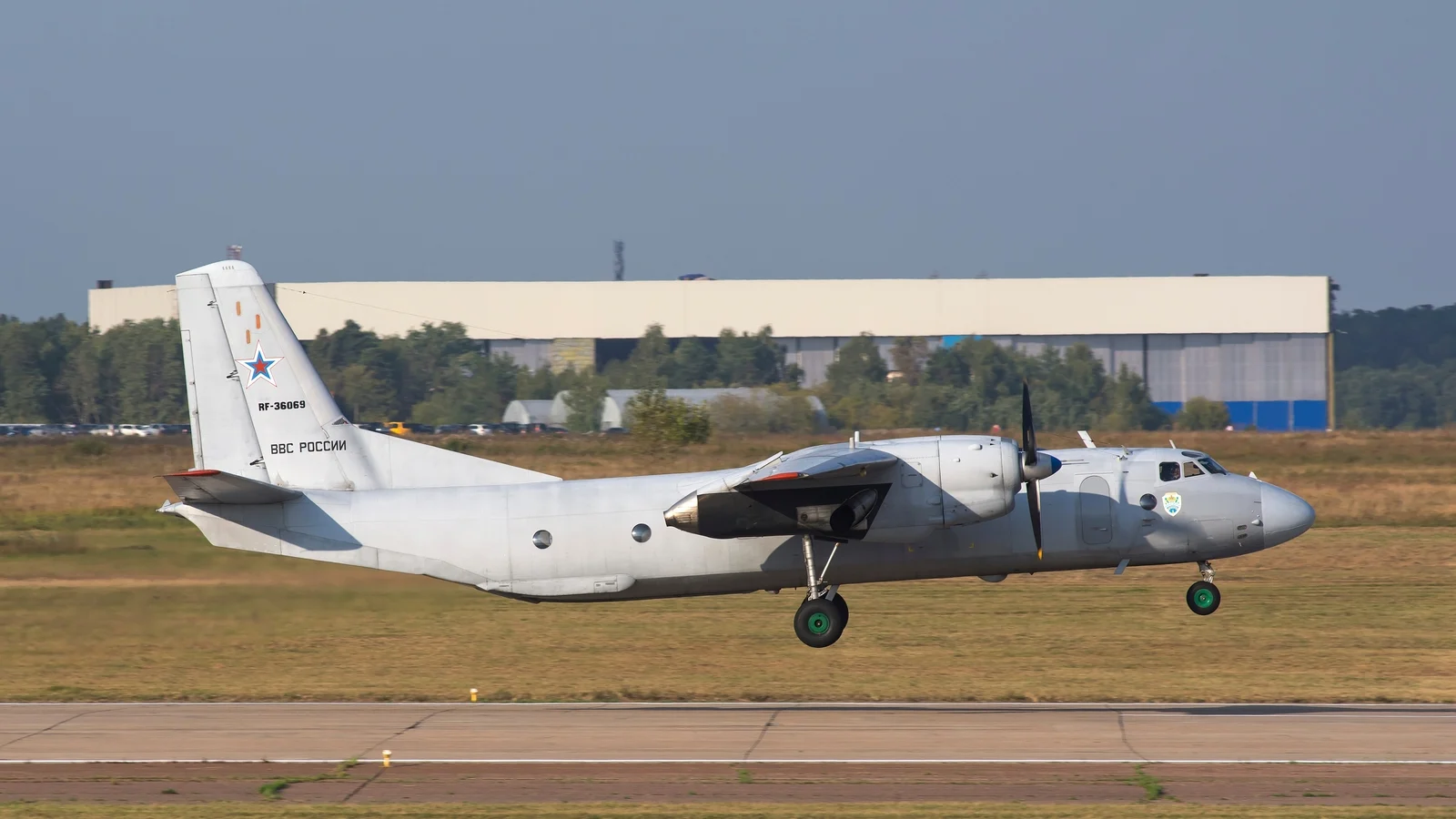
The Antonov An‑26 is no stranger to headlines. Born in the Soviet era, it first flew in 1969 and has been a durable presence in military and civilian fleets across continents for decades. Designed to carry cargo and up to around 40 people over short to medium distances, it’s praised for rugged versatility — and criticised for being, well, old.
“You can’t talk about the An‑26 without talking about age and maintenance,” said Dr. Pavel Sidorov, a European aviation safety analyst. “Many of these airframes have seen decades of service. When you operate a fleet like that in demanding conditions, the margin for error shrinks.”
Indeed, the An‑26’s record includes a string of fatal incidents worldwide over recent years: a Ukrainian An‑26 crashed during a technical flight in Zaporizhzhia in 2022; training and transport flights in 2020 and earlier also ended in tragedy in various countries, including South Sudan and the Ivory Coast. The model’s decades of service have made its failures all the more visible.
Numbers that make you look twice
Official statements are careful with details — they often have to be, and investigations take time. The ministry in Moscow was explicit that nothing had struck the aircraft: no missile, no drone, no bird strike, the report emphasised, suggesting the crash likely stemmed from a mechanical problem rather than hostile action.
But the question on everyone’s lips is why: why does a government that has poured vast resources into military operations still rely on machinery from a previous century? Why are certain fleets allowed to age into fragility while lives continue to depend on them?
On the ground in Crimea: a community grapples
Crimea raises other questions as well. Annexed by Russia in 2014, the peninsula remains a place where geopolitics is not an abstract distant hum but a daily reality — military bases, naval traffic, and the occasional low-flying transport plane are part of the soundscape. Villagers who live near the mountains speak of a landscape that is both beautiful and unforgiving.
“The cliffs are holy to us,” said Rashid Akmet, a Crimean Tatar farmer in his fifties. “We come here in summer to pick herbs and the view is like a painting. Now there is metal and smoke. It hurts.” His community knows loss — a people who remember deportations, who still mark their calendar with both memory and caution.
Rescue crews and military investigators have cordoned off the site. Soldiers and local volunteers moved among the wreckage; a smell of burning rubber lingered in the air while cameras and clipboards multiplied. The military dispatched a commission to sift through flight data recorders, maintenance logs, and the aircraft’s history. These are ritual steps, but they take time.
Beyond the cliff: equipment, politics, and the human ledger
Crashes like this do not live only as headlines. They ripple outward. Every flight that fails is a lesson in logistics, procurement, and priorities. When governments rely on old equipment, the calculus is not merely technical — it is political and budgetary as well.
“Modernising a fleet is expensive,” said Olga Morozova, a defence procurement researcher. “There are political choices at every stage: which projects get funding, which suppliers win contracts, how maintenance is managed. Those decisions ultimately affect real people — pilots, technicians, passengers.”
There is also the international dimension. The peninsula’s political status matters: where international investigators might have stood shoulder to shoulder with local teams elsewhere, here the very question of jurisdiction and access can be fraught. That makes independent verification harder and heightens tensions.
Small facts, large consequences
- Preliminary official cause: possible technical malfunction (as announced by the defence ministry).
- Declared fatalities: 29 people (six crew, 23 passengers).
- Aircraft type: Antonov An‑26 — in service since 1969, used widely across military and civilian operators.
These facts are anchors. They keep the story from drifting into speculation. But they are also thin threads when you try to measure the human cost — a parent’s grief, a village’s memory, a pilot’s empty bunk.
What should we ask next?
When you stand at the edge of a cliff and look down, the immediate question is how to retrieve what can be recovered and comfort those left behind. Then you ask wider questions: Are these tragedies preventable? Who answers for them? What does it mean to keep patching old machines while lives continue to board them?
“It’s not only about machines,” said a retired pilot who spent his career flying cargo in the Black Sea region. “It’s about respect for life and duty. If you are going to fly people, you owe them a plane you trust.” He paused. “We all owe them that.”
As investigators comb the wreckage and the mountain winds pick through the pines, the lives inside the aircraft — their names, stories, and futures — will be what remains. Accountability will be demanded, explanations will be written. But the cliff will not give them back.
What do you think should be done when essential equipment becomes older than the people who depend on it? How do societies decide between cost and risk, between history and safety? These are difficult questions without easy answers — but they are the ones we must ask if the grief that climbs from the ravine is to mean something more than sorrow.