Ash and Silence: A Night When the Internet Went Dark
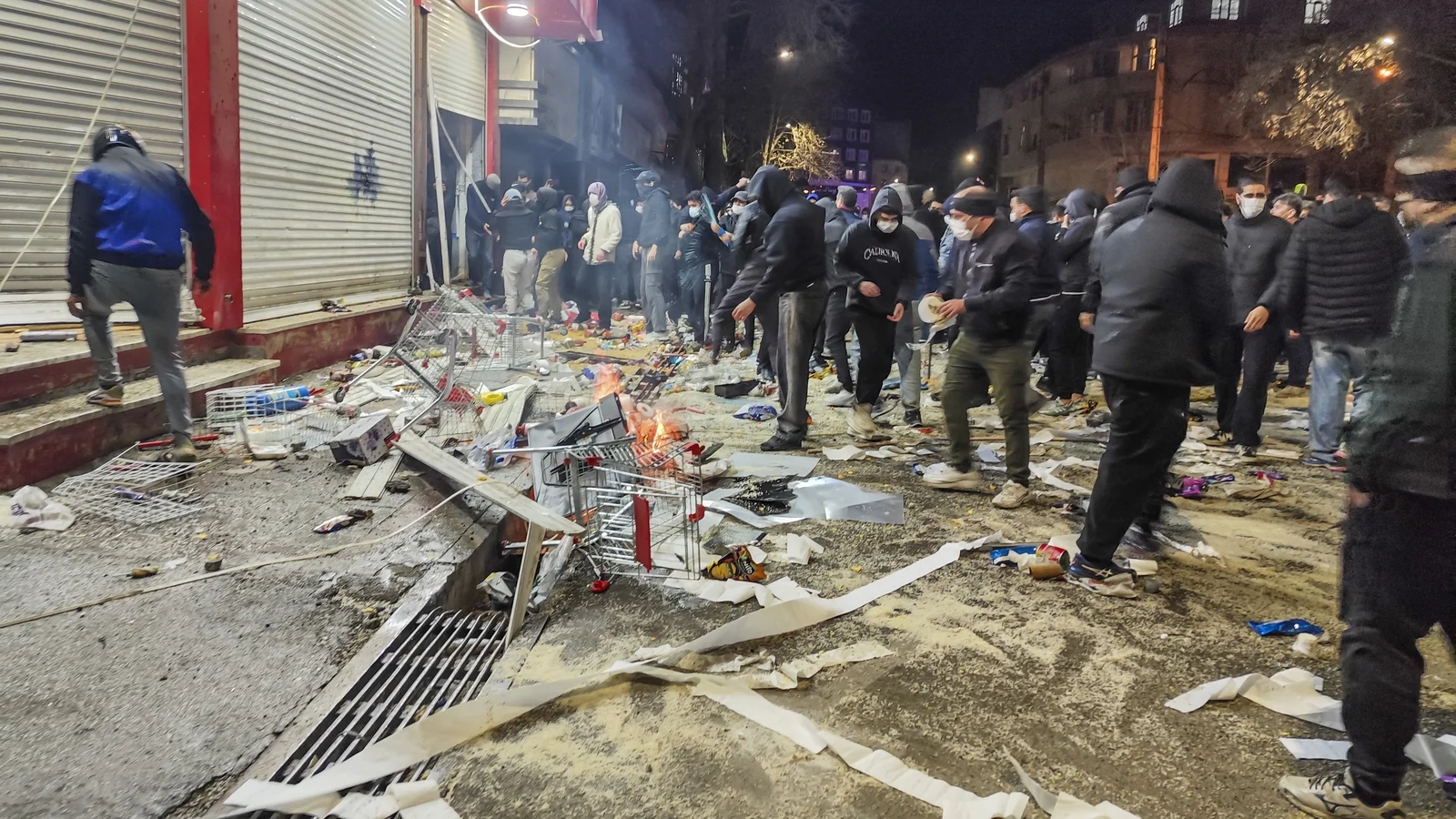
There are images that stick in the mind: a bus burning in a grey Tehran dawn, the national flag torn in two and tossed into a gutter, and a whole city reduced to the orange glow of isolated fires. But in much of Iran last night, the most telling image was not on screens at all—it was the stubborn, suffocating silence of a country pushed offline.
Netblocks, the digital rights monitor, reported that Iran experienced a total connectivity blackout, saying the country had “now been offline for 12 hours… in an attempt to suppress sweeping protests.” For a people who have learned to communicate through encrypted apps and social platforms when streets were dangerous, the blackout was both a physical and psychological tactic: a way to stem the flow of footage, obscurate casualties, and impose a sense of isolation.
“When the internet vanished, the city felt like it had been put into a jar,” said a young protester I spoke to over a patchy phone call before the connection died. “We could still hear sirens and the chanting. But we couldn’t tell our families where to go.”
From Market Squares to Burned-Out Stations: What Happened
Across several cities—Tehran, Rasht, Ilam and others—people poured into the streets, chanting slogans that cut straight to the heart of the regime’s legitimacy: “Death to the dictator,” “End the theocracy,” and, in a raw display of dissatisfaction, some ripped the national flag in half. Buildings that once held municipal offices, banks and metro stations were filmed in flames. State television, showing scenes of fires and clashes, said police officers had been killed overnight, while rights groups have already documented dozens of protester deaths in nearly two weeks of unrest.
These demonstrations are not a spontaneous, isolated flaring up. They have the look of a society pushed to the edge—people whose salaries no longer buy what they did a few years ago, whose savings have been eroded by inflation and sanctions, and whose patience was worn thin by political stagnation.
Local Color: The Streets Tell the Story
In Rasht’s bustling market, a carpet-seller described the scene with a mixture of fear and defiance. “We’ve had winters, we’ve had sanctions, we’ve had bad harvests,” he said, “but I have never seen a crowd so young, so fierce. They burned a government signboard in front of my shop. I tried to stop them—then I stopped trying.”
Across the city, an elderly woman sitting on a low stool outside a tea house watched protesters pass and murmured, “They are not the same children we taught. They have been educated with the internet—when they see ideas they do not accept, they move.” Her hands, stained with tea leaves, trembled as she refilled the samovar.
Power and Defiance: Leaders Speak, Lines Harden
At the top of the state, Supreme Leader Ayatollah Ali Khamenei offered a hard line. In a televised address, he labelled demonstrators “vandals” and “saboteurs,” accusing them of acting at the behest of émigré opposition groups and foreign actors. “Everyone knows the Islamic republic came to power with the blood of hundreds of thousands of honourable people,” he said, according to state broadcasts, “it will not back down in the face of saboteurs.”
There was an unmistakable note of defiance in his words—an insistence that the regime’s foundations are not negotiable and that the state will use the tools at its disposal to restore order. A public prosecutor hinted at the possibility of death sentences for those deemed responsible for lethal violence or sabotage, underscoring the perilous stakes for protesters.
From outside, Western capitals issued a chorus of condemnation. France, the United Kingdom and Germany released a joint statement saying they were “deeply concerned about reports of violence by Iranian security forces, and strongly condemn the killing of protestors,” and urging Tehran to “exercise restraint.” The European Union’s foreign policy head, Kaja Kallas, called the security forces’ response “disproportionate,” adding that “shutting down the internet while violently suppressing protests exposes a regime afraid of its own people.”
Voices from Exile and the Danger of Polarisation
The Iranian diaspora has been vocal, too. Reza Pahlavi, the exiled son of the late shah, urged Iranians to take to the streets, a call echoed in social media posts and diaspora rallies from London to Los Angeles. But the scene is complicated: the government accuses groups like the People’s Mujahedin Organisation (MEK) of stoking unrest, while protesters insist they are driven by domestic grievances—economic pain and a yearning for rights and dignity.
“We are not puppets of anyone,” said a mid-career teacher who took part in the demonstrations. “We are tired of living each day worrying if our children can eat tomorrow. We are tired of watching our futures sold in backrooms.”
Why This Moment Matters: Beyond Borders and Headlines
What is unfolding in Iran is not just a domestic struggle over policy or personnel; it touches on themes resonating across an anxious world: the role of digital connectivity in modern dissent, the fragility of regimes under economic pressure, and the question of how global powers respond when internal crackdowns spill into the international arena.
Consider the blackout. Authoritarian governments have learned that cutting off the internet is an effective short-term tool to disrupt coordination and conceal actions. But it comes at a cost: economic damage, international scorn, and a psychological message that the state will prioritize control over the basic flow of information. In a globally connected age, silence itself becomes a story.
And then there are the geopolitical calculations. Voices from abroad—whether they are calls for restraint from European leaders or hawkish warnings from figures like former US President Donald Trump—add pressure and ambiguity. Do external warnings embolden protesters by signaling potential support? Or do they play into the state’s narrative of foreign interference, stiffening its resolve?
Questions to Hold
As you read this, ask yourself: what do you think a fair international response looks like when people rise against authoritarian rule and face lethal force? How should free societies balance support for human rights with the risk of inflaming conflicts? And what can be done to protect information flows that help people document abuses while limiting the spread of violence?
What Comes Next
The coming days will be crucial. If the blackout persists and the streets keep burning, the human toll could rise. If international pressure crystallises into unified diplomatic action—sanctions, targeted accountability, humanitarian corridors—it might change the calculations in Tehran. But revolutions are not scripted; they are messy, improvisational things born of accumulated grievances, sudden sparks, and the bravery of ordinary people.
“We did not start this because we wanted a headline,” a protest medic whispered as she packed her bag. “We started because we had no other choice.”
In the months and years ahead, historians will look back and try to place this moment on a timeline: a chapter in Iran’s long struggle with power, a signpost in a region in motion, or perhaps the beginning of a larger transformation. For now, the images burn bright, the silence is deafening, and a nation—and the world watching it—waits to see whether restraint or repression will decide the next chapter.