We are Greenlanders: A small nation pushes back against big talk
When the idea of buying Greenland drifted across international headlines like a sudden Arctic squall, something unexpected happened on the island: politics paused and a chorus rose up, not in Copenhagen or Washington, but in Nuuk and tiny settlements along the fjords.
For a place where winds sculpt the conversations as much as the landscape, the response was swift and unmistakable — five political parties put aside differences and issued a joint rebuke. “This is our land,” one leader said. “Our future is for us to decide.” The language was plain and fierce, a reminder that sovereignty is not a commodity to be auctioned off in another capital.
Unity in an unlikely hour
Coalition and opposition, urban and remote — leaders across Greenland’s political spectrum signed the declaration. It was a rarity: party rivalries shelved for a clear, common message. “We will not be bought, nor sold,” an opposition figure told a packed hall in Nuuk. “We will not be Danish for the sake of someone else’s convenience. We are Greenlanders.”
The unity matters because Greenland is no political backwater. Home rule began in 1979 and the 2009 Self-Government Act confirmed Greenlanders’ right to eventual independence if they so choose. While every party on the island says it supports independence in principle, they disagree sharply about timing, economics and how to get there. This joint statement was not a manifesto for secession — it was a defense of the most fundamental principle: the right of a people to choose.
Voices from the fjords
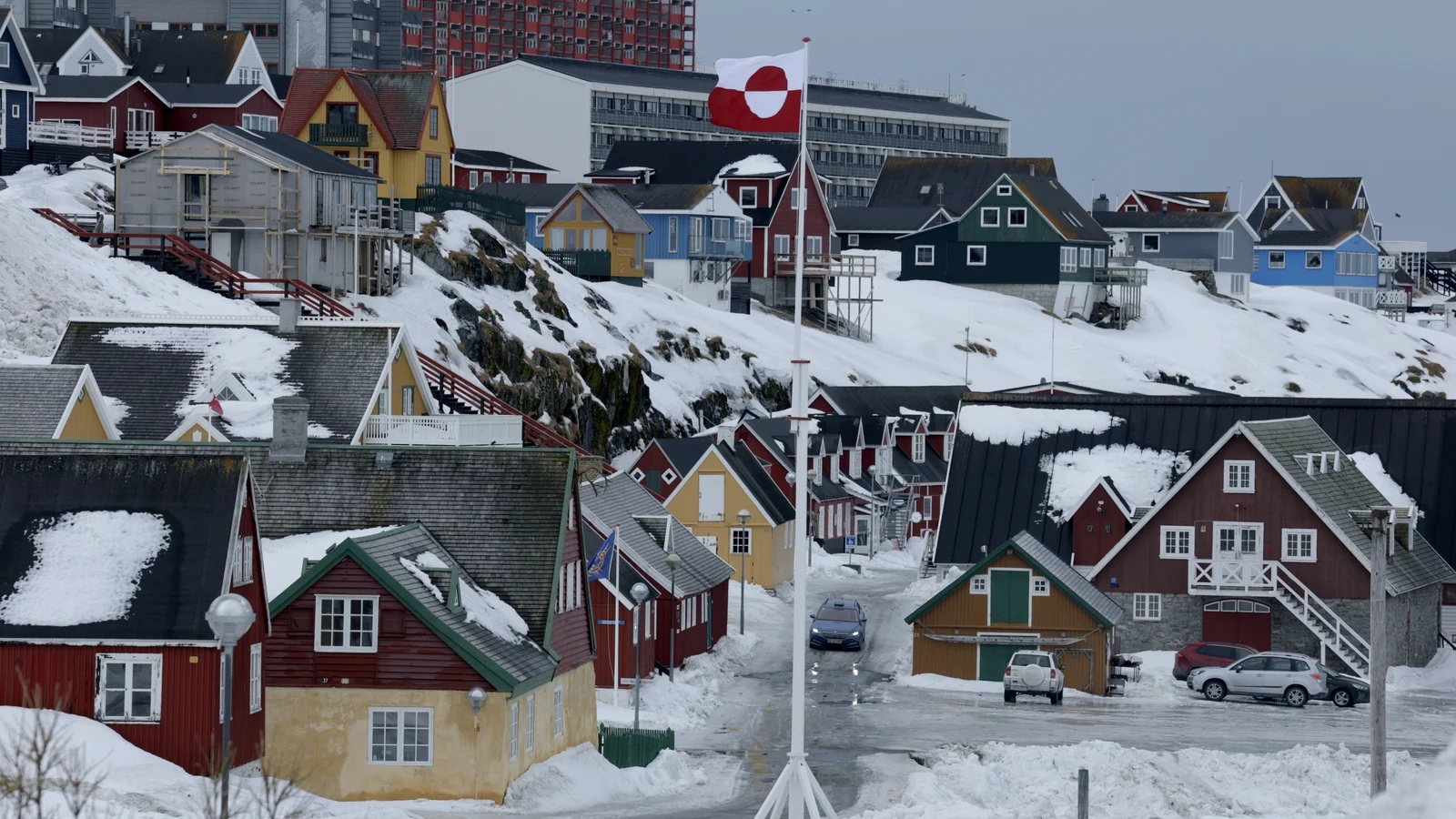
Walk through Nuuk’s harbor at dusk and you’ll hear stories that wind their way between the moored trawlers and the brightly painted houses. “We have weathered storms that politicians in faraway cities cannot imagine,” said a local fisherman, his hands still smelling of cod. “If anyone thinks they can just come and take what belongs to us, they have another thing coming.”
In Sisimiut, an elder hunter paused before answering. “Our grandmothers taught us these lands,” she said. “This is part of who we are. It’s not a chess piece.” A teenager in a university café shrugged and laughed, then said, “It sounds absurd, but it also shows how little people talk about the Arctic. For me, this is about respect.”
Why Greenland matters — Arctic geography, resources and strategy
It is easy to see why Greenland figures in global calculations. The island is the world’s largest, roughly 2.16 million square kilometers almost entirely cloaked in ice, yet inhabited by only about 56,000 people. Its coastline is a tapestry of fjords and glaciers, and its location puts it squarely on the northern flank of the Atlantic and the Arctic — a strategic position coveted since the 20th century.
Several practical factors make Greenland far more than a remote scenic backdrop:
- Military and strategic value: The U.S. maintains an early-warning facility at Thule (Pituffik), a legacy of Cold War cooperation that underscores the island’s strategic importance.
- Natural resources: Melting ice and new technologies have stirred interest in mineral deposits — from rare earths to uranium — and potential offshore hydrocarbons.
- New shipping lanes: Climate change is shortening Arctic routes, promising time and fuel savings that could reshape global trade.
- Scientific significance: Greenland’s ice cores are living archives of climate history, drawing researchers from around the globe.
“Greenland is not about landmass so much as leverage,” explained a defense analyst in Copenhagen. “Control over the high Arctic gives strategic depth, surveillance opportunities and access to resources. But that control comes with huge costs and responsibilities — not least, the lives and livelihoods of the people who live there.”
History and law: the context of self-determination
Greenland’s relationship with Denmark is layered and evolving. Until the late 20th century, the island was administered directly from Copenhagen. Home rule in 1979, and a stronger self-government framework in 2009, expanded local authority over many domestic areas and explicitly recognized Greenlanders’ right to take full control of their affairs in the future.
Any discussion of “buying” territory collides with modern concepts of sovereignty and indigenous rights. “You can’t treat people and culture like real estate,” said a legal scholar specializing in Arctic governance. “International law protects self-determination in ways that make old-fashioned territorial transactions irrelevant in democratic contexts.”
What this episode reveals about power, perception and the Arctic
Beyond the headlines and the heat of political soundbites, there are deeper themes at work. The episode exposed how the Arctic is increasingly a stage for geopolitical tension as major powers — not just the U.S., but China and Russia too — expand interests northward. It also raised questions about how former colonial relationships persist in the modern era.
“This is a lesson in humility for the international community,” said an Indigenous rights advocate. “The Arctic is home to peoples whose voices are often drowned out by strategic narratives. What we need is partnership and respect — not paternalism masked as ‘security’.”
Politics, economics and the path forward
For Greenlanders, the path to greater autonomy is as much economic as political. The economy is dominated by fisheries — accounting for roughly 90% of exports — and communities outside larger towns depend heavily on subsistence hunting and local trades. The question of whether resource development can fund an independent state is unresolved and contentious.
“Independence is a dream — but dreams need plans,” said a city council member in Ilulissat. “We are not asking for charity; we are asking for recognition that decisions about our future must come from us.”
Possible outcomes to watch
- Greater diplomatic engagement: Greenland might seek more direct international ties while remaining within the Kingdom of Denmark.
- Economic diversification: investment in infrastructure, tourism and sustainable resource development could shift the fiscal balance.
- Continued geopolitical attention: as Arctic access opens, international players will likely increase their presence in the region — diplomatically, commercially and militarily.
What should the world learn from Greenland’s stance?
There is a moral and practical lesson here: small communities have agency, and global powers must reckon with that reality. Would the world be better if strategic discussions in distant capitals always began with a question: what do the people who live here want? That question feels obvious until you see it omitted.
Perhaps the most human image to take away is of a coastal village where someone hangs a line of fish to dry while listening to radio broadcasts about far-off debates. Their lives are shaped by weather and waves, by language and family, by a history that is lived every day — not by the rhetorical flourish of a transaction between nations.
As the Arctic warms and maps are redrawn in the imagination of policymakers, Greenland’s unified voice is a reminder: sovereignty is lived, not bought. How will global leaders respond to that simple, stubborn fact?