After the Paris Summit: A Promise on Paper and a War That Keeps Moving the Goalposts
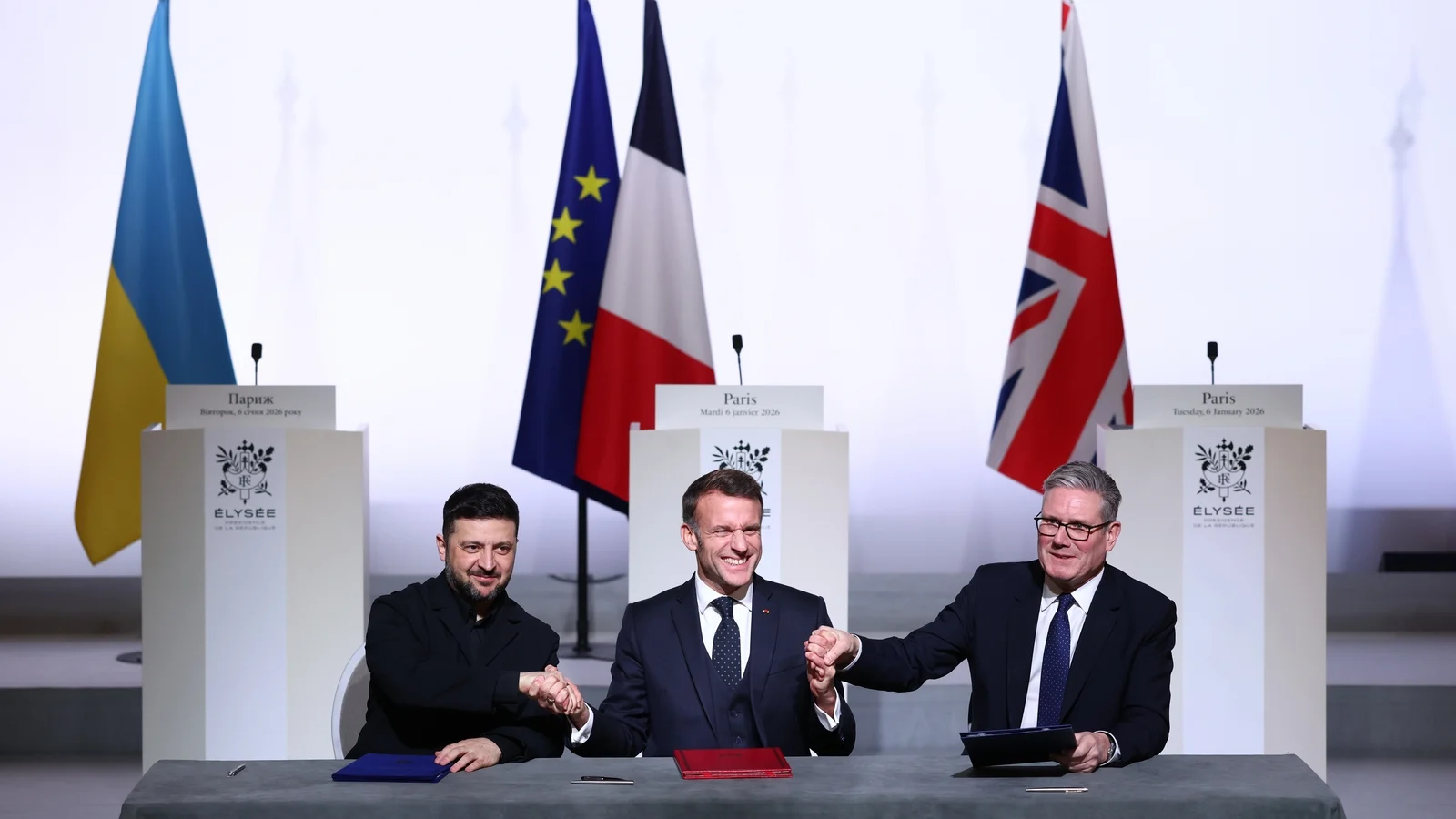
Paris in winter can be forgivingly beautiful: steam rising from manhole grates, the thrum of metros, the aroma of roasting chestnuts. Last Tuesday the city was also the setting for a different kind of choreography — leaders and ministers from 35 nations gathering under the banner of the so‑called Coalition of the Willing, promising to sketch out a new security architecture for a battered Ukraine.
The summit arrived with a flourish of rhetoric. French President Emmanuel Macron had framed the meeting as a necessary step toward “concrete commitments to protect Ukraine.” Cameras captured handshakes and flags. Inside the gilded halls, diplomats drafted what became a Paris Declaration — five points of intent meant to bind countries to a future monitoring force and long‑term support for Ukraine’s defence industry and military.
What the Declaration Actually Says
The text reads like an intentional bridge between aspiration and ambiguity. It pledges support for a US‑led ceasefire monitoring mechanism, short‑ and long‑term military assistance to Ukraine, legally binding security guarantees in the event of future attacks, and help for rebuilding and protecting Ukrainian defence capabilities.
- Support for a US‑proposed ceasefire monitoring system (conditional on Moscow agreeing to a ceasefire).
- Commitments to bolster Ukraine’s armed forces and industry over both the immediate and longer term.
- Language promising legal, binding security guarantees should Russia strike again.
- Plans for logistical and protective hubs, including equipment storage and maintenance facilities to be built in allied countries or on Ukrainian soil after a ceasefire.
- An invitation to coordinate with American strategic enablers, such as satellite monitoring.
Those five points are meaningful. They are also conditional. The central, blunt fact is this: the plan only becomes operational if Russia signs on to a ceasefire — and as of now, Russia shows no appetite for that kind of peace.
Presence and Absence: Who Stepped Forward
Among the most important takeaways was the sheer political weight of the United States showing up. President Trump’s envoys — Steve Witkoff and Jared Kushner — and the US European commander Alexus Grynkewich made clear Washington was no longer in the wings.
“This is not just symbolism,” said a senior EU diplomat who attended the meetings. “US engagement changes the bargaining power of the Coalition. But engagement is not the same as endorsement of fixed troop levels or red lines.”
In Paris there was talk of “the strongest guarantees anyone has ever seen,” as one US official put it — a line intended to reassure Kyiv. Yet what “strongest” means in practical, military terms was left undefined. Will it be satellite tracking and intelligence sharing? Will it include kinetic strikes to repel an aggressor? Or will it be a political shield rather than a military one? The declaration stops short of specifics.
On the Ground: Why Numbers Matter
To turn promise into presence, the Coalition will need boots and bases — lots of them. Defence experts quoted during the summit estimate a credible monitoring force could range between 50,000 and 100,000 troops to cover central and eastern sectors of Ukraine near the front lines.
For perspective: the British Army fields roughly 70,000 full‑time personnel; France more than 260,000. But many of Europe’s other large militaries — notably Germany, Poland and Italy — are hesitant about deploying forces on Ukrainian soil. Germany has signalled it might place troops in neighbouring NATO countries to support logistics rather than enter Ukraine itself.
“You cannot draw a fence with a single spoon,” said Dr. Elena Markova, a security analyst at the Baltic Institute. “If you promise to monitor a ceasefire across hundreds of kilometers of active front, you need the capacity to be seen, be present and be able to act if the line is crossed.”
And yet, political realities restrict capacity. Twenty‑six of the Coalition’s 35 members have previously said they could contribute personnel to land, sea or air elements of a future mission — but few commit to deploying forces into Ukraine proper. Poland insists it will function as a logistics hub rather than send troops across the border; Spain, Turkey, Sweden and Denmark have expressed varying degrees of openness to contributing, but none yet stands up as a decisive major troop donor.
Escalation, Not Conciliation
All of which would be academic if Moscow were willing to sign on to peace. It isn’t. Russia’s sharp response after Paris — warning that NATO troops sent to Ukraine would be legitimate military targets — and the use of a hypersonic Oreshnik missile on energy infrastructure near Lviv — less than 100 kilometres from the Polish border — sharpen the stakes.
“Each time a diplomatic window appears,” said Andrej Kovalenko, a Ukrainian teacher who volunteers at a community shelter in Kyiv, “something explodes. It’s either a missile, a raid or a political statement. It makes you wonder who is negotiating and who wants the war to continue.”
Analysts argue Moscow is using escalation to blow up the bargaining table. “They are prepared to raise risks to derail agreements,” said a Baltic security scholar. “That’s a strategy.”
So What Now? The Long Columns of Uncertainty
If the Coalition wants to move from promises to prevention, several hard questions remain. How many troops are actually available to be deployed? How many nations will accept casualties on behalf of Ukraine? Will the US meaningfully back an enforcement mechanism, or limit itself to strategic and intelligence support? And crucially: can deterrence work against a nuclear‑armed state willing to escalate?
There are glimmers of practicality in the Paris Declaration — hubs, equipment shelters, and an emphasis on legally binding guarantees. But legal guarantees without means are like a lifejacket without air. The world will watch whether the Coalition’s pledges become logistics convoys and satellite feeds, or merely more diplomatic prose.
A Final Thought
Imagine standing at a railway station in Poland watching a line of trucks — medical supplies, generators, helmets — roll east. Imagine the people in Kyiv patching roofs, teaching children in basements, listening nervously to radio updates. These are the lives at stake behind the diplomatic documents. What would you want your country to do — sign a promise, or build a promise that can actually be kept?
Paris may have given Ukraine a stronger map of intent. But the hard work — time, troops, trust and a real ceasefire — is yet to come. Until then, the declaration is a staging post, not the finish line. The question that will define the next months is whether the Coalition’s will can be turned into the muscle that keeps a fragile peace from unraveling.