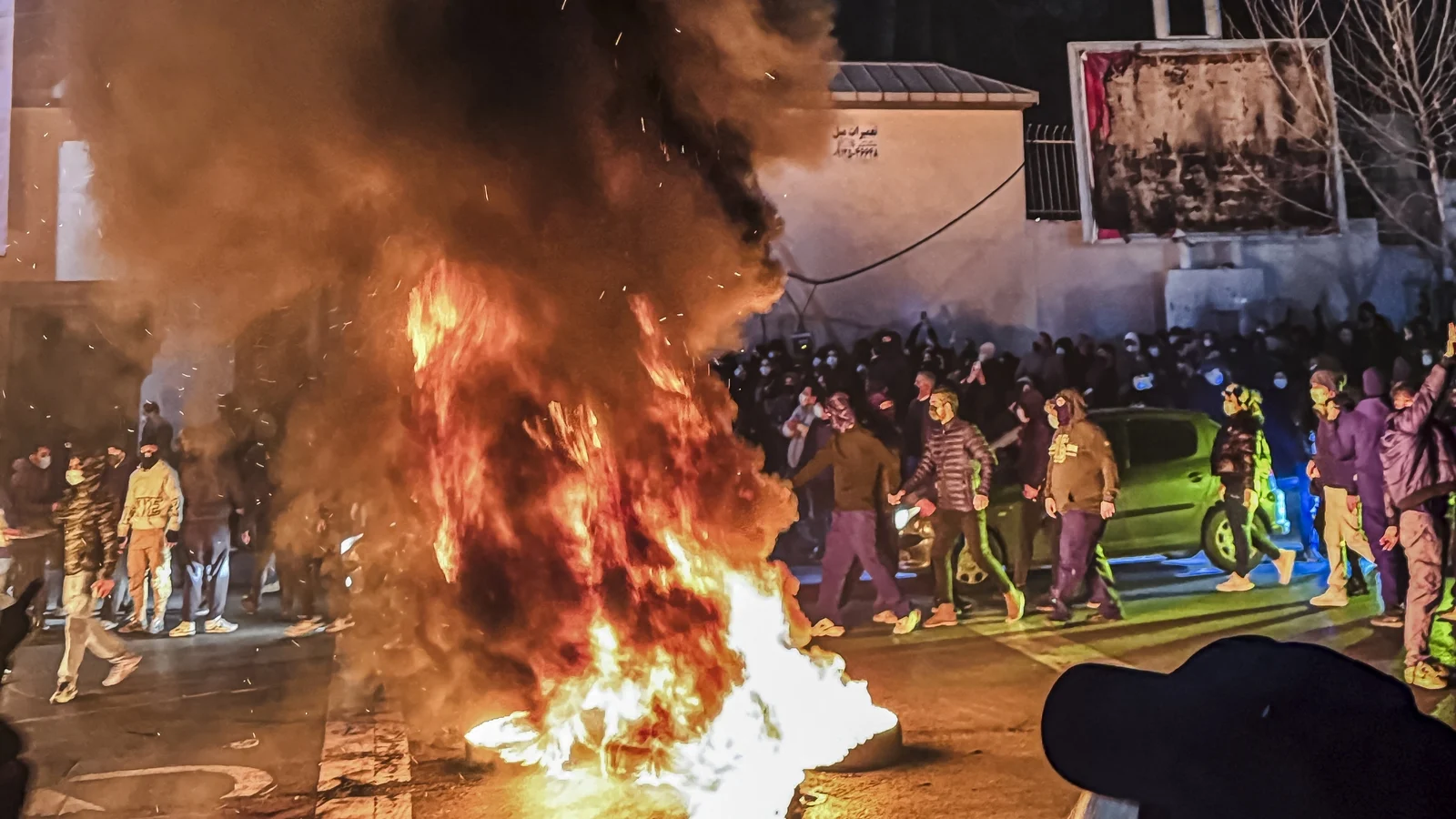
Night Smoke and Morning Fear: Iran’s Unrest Through the Eyes of Streets That Won’t Sleep
By the time dawn leaked through the smog and chant-stained night, Tehran’s avenues already felt like a line drawn across two realities. On one side: the familiar rhythm of traffic and tea vendors. On the other: burn marks on asphalt, groups of young people huddled around smoldering barricades, and the heavy, clinical presence of body bags rolled out at a coroner’s office — an image broadcast by state television and replayed around the world.
“This city is not the same anymore,” said Roya, a schoolteacher who slipped out before sunrise to buy bread and returned with ash on her shoes. “You hear the sirens and you wonder which part of the day will be taken from you next.”
Numbers That Refuse to Stay Quiet
The human cost of two weeks of upheaval is staggering on paper and even more brutal up close. HRANA, a U.S.-based rights group compiling reports from activists inside Iran and from the diaspora, has verified 490 protesters and 48 security personnel killed, and more than 10,600 people arrested. The Iranian government has not released an official tally; international news agencies say they have been unable to independently verify the full figures amid blackouts and restricted reporting.
Numbers are blunt instruments, and yet they anchor a story that otherwise swells with rumor and fear. Each statistic represents a family, a funeral procession, a shop shuttered with graffiti that reads, in Farsi, “Enough.”
From Price Protests to a Challenge to Power
What began as protests over soaring food and fuel costs on December 28 has, for many Iranians, become something broader and deeper: a reckoning with a clerical establishment that has governed since 1979. Streets that once hummed with the small commerce of everyday life—bazaars, kiosks selling apples and pomegranates, chai houses where elders recite lines of Hafez—have become stages for dissent.
“First it was the price of eggs,” said Amir, a mechanic in Mashhad, rubbing soot from his hands. “Then it was the price of dignity. People stopped going home.”
Silenced Networks, Amplified Voices
The Iranian authorities have imposed an internet blackout, cutting off large swaths of the population from the global flow of information. Videos seep through in fragments: nighttime marches in Tehran, smoke rising over Mashhad, masked protesters sprinting past overturned cars. Where connectivity is choked, voices have grown raw and inventive—using satellite links, word-of-mouth, and foreign-based platforms to narrate what is happening.
“They can cut the cables, but not the story,” said Leyla, a university student who helped coordinate online messages before networks dimmed. “When you face water cannons or live rounds, you learn the value of a single witness.”
Visuals from the Front Lines
State television has countered with curated images of the dead packed in body bags and footage of funerals for security personnel in cities such as Gachsaran, Yasuj, Isfahan, and Kermanshah—portraits meant to frame the unrest as an affront orchestrated by “armed terrorists.” The state narrative points fingers outward—to foreign sabotage, to enemies in Washington and Tel Aviv.
Threats That Swirl Beyond Borders
The conflict has not stayed within Iran’s borders. Tehran’s officials warned that any external attack would legitimate targeting U.S. bases and assets, with the Iranian parliament speaker — a former Revolutionary Guards commander — publicly saying that occupied territories and U.S. interests would be considered fair targets in such a case.
Across the world, U.S. President Donald Trump signaled willingness to intervene. According to reports, U.S. options on the table ranged from targeted military strikes to the use of cyber capabilities, stepped-up sanctions, and the covert provision of online support to anti-government actors. The rhetoric has raised the stakes dramatically.
“Intervention is a dangerous idea,” said a former diplomat who has followed Iran for decades. “It can inflame a fragile situation and give the state something to rally against.”
Neighbors Watch, Allies Brace
Israel put its forces on high alert, intelligence sources said, wary of any ripple effect. Israeli and U.S. leaders have been in close consultation. Meanwhile, Tehran’s recent regional setbacks—including pressures on proxies such as Hezbollah and fallout from last year’s skirmishes—have left the clerical regime politically and militarily frayed in some respects, even if its center holds.
“We aren’t watching from far away,” said Yael, an Israeli analyst tracking the situation. “Instability in Iran radiates outward: economics, refugees, supply chains, proxy conflicts. The region is always on edge.”
How Likely Is Change?
Experts diverge on whether these protests could topple the regime. Some see a pattern: waves of street-level rage that burn hot and then ebb under state force. Others point to the cohesion of Iran’s security apparatus, the Revolutionary Guards, and the absence of a single, unified opposition organization capable of translating anger into governance.
“This could weaken the regime significantly,” an Iran specialist told me, “but not necessarily end it. Political erosion is slow. Revolutions that succeed require organization—ideas that outlast the street.”
Faces in the Crowd: Stories That Stay
It’s easy to dwell only on geopolitics. It’s harder to sit in a hallway with a mother who will not stop sorting through clothes for her 19-year-old son, taken two nights ago and not yet heard from. It’s harder to stand with an elderly man who recounts marching as a young revolutionary in 1979 and now sees the same streets used to call for a different future.
“We used to chant for justice then,” he whispered. “Now we chant for our children.”
What Does the World Owe?
As governments posture, as sanctions and threats are traded like chess pieces, people in Iran are making urgent calculations: when to stay, when to flee, whom to trust, and how to grieve. The international community faces its own moral questions: Do you intervene to help protesters? Do you risk escalation? Do you let authoritarian responses go unchecked in the name of stability?
Ask yourself: if you were watching from thousands of miles away, what would you expect your government to do? How much weight should sovereignty carry when a government’s response appears to be killing its own citizens?
Where We Go From Here
The coming days could see further crackdowns, negotiated concessions, or prolonged stalemate. One thing is certain: these protests will leave marks, not only on Iran’s streets, but on its institutions and the region’s balance of power. Whether those marks harden into lasting change, or scar a generation without altering the center of power, depends on a host of unpredictable forces—leadership choices, international responses, and the stubborn, human will of those in the streets.
“This is not only about bread or gasoline,” Roya told me before she vanished into a crowd. “It’s about being seen.”
Are you paying attention? Because history—electric and messy—often unfolds where the world least expects it.