Thunder Over Tehran: A Nation’s Anger, a Leader’s Threats, and the Uncertain Morning After
There is a distinct sound to unrest in a city that has been taught silence for decades: the clatter of shutters, the rapid pickup of whispered prayers, the clank of metal gates as shopkeepers bolt up at dusk. Outside, the streets of various Iranian cities have become a patchwork of grief and defiance — banners, smudges of burned debris, and the heavy, careful footsteps of people who now know how dangerous simply being visible can be.
Into that atmosphere a chorus of global voices has chimed. At the center of recent headlines is a blunt message from former US President Donald Trump, who warned in an interview that the United States would “take very strong action” if Iran began executing protesters — a threat that landed like thunder on both sides of the globe and has left many Iranians wondering not only about their own safety, but about the wider tectonics of a region already frayed by mistrust.
The Streets Speak: Small Lives, Large Courage
“We all put tea on the stove faster than before,” says Parvaneh, a 48-year-old teahouse owner in the northern Tehran district of Tajrish. “People come in, show their hands, tell us who was taken last night. We try to listen. The government thinks silence means fear. It is not silence — it is strategy.”
Across the country, ordinary scenes have become charged with meaning: a mother stopping to tuck a child deeper under her scarf; young men comparing notes about safe routes on their phones; elderly men in parks reciting lines of Rumi to steady their breathing. These are the kinds of small, human details that don’t make the first wave of cable news but that define an uprising’s texture.
“They are not protesting for fun,” an anonymous college student in Isfahan told me. “People cannot buy bread. The lights go out. My cousin lost his job. We are asking for dignity.”
How Many Lives? Numbers That Refuse to Settle
Counting bodies in the fog of repression is never straightforward. Rights groups have offered stark tallies: the US-based HRANA has verified the deaths of 2,571 people during recent unrest — a figure that includes civilians, government-affiliated individuals, and children. Amnesty International and other NGOs have warned of mass arrests, swift trials, and a chilling use of capital punishment.
Iranian authorities, for their part, acknowledged a death toll that surprised many, with an official telling state sources that roughly 2,000 people had died — a rare and grim admission. Yet the state’s framing was different, blaming “terrorists” for much of the violence. The uncertainty, the gaps, the conflicting accounts — they all add to a deeper sorrow.
“These numbers are not abstractions,” said a human rights lawyer based in Oslo who has monitored Iran for a decade. “A number is a child’s name. A number is a market stall gone dark. Statistics are the only record the victims will have, and they must be fought over because acknowledgement is the first step toward justice.”
Washington’s Gamble: “Help Is on Its Way”
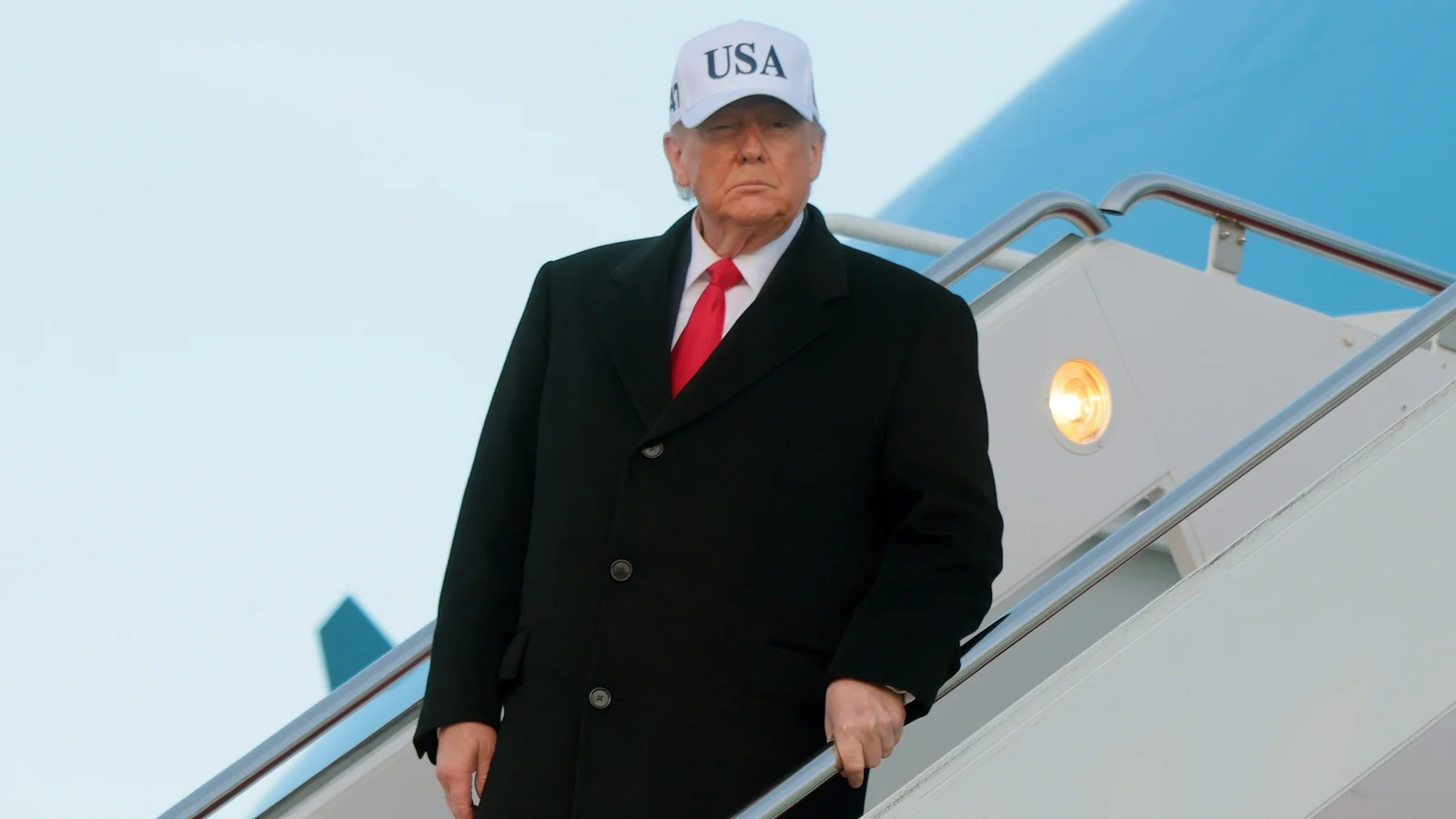
From a manufacturing plant in Michigan — where he was scheduled to speak on the American economy — Donald Trump reiterated his message that “help is on its way” to Iranian protesters. His remarks were intentionally ambiguous, a strategic murmur that can be read in many ways: a promise, a threat, a diplomatic lever.
“When they start killing thousands of people — and now you’re telling me about hanging — we will take very strong action if they do such a thing,” he said in a clip circulated by media outlets. Asked to elaborate, he smiled and told reporters, almost teasingly, that they would “have to figure that out.”
Veteran foreign-policy observers see that ambiguity as deliberate. “Ambiguity gives leverage without the immediate costs of boots on the ground,” said a Washington analyst who has worked on Middle East policy. “But it also invites blowback. When you threaten a government in Tehran, Tehran will threaten bases in the region. It becomes a dangerous spiral.”
Regional Ripples: Allies, Threats, and Escalation
Indeed, Tehran did not hesitate to push back. Iranian officials warned that US bases located on the soil of regional partners — from the Gulf monarchies to Turkey — could be targeted if Washington attacks Iran. A senior Iranian official, speaking on condition of anonymity, said Tehran had urged regional governments to “prevent Washington from attacking Iran.” The message was stark: any foreign intervention, the official suggested, would redraw lines in a volatile neighborhood.
Such statements heighten a geopolitical calculus already complicated by concerns about Iran’s nuclear program and ballistic missile development. They force local governments — who host foreign bases and navigate intricate alliances — to choose carefully between Washington’s encouragement and Tehran’s retaliation.
The Courts, the Gallows, and a Threat to Dissent
Perhaps the darkest specter has been the possibility of rushed trials and executions. Prosecutors in Iran have reportedly invoked moharebeh — “waging war against God” — a capital charge that has historically been used to punish protest leaders and critics. Amnesty International warned that concerns were mounting about swift trials and arbitrary executions aimed at crushing dissent.
“We have already seen cases where the verdict was delivered within days,” said a Tehran-based human rights monitor. “The judiciary moves fast when it wants to make an example of someone. That fear of public, quick punishment is as powerful as the physical fear of bullets.”
Families of detainees tell stories of broken sleep and waiting for any detail that might save a son, daughter, or cousin. In some neighborhoods, mothers have begun to compile lists of names — not out of paperwork, but as prayer.
What Are We Willing to Risk?
So where does the world stand, and what are we willing to risk to prevent bloodshed? Is a distant promise of “help” worth the possibility of regional escalation? Is public pressure and sanctions enough, or does the international community need to mobilize in other ways — through humanitarian corridors, asylum pathways, or legal pressure on complicit state actors?
There are no comfortable answers. There are only decisions that will shape lives for years to come. For Iranians on the ground, the calculus is not abstract. “We are not looking for someone to come and fight our battles,” Parvaneh said. “We want the world to see us. We want to be safe.”
Key Facts to Hold in Mind
- Human-rights organizations have verified thousands of deaths during the unrest, with differing tallies and ongoing investigations.
- Iranian authorities and independent monitors provide conflicting narratives about responsibility and the breakdown of violence.
- U.S. political leaders have issued warnings and hinted at options that range from sanctions to harsher measures; Tehran has responded with counter-threats to regional bases.
- Observers warn of the potential for rapid trials and capital punishment as a tactic to deter protest.
As you read this, in a city square thousands of miles away, someone might be tracing names onto a piece of paper, preparing tea, or taking a frightened child by the hand. What do you see when you look at these headlines — a distant conflict, or a mirror? How do the decisions made in faraway capitals ripple into the very private, very human spaces where life and loss are counted?
The story is not finished. It is being written in living rooms and detention cells, in the halls of power and the cords of a phone call. It asks a simple, old question: when a people rise up for dignity, who will stand with them, and at what cost?