In the Snow and the Streetlights: Minneapolis at the Edge
The air in north Minneapolis snaps like glass. Winter here is a hard-edged thing — clear, cold, and unforgiving — and that chill has seeped into the city’s mood. Under sodium streetlights and the glow of storefronts, residents gather in small knots, blowing on gloved hands and blowing whistles at boots that march through their neighborhoods. Camouflage, masks, and the dull clack of tactical gear have become an almost everyday sight.
“You don’t feel like you live in a city when soldiers roam your block,” said Amina Hassan, a neighbor and mother of two, her breath billowing out in the cold. “You feel like you’re under siege.”
What began as anger over a fatal encounter on a quiet January night has grown into something larger and more combustible — protests, federal agents sent in force, and a presidential threat that very nearly reshapes the relationship between Washington and the streets of American cities.
The Incident That Started It
On 7 January, Renee Nicole Good, a 37‑year‑old mother of three, was shot dead while sitting behind the wheel during a neighborhood patrol of residents documenting federal officers’ activities. Her death was, for many in Minneapolis, the spark.
“She came to watch over us,” said Jamal Turner, a longtime neighbor. “She was a mother. We weren’t trying to start anything — we were just watching so no one would be hurt.”
Local leaders, community activists and family members have disputed official claims that an officer feared being run over. For many, the killing has become emblematic of a broader pattern: federal enforcement that feels opaque, aggressive, and untethered to local norms.
What happened next
- Immediate protests erupted across Minneapolis in the days after Renee Good’s death.
- Federal authorities doubled down, sending hundreds more agents to a force that now numbers about 2,000 people in the city.
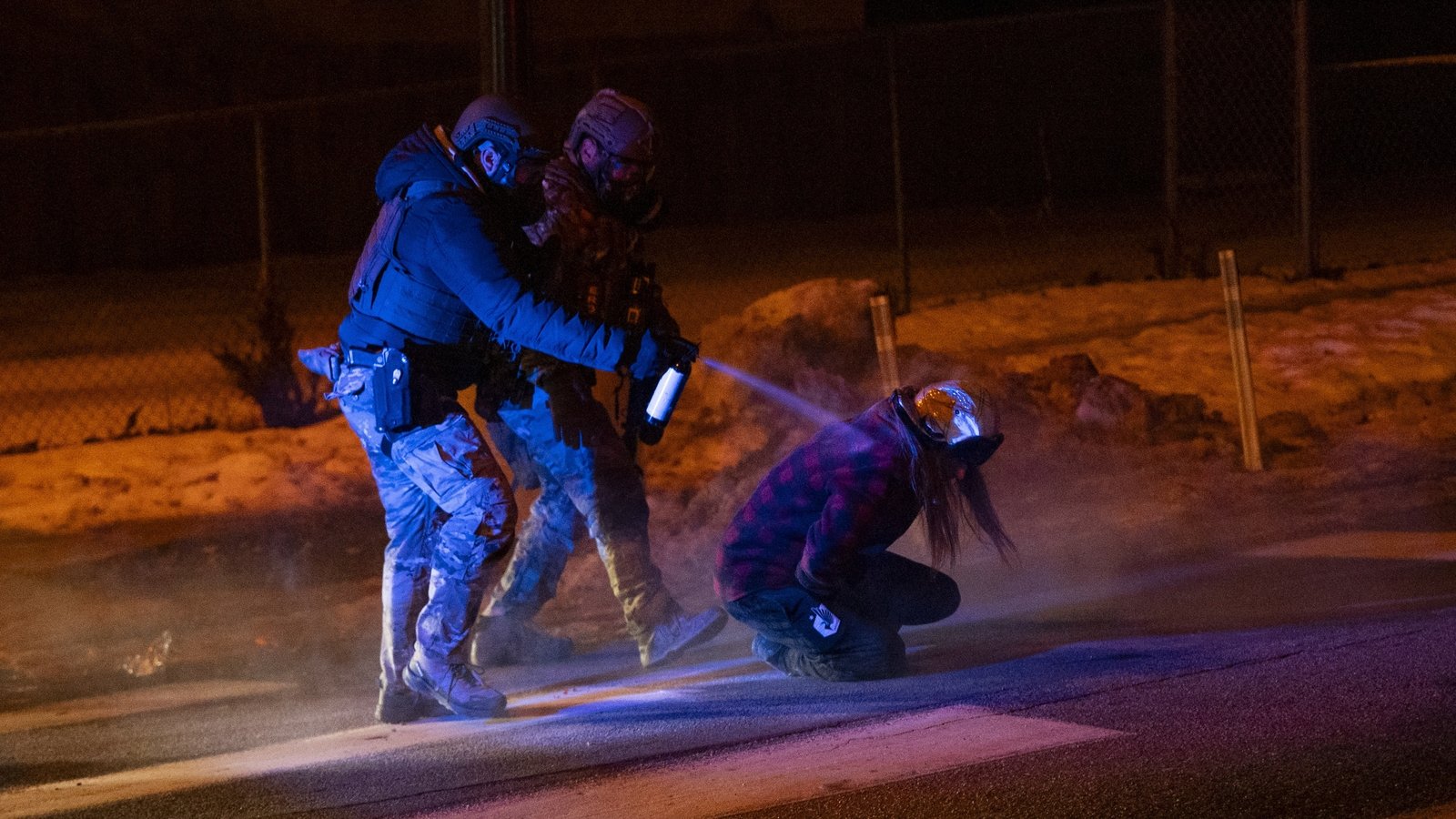
- Clashes escalated: tear gas and pepper spray were used, videos showed agents in military-style gear entering residential blocks, and a second shooting — an ICE agent wounding a man from Venezuela — further inflamed tensions.
A Country’s Law, a City’s Crisis
Into this cauldron stepped a potent, old statute: the Insurrection Act. Signed into law in 1807, the act gives a president the power to deploy military forces domestically to suppress insurrections and enforce federal law. It’s a measure with deep historical lineage and, until now, limited modern use; the last major invocation came in 1992, when President George H.W. Bush deployed federal troops after the Los Angeles riots.
“We need order,” President Donald Trump posted on Truth Social, threatening to invoke the law if Minnesota politicians did not curb what he called “professional agitators and insurrectionists.” “I will institute the Insurrection Act … and quickly put an end to the travesty that is taking place in that once great State.”
The suggestion of soldiers patrolling American cities stirs a historic unease. For many across the political spectrum, the question is not only whether federal law enforcement is overstepping but how far the executive branch can go when faced with civic unrest.
Voices from the Ground
Minneapolis Mayor Jacob Frey put it bluntly: “This is not sustainable.” He has joined state officials in calling for answers and restraint, while federal officials argue more officers are needed to enforce immigration law and protect their agents.
Homeland Security Secretary Kristi Noem, speaking outside the White House, refused to say whether the president should use the Insurrection Act but told reporters, “I think that the President has that opportunity in the future. It’s his constitutional right, and it’s up to him if he wants to utilise it to do it.”
At a press conference, Minneapolis Police Chief Brian O’Hara described the latest shooting as a “struggle” during an attempted apprehension, saying the federal agent discharged his weapon when attacked by multiple people. The wounded man, officials said, sustained a non‑life‑threatening leg wound and was transported to a hospital.
“We’re seeing video of agents smashing car windows, pulling people from vehicles, and detaining bystanders,” said Dr. Lena Morales, a criminal justice scholar who studies federal-local interactions. “Those images have a powerful psychological effect. They feed fear, and fear begets more conflict.”
Policing, Power, and Population: Broader Fault Lines
Minneapolis is not just any city. It is a place with a particular recent history — a city that still bears the scars of the George Floyd protests and the long conversations about police reform and racial justice that followed. It’s also home to vibrant immigrant communities, including a large Somali population who have lately found themselves in the crosshairs of enforcement and rhetoric.
Administration figures have pointed to alleged fraud in refugee resettlement cases and have argued that raids and re‑vetting are necessary. Critics say the tactics are politically motivated and disproportionately impact Black and immigrant communities. Some refugees and legal residents were reportedly arrested in weekend actions, fueling outrage among advocacy groups.
“They’re treating neighbors like suspects,” said Mohamed Ali, a community organizer. “I’ve lived here since I was a boy. I pay taxes. My kids go to school here. Yet we stand on the curb and they ask our papers.”
When Law Meets Legitimacy
At the heart of this standoff is an agonizing question: How do you balance enforcement of immigration laws with constitutional rights and community trust? If a federal presence is intended to create safety, the optics — agents masked like soldiers sweeping through residential streets — often do the opposite.
Proponents of the surge say federal officers are being assaulted and need protection to do their jobs. Opponents ask whether law enforcement techniques designed for foreign terrains belong on American sidewalks. Both frames carry anxieties about violence, authority, and the use of force.
“There’s always a threshold,” Dr. Morales said. “Once the public feels the state is using overwhelming force, legitimacy erodes. Compliance must be consent-based, not enforced by spectacle.”
Questions for the Reader
How would you feel if heavily armed, masked agents came through your neighborhood? Is the deployment of federal forces a proportional response to protests and the enforcement of immigration laws? Where should the line be drawn between public safety and civil liberties?
Those are not rhetorical questions for Minneapolis. They are live policy debates that ripple outward — into courtrooms, into city budgets, and into the next election cycle. The invocation of a nearly 220‑year‑old law would not just relocate soldiers; it would place an ancient, rarely used power at the center of modern American civic life.
What Comes Next
For now, the Insurrection Act remains a threat rather than a reality. The city is braced for more protests, and residents like Amina Hassan plan to keep watching. “We just want to be able to walk to the store without being shouted at,” she said. “Is that too much to ask?”
As Minneapolis waits and the national conversation intensifies, one thing is clear: the questions raised here are not contained by city limits. They touch on the future of policing, the boundaries of executive power, and the lived experience of communities who feel both defended from and targeted by the very institutions meant to protect them.
We are watching a story about power, place, and pain unfold. What will we — as a nation, as neighbors, as citizens — choose to do when the buildings and the law don’t seem to answer the same language?