A Courtroom, a Country on Edge: The Fall of Yoon Suk Yeol
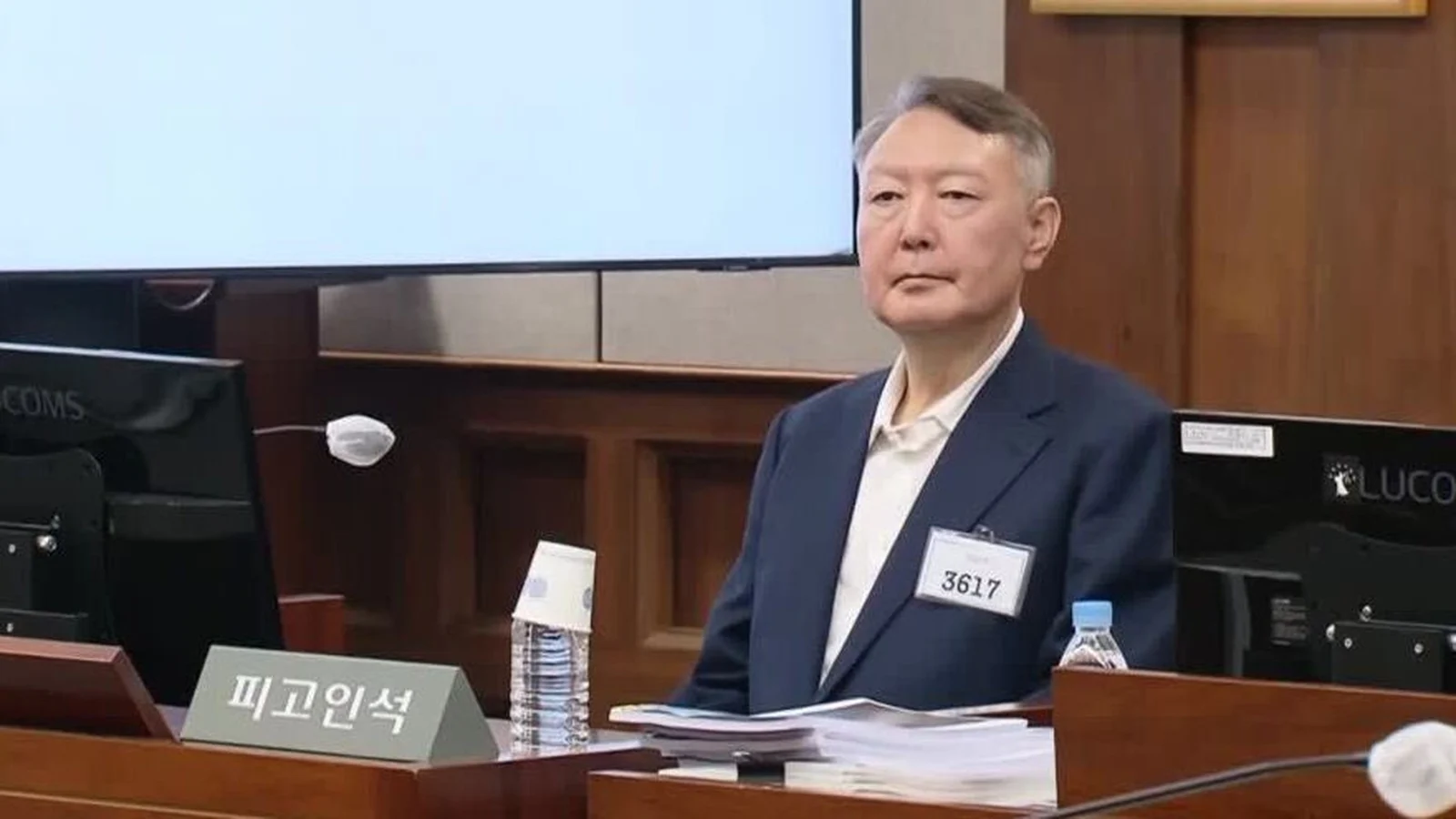
The morning air outside the Seoul Central District Court was cold and taut, like the silence before a storm. Supporters clustered beneath umbrellas and banners, their voices a mixture of chant and prayer. Across the street, police vans idled, officers in dark coats keeping an unblinking watch. Inside the courtroom a man once entrusted with the nation’s security sat motionless as a judge read words that would mark him, and perhaps his country, for years to come.
Yoon Suk Yeol, 65, was sentenced to five years in prison after a panel of judges found him guilty of obstructing attempts to arrest him following his failed declaration of martial law in December 2024. The same court concluded he had misused presidential power, fabricated documents and circumvented the legal process required to impose martial rule—an extraordinary sequence in a nation that has prided itself on democratic resilience.
“The defendant abused his enormous influence as president to prevent the execution of legitimate warrants through officials from the Security Service,” the lead judge said, noting that the security apparatus had been, in effect, privatized in service of one man. It was a blunt rebuke of authority harnessed to personal ends.
Scenes from a charged morning
Yoon’s hair was streaked with grey; his face, as many observers later described, looked drawn. He showed no outward reaction when the sentence was pronounced. Nearby, a small cluster of supporters held placards that read “History will be the judge” and insisted—quietly, fiercely—that he remained their president.
“He’s a patriot. They’re trying to erase him,” said one supporter who gave his name as Park Min-jun, a local businessman who had driven across the city to stand outside the court. “People like me are not disappearing. We know what he tried to do.” His voice trembled with a mixture of anger and grief.
On the other side of the courthouse square, a retired schoolteacher, Kim Hye-jin, who watched the trial on a small portable radio, spoke with a slower, almost philosophical cadence. “We have to live with the decisions institutions make,” she said. “I want to believe the law is for everyone, even if it sometimes hurts.” Her words carried the kind of weary hope that has long characterized civic life in South Korea.
What happened — a quick timeline
- December 2024: Yoon attempts to declare martial law in a surprise move that lasted about six hours before parliament overturned it.
- January: Yoon barricades himself inside his residence and instructs the presidential security service to block investigators; prosecutors seek arrest warrants.
- Later: In a second, large-scale police operation involving more than 3,000 officers, Yoon is arrested—the first time a sitting South Korean president has ever been detained.
- April (following month): The Constitutional Court removes Yoon from office for violating his duties.
- Now: The Seoul Central District Court sentences him to five years for obstruction and related offenses. Separate trials carry other potential charges, including allegations amounting to insurrection, for which prosecutors have urged the harshest penalties.
What this means for South Korea — and why the world is watching
South Korea is more than a regional economic powerhouse; with a population of roughly 51 million and a hyper-connected civic sphere, it is a country where politics move fast and public scrutiny runs deep. Yoon’s attempt to impose martial law—brief though it was—sent shockwaves across a polity that still wrestles with its authoritarian past. Memories of the brutal Gwangju massacre in 1980 and the authoritarian decades that followed are never far beneath the surface of public life.
“This case isn’t just about one man,” said a Seoul-based constitutional scholar who asked not to be named because of ongoing legal sensitivities. “It’s a test of institutions—courts, parliament, law enforcement—and their capacity to balance security and liberty. That tension is a global one.” The scholar paused, then added, “We must ask: how do democracies guard themselves against those who would bend the system toward personal ends?”
The international implications are not trivial. South Korea is a key ally of the United States and sits in a volatile neighborhood across from North Korea, with tensions over nuclear capabilities and missile tests never far from headlines. Stability in Seoul matters to regional security, trade, and global supply chains. Even more intimately, it matters to the millions of South Koreans who hope their institutions can weather crises without tumbling into arbitrariness.
Voices from the street
Outside the court, people spoke like they were trying to stitch the future from frayed memories.
“I voted for him,” Minsu Choi, a small restaurant owner, told me. “I believed in his promise to clean up corruption. But when a leader isolates himself and uses state power like this—it’s frightening. We deserve better.” He wiped his hands on his apron and shook his head.
A high school teacher, Lee Ji-won, echoed another concern. “Our kids are watching,” she said. “Do we teach them that no one is above the law—or that political survival matters more than democratic norms?” Her question hung in the air like an accusation and an invitation.
Bigger questions: leadership, accountability, and the cycle of conviction
South Korea has a complicated history with presidential accountability. Several past leaders have faced criminal charges once out of office—sometimes convicted, sometimes pardoned. The late 20th-century example of Chun Doo-hwan, a former general sentenced to death (later commuted and pardoned), remains a defining moment in the nation’s grappling with authoritarianism and justice.
Now the legal system has again put itself center stage. Some will see the verdict as vindication of rule-of-law principles; others will view it as political retribution. Both reactions are understandable in a deeply polarized climate.
But beyond partisan lines lies a more universal concern: how democracies handle leaders who attempt to erode the very institutions that empower them. Across the globe—from Latin America to Europe—countries are grappling with similar dilemmas. How do we preserve democratic norms while ensuring the law isn’t weaponized for political ends? Where is the line between accountability and political score-settling?
A final thought and an invitation
As Yoon prepares to appeal—and as prosecutors weigh other charges—the story will continue to unfold in courtrooms, in living rooms, and in the streets. For South Koreans and for anyone who watches democracies under strain, this is a moment to reflect on what civic courage looks like: not the bravado of power grabs, but the quieter, harder work of building institutions that serve the many.
What would you want your leaders to do when trust frays and institutions creak under pressure? How do we balance security and liberty in times of crisis? These are not just South Korean questions; they are questions for any democracy trying to remain both strong and just.