Midnight at Nuuk Airport: A Cold Welcome for Hot Politics
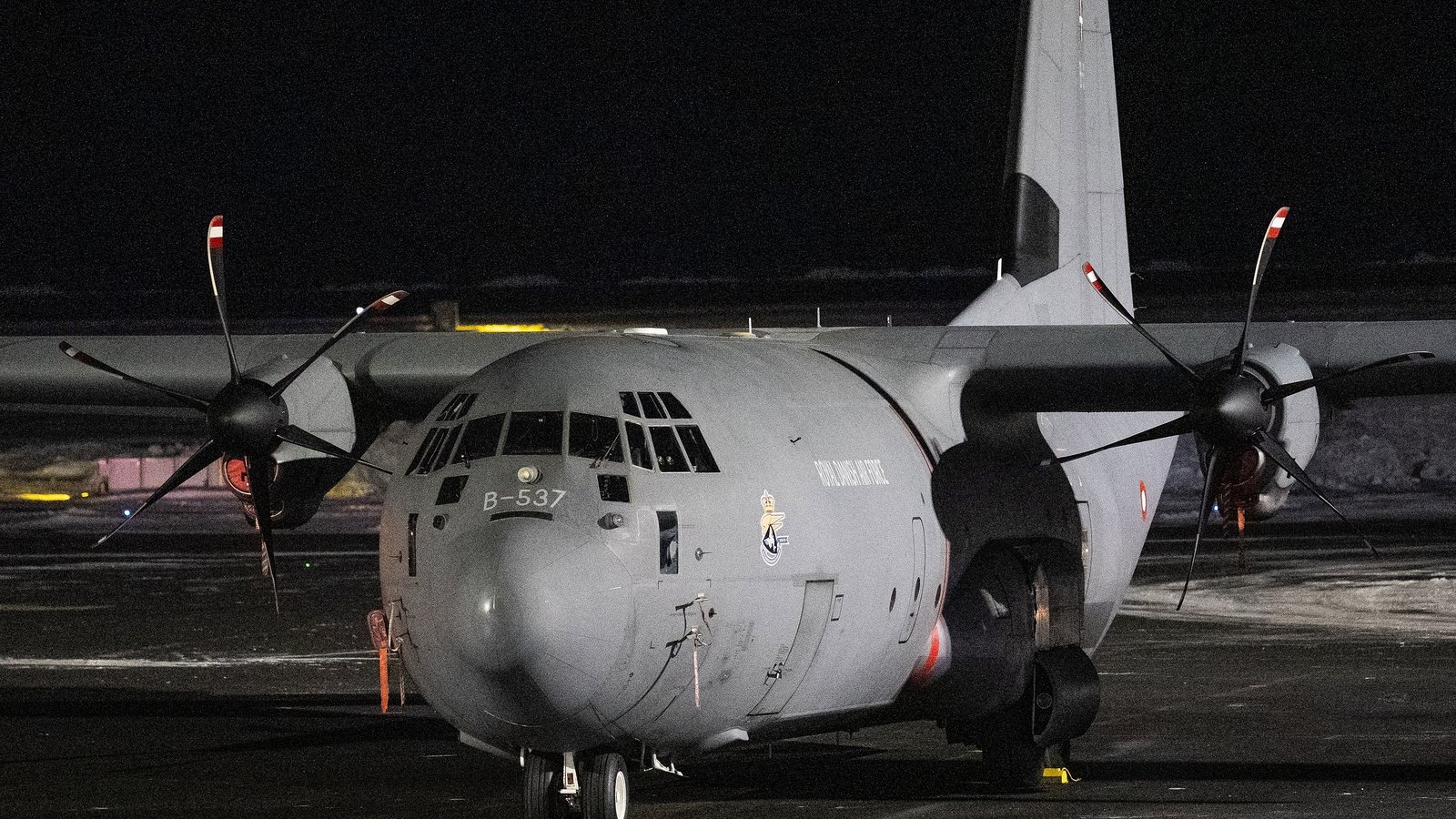
The plane from Copenhagen touched down under a pale Arctic sky and disgorged a small, deliberate procession of soldiers into the chill. They moved past electronic billboards advertising Greenlandic smoked fish and a poster of a local drum dancer, their uniforms a strange, foreign cadence against the soft hum of Inuit conversation.
“You feel it in the air,” said an elderly hunter named Aqqaluk, leaning against a snow-dusted fence as buses arrived to take the newcomers to temporary quarters. “This is our home. We watch boats and weather, not flags arriving like tourists.”
That low-key scene in Nuuk—quiet, seasonally lit, stubbornly ordinary—belies a far larger drama. For weeks, Denmark and Greenland have been racing to reassure friends, push back on a rhetorical claim from Washington, and make a statement about sovereignty that is as much cultural as it is strategic.
Why Greenland Suddenly Feels Like the Center of the World
It helps to remember some basic facts: Greenland is vast—about 2.16 million square kilometers, mostly ice—and tiny in people, home to roughly 56,000 people concentrated along a long, rugged coast. The island has been an autonomous territory within the Kingdom of Denmark since the Self-Government Act of 2009, but its geological underbelly—minerals, rare earths, potential shipping lanes carved by climate change—has made it a prize in a new kind of geopolitical chess.
“This is not romantic adventurism,” said Dr. Helena Sørensen, an Arctic security expert. “When the ice retreats, the world’s supply chains and power dynamics change. That’s why states take Greenland seriously.”
The spark for the latest tension was blunt: a presidential remark from Washington reiterating what some diplomats call an “ambition” to gain more control over Greenland in the name of security. Whether framed as purchase talk or a broader assertion of interest, it sent ripples through capitals in Copenhagen, Paris, Berlin and beyond.
Allies in, Tension Up
Rather than respond to rhetoric with rhetoric, Denmark and Greenland quietly called allies home. Within days, small teams from France, Germany, Sweden and Norway were en route. A reconnaissance contingent from Germany—around 13 personnel—stopped first in Copenhagen before heading north with Danish colleagues. France said it had placed a first group of around 15 mountain specialists, and Sweden and Norway each dispatched a handful of officers. One British officer joined reconnaissance efforts and the Dutch signalled willingness to send staff.
“We’re not building an invasion force,” said Commander Emil Larsson, a Swedish liaison. “We’re showing up to exercise and to say that the Arctic security architecture is collective.”
- Greenland area: ~2.16 million km²
- Population: ~56,000 (2023 estimate)
- Autonomy under Denmark: Self-Government Act, 2009
- Initial European deployments: small reconnaissance and specialist teams (Germany ~13, France ~15, Sweden 3, Norway 2, UK 1)
What They’re Practicing—and Why
Officials say the exercises are focused on surveillance, search-and-rescue, and joint logistics in a harsh environment rather than conventional combat. Yet the symbolism is sharp. In the words of Marc Jacobsen, a defense analyst in Copenhagen, “There are two messages: deterrence, and competence. Show you can defend your territory, and show you are taking surveillance seriously.”
In Nuuk’s cafés, residents sip coffee and debate the optics. “I’ve seen NATO banners at our festivals before,” joked Sara, a teacher, “but not soldiers at our airport. It’s odd. I worry about what big men argue about in big rooms where we’re not invited.”
Diplomacy That Avoided the Spotlight—but Not the Tough Questions
A meeting in Washington between US, Danish and Greenlandic officials aimed to dial down theatrics. It produced a practical step: a working group to address shared concerns, from military posture to economic ties. Yet there was no quick patch to the deeper disagreement.
“We are in fundamental disagreement,” said Denmark’s prime minister in a sharp, yet conciliatory tone. “This is serious. We will continue our efforts to prevent any scenario where Greenland’s status is undermined.”
Greenland’s leaders were resolute. “This island has its voice,” said Greenland’s foreign minister in a video statement. “We do not want to be traded or governed by force. Our path is with Denmark and with NATO, and we choose dignity over panic.”
Voices from the Edge: Local Color and Concern
Out on the water in Sisimiut, where fishing remains a backbone of daily life, captains track the horizon more closely now. “We look for seals and storms,” said boat-owner Jens, hands rough from nets. “We shouldn’t have to watch for flags.”
Older Greenlanders, who grew up with dog sleds and the rhythm of seasons, speak of history in quiet tones. “Colonial maps felt like ink on skin,” said an elder who asked to be identified only as Nivi. “We have had rulers. Today we have to remind them: our land, our rules.”
Big Powers, Bigger Questions
Russia dismissed Western warnings of its Arctic ambitions as exaggerated, calling talk of a Moscow-Beijing axis in Greenland “hysteria.” Meanwhile, European leaders pointedly framed their deployments as a reminder that NATO’s fabric is a two-way street.
What’s at stake is bigger than any single island. The Greenland episode gestures toward broader issues: how democratic alliances manage competition, how Indigenous voices shape resource policy, and whether international institutions can prevent security dilemmas from becoming skirmishes.
Food for Thought
If a sparsely populated, ice-covered island can lay bare fractures in global order, what does that say about other contested spaces—undersea cables, polar routes, even the moon? How do we protect fragile communities from becoming bargaining chips in geopolitical contests?
The answers will not arrive in a single communique or a handful of reconnaissance missions. They will emerge, slowly, in working groups, in legal claims, in the steady, often invisible work of diplomacy and local resilience.
A Quiet Resolve
Back in Nuuk, the buses unloaded. Soldiers moved through the town with measured care, passersby watching with a mix of curiosity and weary resolve. Greenlanders are not naïve about their value on a world map—yet neither do they accept being reduced to it.
“We know what it is to adapt,” Aqqaluk said, watching the sunset ignite the ice with copper. “We will adapt again. But don’t pretend you can buy what cannot be sold: our lives, our land, our voice.”
Will the diplomatic working group calm the seas, or will it merely stall a larger conversation about Arctic sovereignty and global competition? The island keeps its own calendar, and it will demand to be heard. Are we listening?