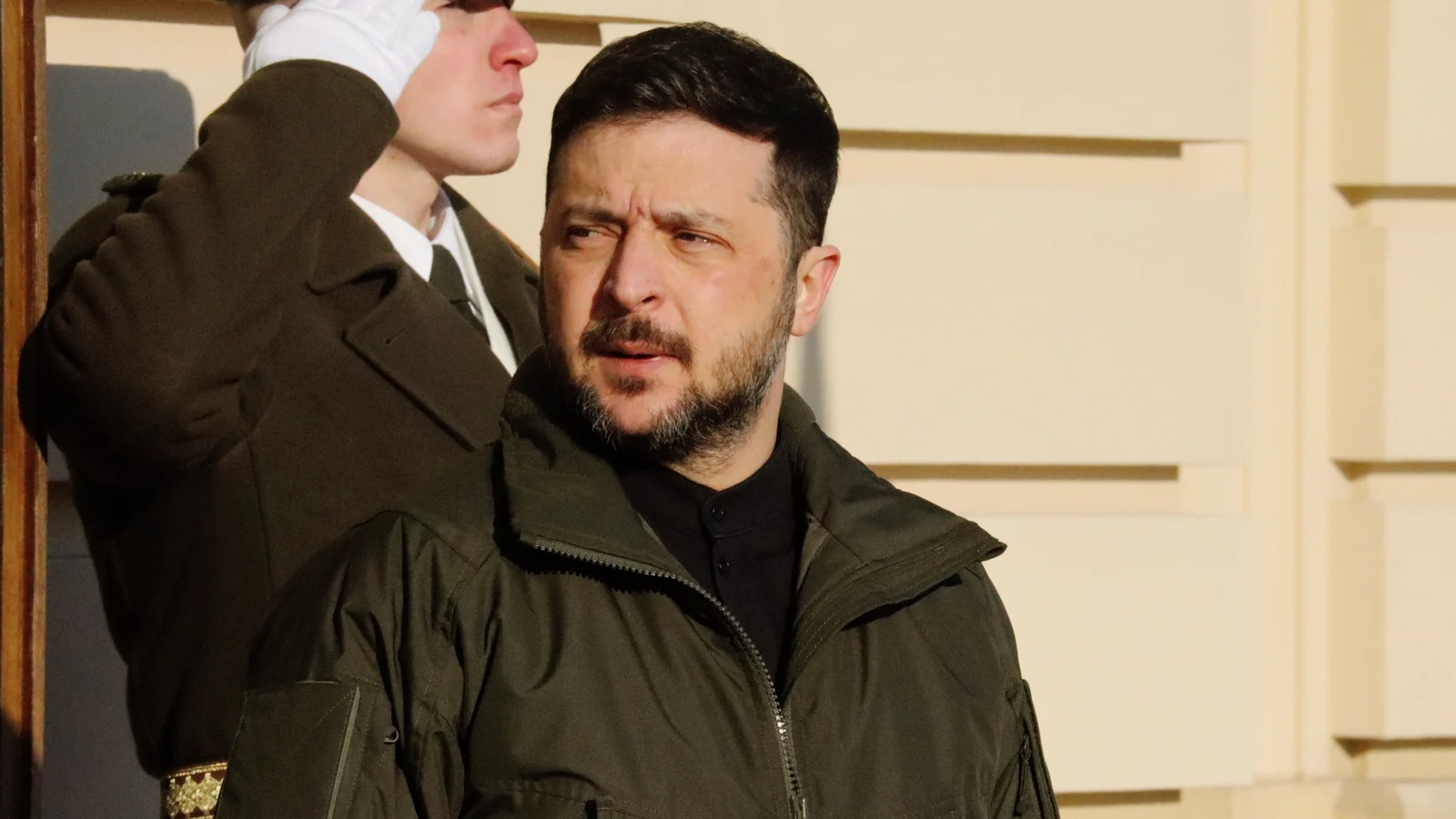
Negotiations under Miami Sun, Winter under Kyiv Sky: A Fragile Pause in a Brutal War
They arrived in Miami as if stepping out of two different worlds.
On one side, Ukrainian negotiators—Kyrylo Budanov, newly installed as President Volodymyr Zelensky’s chief of staff and leader of the delegation—touched down in a balmy city of palm trees and glass towers. On the other, millions back home huddled against a merciless Ukrainian winter, with thermometers plummeting as low as −19°C and the lights flickering and failing across towns and suburbs battered by months of bombardment.
“Arrived in the United States,” Budanov wrote on social media, a line as terse as it was loaded. He added that he and security chief Rustem Umerov and negotiator David Arakhamia would “have an important conversation with our American partners regarding the details of the peace agreement.” A joint meeting with Steve Witkoff—President Donald Trump’s private-sector envoy—as well as Jared Kushner and U.S. Army Secretary Daniel Driscoll was on the books.
Why Miami? Why now?
Timing is not accidental. February marks the fourth anniversary of Russia’s full-scale invasion. The world watches a war that has already reshaped geopolitics, redrawn supply chains, and forced millions from their homes. And this week, while Miami hums with hotel lobbies and diplomatic backrooms, Kyiv is conserving energy, schooling closures are enforced for health reasons, and entire neighborhoods shiver in the dark after targeted strikes on power infrastructure.
Ukraine has asked for clear, robust, and legally binding security guarantees—carrots and sticks to stop a future invasion. Washington, for its part, has been pushed into a delicate balancing act by President Trump’s vocal impatience with the conflict and by his aides’ unusual role as intermediaries. For Kyiv, the calculus is existential: any peace that looks like surrender could invite another assault. For Moscow, the insistence is simple and brutal: seize the rest of the land it claims or risk losing everything.
On the Ground: Power Cuts, Closed Schools, and the Human Cost
The negotiators’ shuttle between conference rooms could not hide the human reality they left behind.
Ukraine’s energy ministry announced a state of emergency in the energy sector after what it called “constant massive attacks by the Russian Federation.” Most regions experienced regulated power restrictions. In Bucha—an area that still bears the memory of atrocities from 2022—some 56,000 families were reported without power following nighttime strikes. For households that survived occupation and returned, a winter without heating is a cruel echo of earlier horrors.
“We heat our apartment with the kitchen stove and a small electric heater when we can,” said Oksana, 48, a teacher in a Kyiv suburb who asked that her full name not be used. “Last night the lights went off at midnight. My son and I wrapped in the blankets we kept for emergencies. We joke sometimes, but it’s not funny.”
Schools in the capital were ordered closed until February, with authorities citing health and safety during power shortages. The closures are another reminder that the war is not confined to battlefields: it cuts into education, food security, and the rhythms of daily life.
Energy as a Weapon
Experts say the campaign against infrastructure is strategic.
“Attacking energy systems in winter does more than black out homes,” said Dr. Elena Morozova, an energy analyst who has worked in Eastern European grid resilience. “It degrades morale, disrupts hospitals and communications, and places enormous economic strain on reconstruction. Rebuilding a power grid is an investment measured in years and billions.”
Those are not abstract numbers. For Ukraine, the need to repair and fortify energy systems will be a centerpiece of any post-war recovery plan. Kyiv has made that point loudly as it seeks guarantees and financing for reconstruction alongside security assurances to deter future aggression.
Negotiating the End: Guarantees, Territory, and the Shape of Peace
Talks in Miami were said to focus on security guarantees and post-war reconstruction—two halves of the same question. What will stop Russia from returning if Kyiv relinquishes land or stops fighting? What powers are prepared to guarantee Ukraine’s borders? How will Western help be structured if the ink dries on a ceasefire?
The United Kingdom and France have signed a declaration of intent to deploy troops to Ukraine in the event of a ceasefire, a move designed to deter Russian advances. Moscow’s answer was blunt: any foreign forces in Ukrainian territory would be “legitimate targets.” Those words, chilling in their simplicity, underscore the risk of escalation and what’s at stake in any agreement.
Back in Miami, American lines were more guarded. “We’re discussing frameworks—for security, for reconstruction, and for how to make a treaty that is credible,” said a U.S. official familiar with the talks, speaking on condition of anonymity. “But Kyiv must see that guarantees are real and enforceable.”
Kyiv’s ambassador to Washington reiterated that security guarantees are non-negotiable. President Zelensky has signaled he hopes the signatures could be put to paper at the World Economic Forum in Davos next week—an audacious plan to take a local deal into a global spotlight.
Between Private Envoys and Public Stakes
One striking element of these negotiations is who’s in the room: private envoys, former advisers, and family members of powerful figures. Steve Witkoff, Jared Kushner—names more familiar in business and past White House corridors than in official diplomacy—add a peculiar texture to talks otherwise dominated by generals and foreign ministers.
“Private diplomacy can move fast, but it can also complicate signaling,” said Anna Petrenko, a Kyiv-based analyst. “When back-channel figures are negotiating, it raises questions about the chain of command, about who will be held to promises.”
There is also a deep global dimension. The war in Ukraine has contributed to volatile energy markets, strained NATO’s unity, and repeatedly put grain and fertilizer exports in the balance—items that matter to food security across Africa, Asia, and the Middle East. How this conflict resolves will shape not just the map of Europe, but the geopolitics of the next decade.
Questions for the Reader
What would you expect from a security guarantee that would feel real to a nation that has been invaded twice this century? Is the presence of foreign troops on sovereign soil a guarantee—or a provocation? How should the international community weigh immediate peace with long-term security?
What Comes Next?
These Miami talks are a waypoint, not a destination. As delegates trade proposals and red lines, gunfire in eastern and southern Ukraine continues. Moscow claims fresh village captures in Donetsk and Zaporizhzhia regions. On the ground, civilians tally losses in homes and in trust.
“We live in hope and fear,” said Maksym, a volunteer who coordinates wood and blankets for families in Bucha. “I hope our leaders come back with a plan to keep us safe. I fear they will sign something for the cameras and leave us warming in the dark.”
In diplomacy, as in weather, storms are rarely ended by a single negotiation. They are managed, alleviated, and—sometimes—transformed by patience, power, and an appetite for risk. This week, under Miami’s sun and Kyiv’s freezing lights, the world will watch whether a fragile band of conversations can begin to stitch back a battered nation—and whether the guarantees on paper will hold when the guns fall silent.