Tension in Brussels: When Tariffs Become a Diplomatic Shockwave
The marble corridors of the EU finance ministry in Brussels usually hum with routine — budget briefs, tax harmonisation, sleepy debates about value-added rates. This morning, they hummed with something else: the electricity of a crisis that arrived not through a leaked cable or overnight memo, but via a blunt geopolitical threat from across the Atlantic.
Over the weekend, US President Donald Trump announced plans to slap a 10% tariff on goods from eight European countries — Denmark, Sweden, Finland, the Netherlands, France, Germany, Norway and the United Kingdom — allegedly in response to their military presence in Greenland. The tariff, he warned, could rise to 25% by June if a negotiated settlement is not reached. Europe woke up to a policy shock that smells of coercion, and now finance ministers are gathering to decide whether to respond and how hard.
A meeting that could ripple through global markets
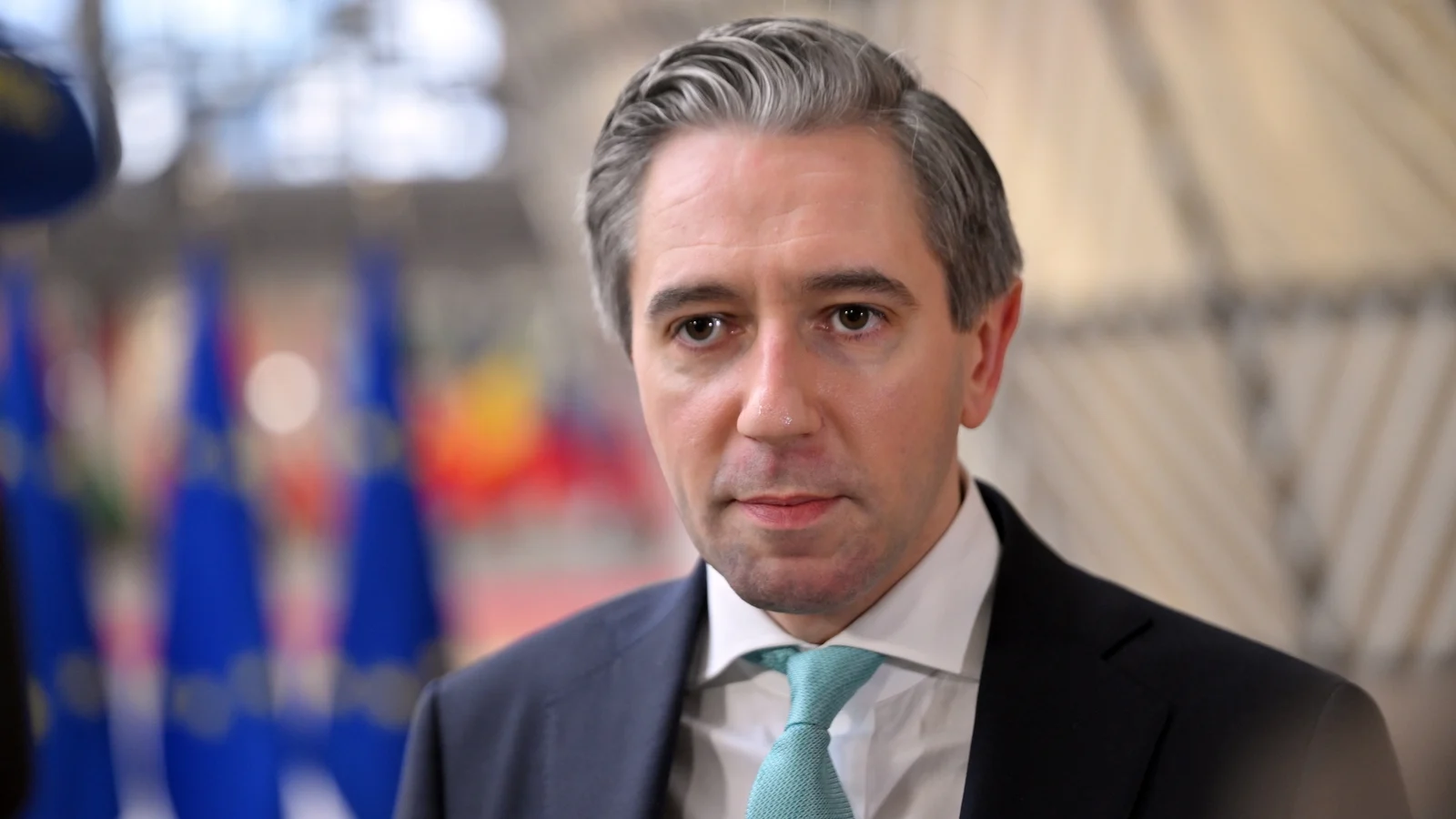
Tánaiste and Minister for Finance Simon Harris arrived in the ECOFIN chamber with a clear warning. “We worked hard with our US counterparts last year to deliver clarity for businesses and families,” he told reporters. “These new threats are a clear breach of that agreement. New tariffs would damage supply chains and open trade — they must be avoided.”
Harris’ words were measured but urgent. They landed against a backdrop of hard numbers that remind anyone watching how intertwined the transatlantic economy is: goods and services trade between the EU and the United States runs into the hundreds of billions each year, supporting millions of jobs on both sides of the Atlantic and underpinning critical supply chains from aircraft parts to agricultural produce.
“Every container that sits on a quay because of tariff fear is a factory line slowing down, a shop shelf emptying, a family’s paycheck uncertain,” said Ana Petrescu, an international trade analyst in Brussels. “The macro numbers are huge; the human impact is immediate.”
Options on the table — and their consequences
European ambassadors were reported to have downplayed the idea of immediate financial countermeasures. But the arsenal of possible responses is real and, in some cases, already drawn up. At the top of the list are:
- The reactivation of previously suspended retaliatory tariffs worth about €93 billion, a package shelved after last summer’s EU-US tariff detente.
- Political blockage — MEPs could withhold approval for the implementation of the existing US-EU deal this week in Strasbourg, creating procedural friction.
- The longer arc: activation of the EU’s so-called anti-coercion instrument, a way for the Union to respond to economic pressure through targeted financial measures.
Each option carries costs. Tariffs are not a pure weapon; they are a two-way knife that can slice into European exporters, disrupt integrated supply chains, and raise prices for ordinary consumers across the continent.
“Retaliation is tempting politically but risky economically,” said Dr. Matteo Ricci, an economist who studies trade policy at the European University Institute. “If you impose counter-tariffs on billions of dollars of US goods, the short-term signal of resolve is clear. The long-term effect can be fractured trade partnerships and higher inflation.”
Voices from the ground: worry, anger, and defiance
In Dublin bars and Copenhagen cafes, the conversation has moved from abstract geopolitics to concrete concern. At a seafood cooperative in Nuuk, Greenland, fishermen used to trade winds and long summers to describe a sudden sense of being at the center of a story they never asked for.
“We don’t want to be chess pieces,” said Lars Mikkelsen, a 47-year-old captain who runs a small fleet. “When foreign politicians talk about our home as if it were an object on a map, it affects real livelihoods. Tariffs mean markets tighten, buyers look elsewhere, and families here feel it.”
Back in Brussels, an EU official speaking on condition of anonymity described the mood as “stunned and steadily pragmatic.” “We have to show we are cohesive,” they said. “If we split, the leverage is lost. If we overreact, we hurt our own people.”
Political ripple effects: Davos, the European Council, and beyond
This diplomatic spat arrives at a frenetic time. World leaders and business titans are scheduled to converge on Davos for the World Economic Forum mid-week, a setting that amplifies every message. António Costa, President of the European Council, has convened an extraordinary meeting of European leaders to address developments — a rare move that underscores the gravity of the situation.
“This is not a trivia of tariffs; it’s a test of the rules-based order that has underpinned global prosperity,” said Helena Osei, a former trade diplomat. “If we allow economic coercion to become commonplace, we rewrite the playbook on how nations interact.”
Helen McEntee, Ireland’s Minister for Foreign Affairs, was similarly blunt in a statement: these tariffs “are not compatible with the EU-US agreement and they risk undermining the strength of our trans-Atlantic relationship at a time when co‑operation matters more than ever.”
Questions for a fragile moment
How should democratic states react when a major partner wields economic policy as a blunt instrument? Is tit-for-tat retaliation the only language powerful actors understand, or are there subtler levers — arbitration, legal challenges within the WTO, multilateral diplomatic pressure — that can protect both principle and prosperity?
“We are not just protecting markets,” Petrescu said. “We are protecting a set of norms: that commercial disputes are solved through agreed rules, not unilateral threats.”
Whatever path European leaders choose in the days ahead, the human stakes are already visible. Manufacturers that rely on cross-border inputs, farmers who sell into delicate supply networks, and communities in Greenland whose futures now flash on the screens of global capitals — all are part of the calculus.
What happens next — and why you should care
Expect rapid diplomatic outreach, a flurry of statements in Davos, and a careful calibration of economic responses in Brussels. Expect, too, a broader discussion about the resilience of trade relationships in an era of geopolitical brinkmanship. For global citizens, the lesson is immediate: in a connected economy, decisions made in the corridors of power cascade to shop floors and kitchen tables.
So as leaders weigh tariffs and leverage, ask yourself: what kind of international order do we want to inhabit? One where trade is a bargaining chip used in a bilateral squabble, or one where the rules and institutions built over decades still matter enough to constrain blunt force tactics?
For now, the ECOFIN meeting will talk, leaders will confer, and markets will watch. But beyond the meetings and the statements, ordinary people — fishermen in the Arctic, exporters in Rotterdam, shopkeepers in Lyon — will feel the outcomes. That is the true ledger of any trade decision: not just the billions in tariffs, but the livelihoods and trust they affect.