On Bondi’s Sand, a Country Rewrites Its Rules
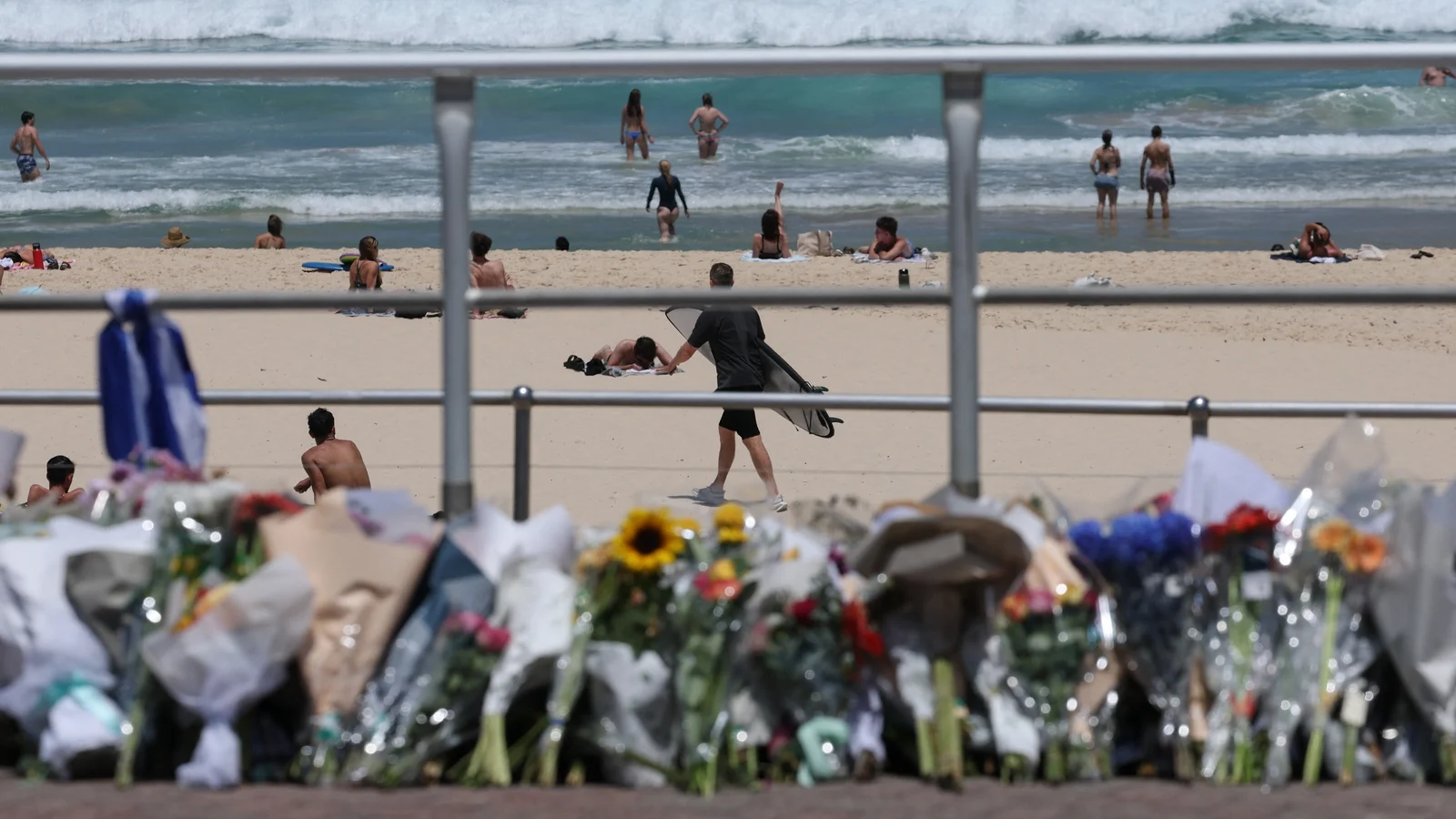
The surf still rolled in over Bondi’s honeyed sand as if nothing had happened, but the shoreline felt different — raw with memory, flecked with candles, and stitched with conversations that would not settle into easy answers.
On a warm evening in December, a Hanukkah gathering at Sydney’s most famous beach became the point at which private grief and public urgency collided. Fifteen people were killed; a city and nation were shaken awake. In the weeks that followed, lawmakers in Canberra moved with unusual speed, voting through a package of laws designed to do two things at once: clamp down on hate, and take dangerous guns out of circulation.
“We’re taking action on both — tackling anti‑Semitism, tackling hate, and getting dangerous guns off our streets,” Prime Minister Anthony Albanese told parliament, summing up a response that many called necessary, and some called rushed.
What changed: the law on the books
The reforms come in two strands: tougher hate‑speech provisions and tougher firearms controls. Parliament debated the bills separately, but the logic was the same — that weapons and words can feed one another until violence becomes inevitable.
The new hate‑speech law raises penalties for those who incite violence, spread radicalising material, or recruit followers — particularly where adults target children or where religious leaders use platforms to push extremist doctrine. It creates a legal framework to list and proscribe organisations judged to be hate groups, and it arms border officials with clearer grounds to deny or cancel visas where authorities suspect individuals of espousing racial or religious hatred.
On guns, Canberra has announced a national buyback scheme, tighter import controls, and a beefing up of background checks. Intelligence agencies will have a formal role in assessments for firearm permits, an intervention planners say could have prevented earlier tragedies.
Official figures provided by the government were stark and difficult to ignore: roughly 4.1 million firearms are now estimated to be in Australian hands — a higher total than in 1996, the year of the Port Arthur massacre that prompted the nation’s most famous gun reforms and buyback. Back then, 35 people were killed. The memory of that reform — and its political aftertaste — loomed large in debates this month.
Inside the debate: urgency and caution
Not everyone is at ease with the speed of change. Senator Larissa Waters, leader of the Greens in the Senate, warned that some provisions could have “massive unintended consequences,” arguing that protections should be extended to groups targeted for sexual orientation or disability, and that the laws must not hollow out free expression in the name of safety.
Security experts, community leaders and ordinary Australians offered a chorus of concern and resolve. “We need laws that reach the radicalisers who whisper into the ears of the vulnerable,” said Dr. Priya Raman, a counter‑extremism scholar based in Sydney. “But we must also be very precise. Overbroad definitions will play into the hands of those who want to claim persecution when they are in fact promoting violence.”
From a cafe near the beach, Rachel Cohen, who belongs to Bondi’s small Jewish community, said simply: “We laughed and lit menorah candles on the sand here. Now every flame feels like a small iron rule in a larger reckoning. Laws won’t bring them back, but they might mean we don’t have to bury our young again.”
Questions about intelligence, and what went wrong
Compounding public grief are hard questions about whether police, security and border agencies could — or should — have acted sooner. The younger suspect in the attack, 24‑year‑old Naveed Akram, was reportedly flagged by intelligence services as far back as 2019. Authorities decided he posed no imminent threat at the time; he remains in custody and is charged with terrorism and multiple murders.
“These are the most painful post‑incident conversations,” said a former senior police officer who asked not to be named. “You have tens of thousands of leads, limited resources. But when a flagged person resurfaces in this way, every failure feels personal.”
There are structural questions, too: how intelligence is shared across state and federal lines, how social media surveillance tools are used, and how mental health and community outreach intersect with security work. The new laws aim to weld better cooperation across those lines — but repair is not the same as restoration.
On the sand: an everyday ritual becomes memorial
Walk along Bondi now and you see the ordinary woven into the extraordinary. Lifeguards patrol as ever; surfers paddle beyond the breakers. Yet at the northern end, near the rocks, people still leave flowers and small stacks of candles. A menorah set into the sand looks timeworn. Strangers stand quietly around it, trading stories about the dead: which songs they loved, which children they kept at arm’s length at parties, which were generous with their time. Grief here is granular—one dish, one joke, one lost voice.
“We used to have little festivals, fish and chips and a few candles,” said Ahmed, a shopkeeper whose stall sells sunglasses and toasted sandwiches. “Now every Hanukkah will be different. Our kids ask: is it safe? You don’t want to promise them certainty when you feel fragile yourself.”
Wider currents: what this moment tells the world
This is not merely an Australian tale. Many democracies are grappling with the uneasy partnership between hate speech and easy access to arms, with online ecosystems that radicalise quickly, and with fractured social cohesion where some communities feel less protected than others.
Across Europe and North America, antisemitic incidents recorded by community monitors have surged in recent years, driven by a mix of geopolitical tensions, conspiracy narratives, and the amplification power of social platforms. The Bondi attack is both a local wound and a symptom of a global shift: communities worldwide are asking how to protect pluralism without suffocating legitimate dissent.
Ask yourself: when a society chooses security, what does it pay for in freedom? When it chooses freedom, what risks does it accept? There is no single answer; the policy choices Australia has just made are an experiment in balance, and its consequences will be studied far beyond the continent.
What comes next
Implementation will be the test. Laws on paper feel potent — but their power depends on careful, accountable enforcement: who gets listed as a prohibited group, how intelligence assessments are weighed in firearms approvals, and how communities are supported to heal without feeling wrapped in state surveillance.
“Legislation is a start,” says Dr. Raman, “but you also need investment: community outreach, mental health services, education programs that teach media literacy and empathy. The other half of prevention isn’t more police; it’s more civic strength.”
For now, Bondi’s people keep gathering at the water’s edge. They light candles that sputter in the sea breeze, exchange recipes for latkes, compare notes on the children’s schools. They ask questions out loud, in the way only towns in mourning can do: Who will hold us? Who will listen? Who will remember the names of those taken?
Australia has voted for new laws. The country has also accepted that laws alone cannot rebuild trust or soothe the small, intimate losses of a community on the sand. The work ahead is legislative, yes — but also human, patient, and slow. It will require watching, hearing, and, most of all, staying.