Morning leaflets, sudden departures: Life again upended in southern Gaza
At dawn, the paper descended like a blizzard—thin, white rectangles drifting down into a settlement of tents and battered houses on the outskirts of Bani Suhaila, east of Khan Younis.
For families already squeezed into a shrinking patch of Gaza, the leaflets were both a message and a summons: “Urgent message. The area is under IDF control. You must evacuate immediately,” read Arabic, Hebrew and English lines that fluttered across the canvas of makeshift roofs.
“We woke to the sound of people crying,” a woman who asked to be called Fatima said, clutching a plastic bag of clothes as she prepared to move. “My son asked if the war had started again. I had no answer for him.”
What happened — the immediate facts
On Monday, Israeli forces dropped leaflets over the Al-Reqeb neighbourhood in Bani Suhaila, telling dozens of Palestinian families to leave their homes. Residents and officials from Hamas described the move as the first forced evacuation orders since the U.S.-brokered ceasefire in October.
The Israeli military confirmed the leaflet drops but framed them differently, saying they were intended to warn civilians against crossing a demarcation line and to prevent people from approaching troops. The army denied plans to forcibly displace Palestinians from the area.
Who is affected
Local residents said the notices affected at least 70 families living in tents and partially damaged homes. Ismail Al-Thawabta, director of the Hamas-run Gaza government media office, told reporters that Israeli forces have expanded zones under their control east of Khan Younis several times since the ceasefire, displacing thousands.
“Since the truce, the expansion has forced at least 9,000 people to move repeatedly,” Al-Thawabta said. “This latest order impacts roughly 3,000 people and deepens a humanitarian crisis already at breaking point.”
The human geography of a trapped population
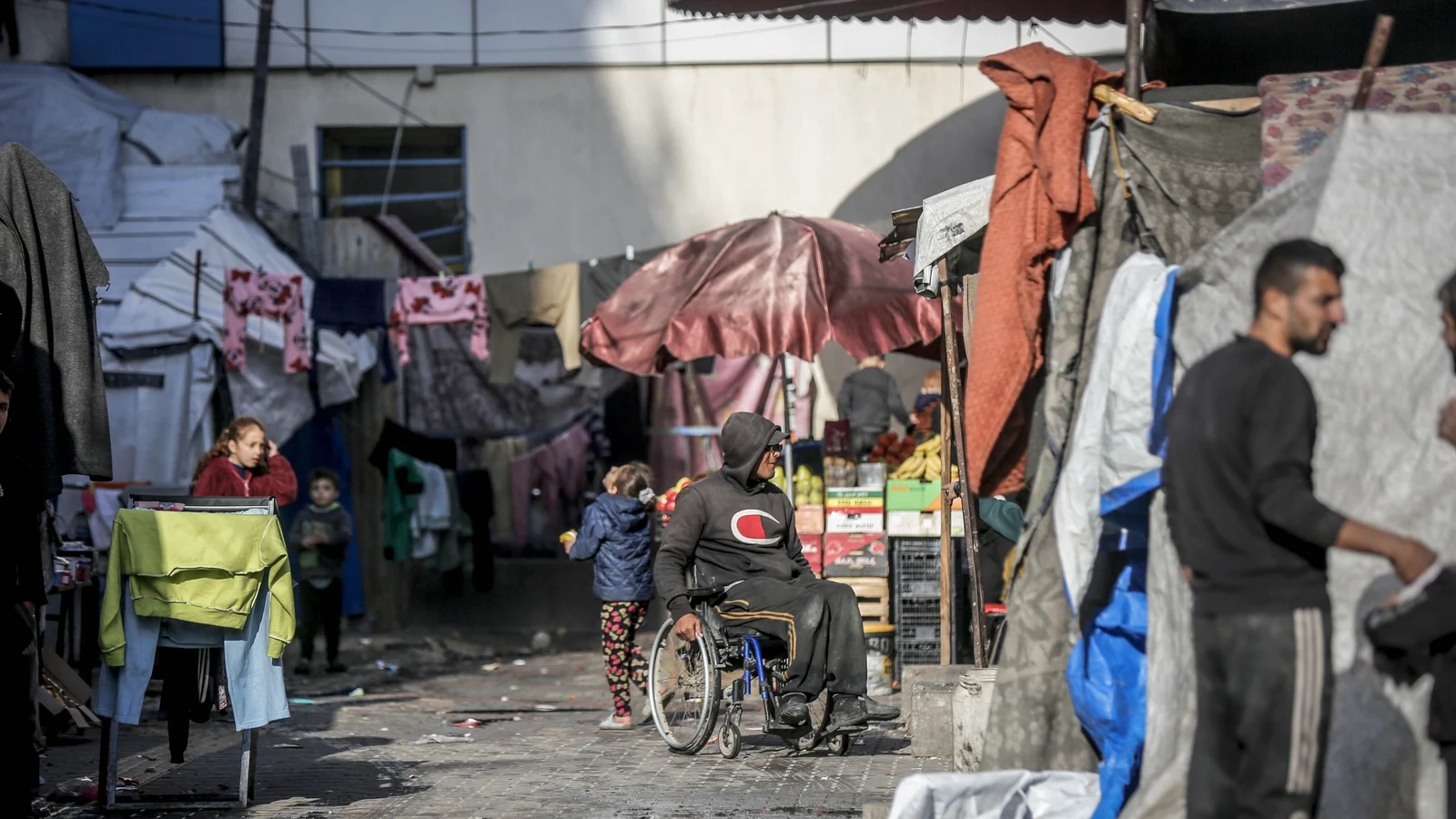
The numbers make the predicament stark. Gaza is home to more than 2 million people, and since hostilities paused in October, most residents have been corralled into roughly a third of the territory—clusters of tents, school compounds and damaged high-rises where families try to rebuild a daily life under the watch of local administrators and aid groups.
For many, “home” is now a location defined more by the next distribution of food and water than by walls and memories. The repeated displacements of 2023 left people exhausted, gardens turned to dust, and possessions reduced to what one can carry in arms.
“You cannot keep uprooting people and expect them to recover,” said Leila Mansour, a humanitarian worker who has coordinated relief convoys through southern Gaza. “Every move shreds a little more of their safety net—schools, social ties, income. The psychological toll is enormous.”
Leaflets, history and fear
Leaflets have a bitter history in this conflict. During the intense fighting before the ceasefire, Israeli aircraft often dropped written warnings over neighborhoods that were later struck, giving some families only hours or even minutes to flee. Residents say the latest flyers bring back those memories.
“When the paper falls, you don’t know if it’s an invitation or an alarm,” said Ahmed, a father of three who has moved multiple times since last year. “We learned to run. We learned to leave quickly. But where are we supposed to go now?”
Between the lines: the political and humanitarian context
The ceasefire that took effect in October halted the worst of the fighting but left many questions unresolved. Under its first phase, an exchange of hostages for Palestinian detainees took place and major offensive operations paused, yet control of land remained contested. Israel withdrew from less than half of Gaza, according to various assessments, and both sides accuse each other of violations.
Talks about future phases—disarmament of militant groups, further Israeli withdrawals and the establishment of an internationally-backed administration to rebuild Gaza—have made slow progress. The plan floated by the U.S. envisages a stepwise path toward reconstruction and governance, but the details and timelines remain contested.
Casualties and displacement — a sobering ledger
Since the ceasefire, local authorities in Gaza reported more than 460 Palestinians killed and three Israeli soldiers killed, numbers that remind us how fragile even a pause in hostilities can be. These figures sit against the broader tragedy that exploded in October 2023: Israeli tallies put the death toll from the initial Hamas-led attack at about 1,200 people, while Gaza’s health authorities, run by Hamas, report tens of thousands of Palestinian dead during the subsequent months of conflict.
- Population of Gaza: more than 2 million people
- Territory currently functioning as refuge for most residents: roughly one-third of Gaza
- Reported displacement in eastern Khan Younis since ceasefire (Hamas figure): at least 9,000
- New evacuations affecting: approximately 3,000 people
Voices on the ground and the wider implications
An Israeli military spokesman told a local correspondent, “Our operations are focused on securing our forces and preventing infiltrations across the agreed line. Warnings are issued when necessary.” That statement, measured and procedural, contrasts sharply with the frantic scenes in the streets where children clutch blankets and neighbors share food.
A UN aid official, speaking on condition of anonymity, warned of mounting pressures: “Shelter space is finite. When one camp is asked to move, ten more families scramble to find room. It creates a chain reaction that undermines everything relief organizations are trying to do.”
Is this simply the latest episode in a localized tug-of-war over territory? Or does it point to a larger crisis in how modern conflicts treat civilians—especially those already crowded into densely populated urban environments?
Local color: everyday resilience in small acts
Even amid the upheaval, life persists in small, stubborn ways. A man named Youssef grilled sardines over a shared fire, offering them to neighbors who had hurriedly packed. A woman painted eye-catching patterns on a child’s shirt to cheer him up. The local mosque’s minaret still calls the faithful to prayer, a sound that for many anchors them to a sense of normalcy while everything else is unmoored.
“We are used to loss, but not to losing hope,” said an elderly neighbor, who declined to give his name. “We tell each other: one day, this will be a story we survived.”
Looking outward: what this tells the world
The scene in Bani Suhaila is not simply a local incident; it refracts larger questions about ceasefires, civilian protection, and the mechanics of rebuilding after urban conflict. How do you design a ceasefire that is resilient to small escalations? Whose job is it to ensure humanitarian corridors remain open? And what obligations do occupying and defending forces have to prevent repeated displacement?
For readers far from Gaza, consider this: millions globally live in similar limbo—displaced by conflict, climate, or economic collapse. The questions raised here are not unique to one place; they reflect the modern challenge of safeguarding human dignity amid geopolitical turbulence.
After the leaflets
By evening, many families had moved again, carrying what little they could. Some went to relatives, others to crowded shelters. Aid groups scrambled to register the new arrivals, reroute supplies, and assess needs. The numbers will shift; the names will multiply. The leaflets, though ephemeral, made a permanent mark.
What will happen next depends on negotiations, military decisions, and the stubborn, intimate acts of everyday people trying to keep their world together. As the region waits for the next phase of the ceasefire to be negotiated, these families wait too—suspended between a paper warning and the fragile hope of a safe home.
Where do you think responsibility lies when civilians are given 48 hours—or less—to move from a place they can barely call home? How should the world respond when pauses in war become the norm, but peace remains out of reach?