A Rift Between Mountains: Davos, Diplomacy and the Echoes of War
The Swiss air at Davos is thin and bright this week — the kind that sharpens small talk into proclamations. Jackets zip tighter against a January wind, coffee steams in insulated cups, and the usual whirl of ministers, billionaires and think‑tankers threads through glassed conference halls. But amid the well-polished rhetoric about markets and innovation, one conversation kept slipping back into the rawest of realities: a war just a few time zones to the east that refuses to be sidelined.
Onstage, an American leader, blunt and theatrical by turns, suggested that the path to peace in Ukraine was close — if only both sides were willing. He said, offhand, that it would be “stupid” not to reach a deal. The remark landed like a pebble in a pond: an instant ripple that stirred reporters, roomfuls of delegates, and — crucially — the Kyiv government, which said the Ukrainian president was hundreds of miles away, dealing with blackouts and bitter cold.
“There is a disconnect between what’s said in Davos and what’s happening in Kyiv,” said Marta Olexiy, a political analyst in Lviv. “When leaders throw out big, easy lines about peace, it sounds humane. But the people digging their cars out of snow in the dark want to know who will fix the boilers.”
Words vs. Whereabouts: The Confusion at Davos
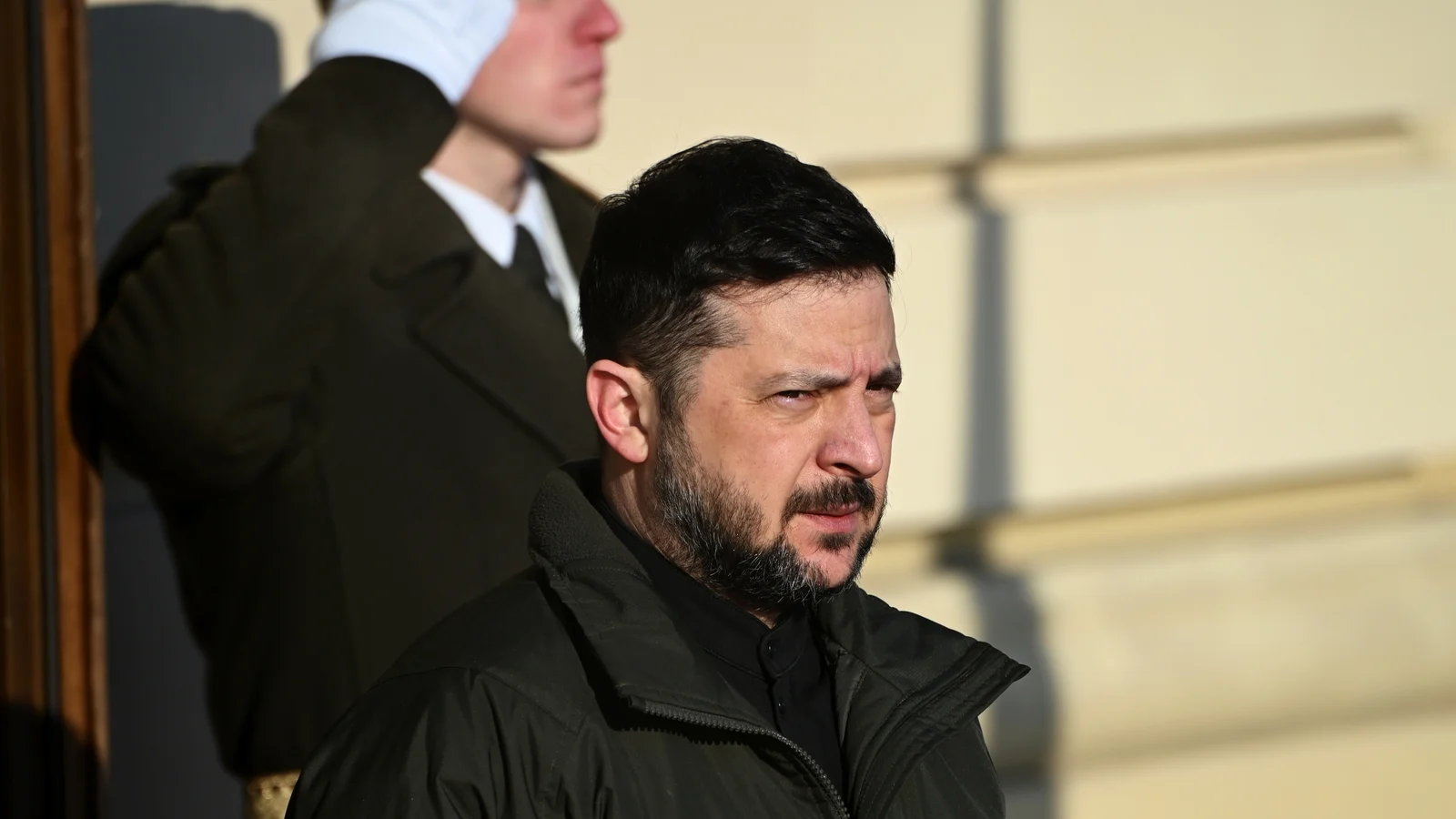
The exchange that gripped headlines began with a claim on stage that the Ukrainian president might be in the audience at the World Economic Forum. Kyiv’s team was quick to respond — the president was in the capital, they said, coordinating emergency response after recent strikes left much of the city without power and heat. A presidential adviser told journalists flatly: “The president is in Kyiv.”
In the lull between podiums and coffee breaks, reporters chased confirmation. A follow‑up from the U.S. side shifted the timing: the meeting, the U.S. leader said later, would happen the next day. The shuffle — a confident claim, then a correction — exposed the awkward choreography of big‑stage diplomacy where announcements can outrun reality.
“Davos is a theatre,” a former ambassador and regular at the forum observed. “Speeches are often written for cameras and donors, not necessarily for the people whose lives are on the line. That’s not to say the words don’t matter — they do — but timing matters, and accuracy matters even more.”
Kyiv in Winter: Torches in the Dark
Back in Kyiv, the human texture of the story was unmistakable. Temperatures were below freezing. Ukrainian officials reported thousands of apartment blocks without heating and electricity after recent strikes — an immediate humanitarian concern layered on top of the broader geopolitical quarrel. Local volunteers set up warming centers in school gyms, and neighbors hauled space heaters into stairwells.
“We lined up for blankets at the community center like it was 1941,” said Oksana, a nurse who lives on the city’s west side. “The politicians can talk about ‘deals’ in Davos, but for my neighbors, the deal today is staying warm.”
Those domestic realities explain Kyiv’s caution. Negotiations under bombardment are different from treaty talks in warm rooms; they are urgent, improvisational, and often painfully constrained by the immediate needs of civilians. That’s a truth that no stage presence can make vanish.
Numbers That Matter
Since Russia’s full‑scale invasion in February 2022, the conflict has reshaped security calculations across Europe and beyond. Millions have been displaced; cities have been scarred by shelling and strikes; civilian casualty figures are contested between sources but run into the tens of thousands. NATO member states have been urged to meet collective defense spending targets — conventionally set at 2% of GDP — and several nations have increased their defense budgets in recent years.
And yet, the arithmetic of diplomacy is not solely fiscal. It is moral and human. Every statistic represents a family’s winter, a school’s shuttered windows, a hospital running on generators. That is the frame Kyiv says it cannot lose.
Voices from the Slope: Reactions and Realities
In Davos’s networking corridors, reactions were predictably varied. A hedge fund director shrugged. “If there’s even a sliver of a path to peace, we must look at it,” she said. A defense analyst, whose office overlooks a map-heavy wall, sounded a different note. “Deals without security guarantees are brittle. Peace has to be durable. That takes time, not soundbites.”
Meanwhile, a Ukrainian expatriate who flew in for a roundtable described a chilling cognitive dissonance. “I walk past panels on AI and green finance, and then I see footage of apartments without heat,” he said. “It’s like two parallel Davoses: one talking about the future, the other living in a present where every day is about survival.”
What’s at Stake — Beyond the Headlines
There are a handful of broader conversations that this episode at Davos folded into: the role of the United States in distant conflicts, the endurance and purpose of NATO, and the global community’s appetite for mediation when trust is thin. Some leaders at the forum voiced fatigue with the endless complexity of modern conflict; others argued that retreat is not an option when authoritarian aggression threatens the rules that govern sovereign borders.
“If we’re serious about a rules‑based order, we don’t get to pick which violations matter,” said an academic who studies international institutions. “When big powers weigh in casually on a peace process, they should do so with clarity and a plan that accounts for consequences.”
Questions for the Reader
So what should we expect? Should the heat of Davos — the deals discussed over dinners and in hallways — be the arena where peace is brokered? Or does peacemaking require, instead, the slow, painstaking work of reconstruction, accountability, and guarantees that touch the lives of those who have lost homes, heat and safety?
When a world leader declares that peace is within reach, do we cheer the sentiment and risk complacency, or do we ask for a plan, for verification, for the human safeguards that make agreements real? If you were in the position of the people of Kyiv tonight, what would you demand from negotiators who speak on your behalf in faraway mountain conference rooms?
After the Applause
By the time Davos’ fancy lighting dims and private jets line up on the tarmac, what safeguards will have been put in place for a Ukraine still counting the cost of winter? The spectacle of international forums can produce hopeful headlines. But without the painstaking, and sometimes tedious, work of logistics — generators, repairs, pipelines of humanitarian aid, and clear security guarantees — words risk becoming theater rather than treaty.
Out here, among the pine and the snow, it’s easy to forget that diplomacy’s consequences are measured in wet mittens, warmed hospital wards, and the number of children who will sleep through the night. If a deal is truly “reasonably close,” as one official put it in a private aside, then let it be built on the kind of concrete commitments that people warming their hands over donated kettles in Kyiv can rely on.
Because in the end, a peace that skips the hard parts — the repairs, the guarantees, the human care — is just another headline, and headlines don’t keep the lights on.