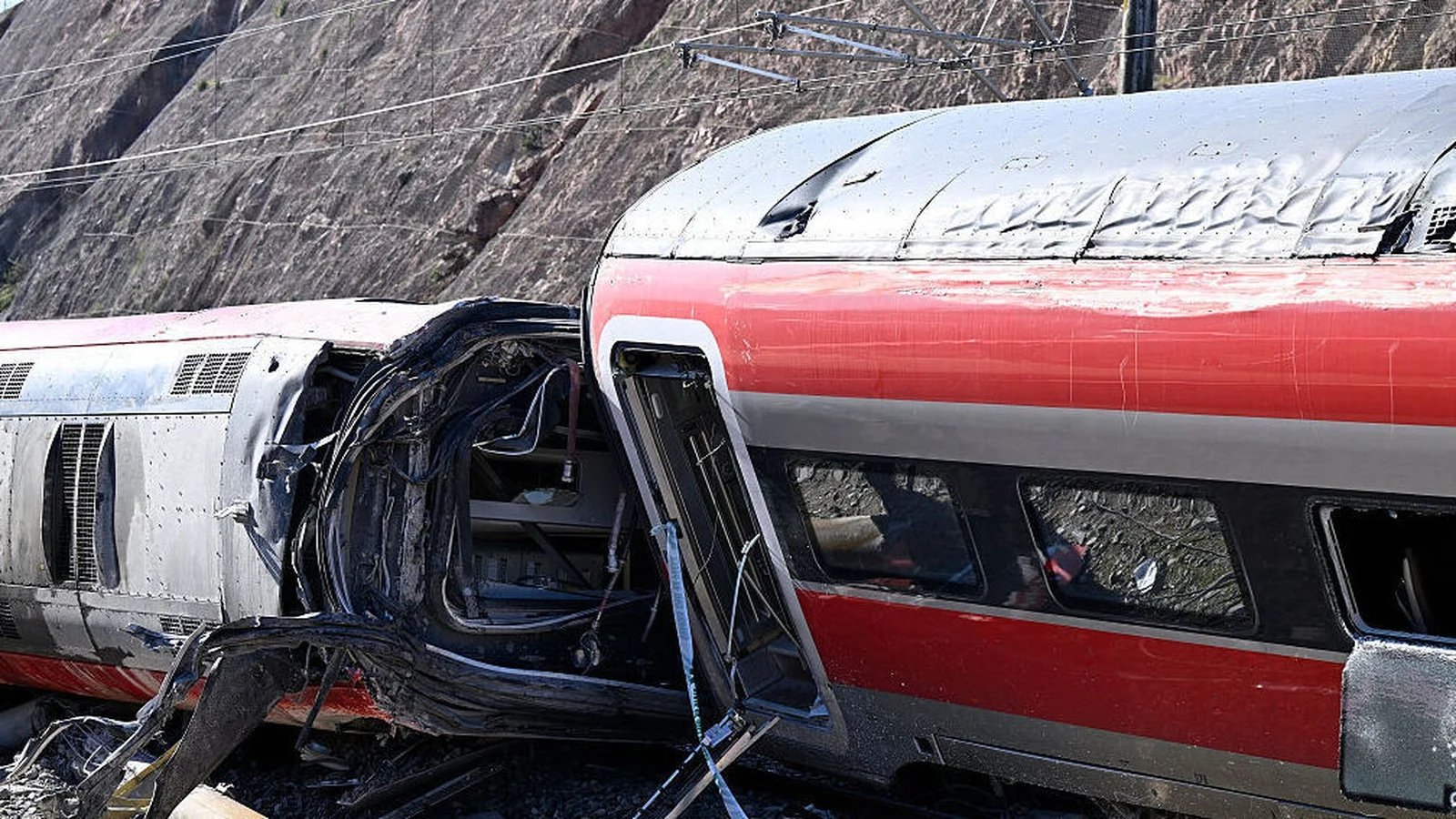
A country stunned: the human cost behind the headlines
The sun set over whitewashed Andalusian hills as families lit candles and placed them on kitchen tables, on village church steps, at the corners of narrow streets where neighbors lingered and whispered. Spain, a land of festivals and crowded summer trains, found itself holding its breath: two more bodies pulled from the twisted metal of a high-speed train have pushed the official death toll to 45.
It is hard to make sense of numbers when grief is local and immediate. For the people of Adamuz, a town best known for its dusty olive groves and Sunday markets, the list of names is not a statistic but a row of chairs kept empty at funerals. “He used to joke that trains were as much a part of Spanish life as siestas,” said María López, who grew up with one of the victims. “Now we can’t sit through the silence.”
What happened on the rails?
The catastrophe unfolded on a stretch of renovated, straight track in southern Andalusia, where a modern Iryo service derailed and crossed into the path of a Renfe high-speed train. Emergency teams spent days combing through wreckage, and forensic coordinators—tasked with a grim and delicate job—confirmed the final recoveries this week.
More than 120 people were hurt in the crash, official coordinators say; among the 45 dead, most were Spanish citizens, with three foreign victims identified as women from Morocco, Russia and Germany. The scale of the disaster—Spain’s deadliest rail accident in over a decade—has reopened uncomfortable questions about how such tragedies occur on tracks deemed safe and modern.
Two separate incidents, one shaken system
As the nation mourned, other incidents compounded the sense of crisis. Near Cartagena in Murcia, a passing commuter train was struck by a crane arm that swung into its windows—an accident that left six people with minor injuries. In Catalonia, a commuter service outside Barcelona collided with a retaining wall that collapsed onto the tracks after heavy rain; one train driver was killed and 37 passengers were injured.
These back-to-back events prompted the suspension of Barcelona’s Rodalies commuter network for safety checks, leaving hundreds of thousands of daily users stranded and tentative riders asking: can we trust our trains again?
Voices from the ground: grief, anger, and urgent questions
At a packed mass in honor of David Cordón, a former international beach football player killed in the crash, sorrow turned sharply to demands for answers. “David loved life. He would never have imagined ending like this,” said Ana Ruiz, a longtime friend. “We need to know why. We need to know who is responsible.”
Across towns and cities, the mood is less ceremonial and more insistent. “People are scared,” said José Navarro, a commuter from Valencia who rides high-speed lines weekly. “It’s not just about this train. It’s about whether maintenance, weather preparedness and human oversight are up to scratch.”
From the union side, Diego Martín Fernández, secretary general of the Semaf drivers’ union, has been blunt: “To restore public confidence, we need guarantees. The safety checks must be thorough and transparent—procedures cannot be bypassed in the name of speed or schedules.” Semaf has called a national strike for 9–11 February, citing repeated safety failings. The union says the workforce won’t return to stations without firm commitments.
Officials respond—but questions remain
Transport Minister Óscar Puente, speaking in Madrid, insisted he would negotiate with unions to avoid the strike and emphasized that the recent tragedies are not linked. “We must be careful not to conflate unrelated events,” he said, while also promising full investigative resources. “We owe the families the truth.”
Investigators describe the Andalusian collision as “extremely strange”—a loaded phrase when you consider the stretch involved had been recently renewed and was straight and level. That description has deepened suspicion and frustrated relatives who crave clarity and accountability.
How big is Spain’s high-speed system?
Spain is proud of its rail network: it operates one of the world’s largest high-speed systems, with over 3,000 kilometers of dedicated high-speed lines connecting Madrid to cities across the peninsula. Millions of travelers rely on those routes for work, tourism and family. That scale makes systemic safety questions especially consequential, not only for Spaniards but for the many international visitors who use trains to explore the country.
Beyond the tracks: climate, maintenance and politics
Analysts point to a tangle of factors that can conspire to create disasters: aging infrastructure kept in motion by tight budgets, extreme weather that strains drainage and embankments, and the human errors that can arise in rushed operational cultures. Heavy rains were linked to the Barcelona-area incident; elsewhere, landslips and flooding have punctuated a wetter and more volatile climate pattern across southern Europe.
“Rail systems elsewhere have faced similar pressures,” said Dr. Elena Martínez, a transport safety expert at a Madrid university. “What matters is resilience—regular, documented maintenance; clear, respected safety procedures; and independent oversight that isn’t swayed by the need to meet timetables or political promises.”
Public faith in rail safety is a fragile commodity. In the immediate aftermath, many regular commuters reported switching to cars or buses, a short-term response with long-term consequences: more road congestion, higher emissions, and greater inequality for those without alternate transport options.
What happens next?
The investigative machinery is in motion: forensic teams, rail regulators and independent experts will examine black boxes, signaling records and maintenance logs. Families seek not only explanations but also systemic change so that other lives aren’t lost needlessly. Parliament is likely to demand hearings; unions will press for binding guarantees; and towns like Adamuz will measure each news update against the names of friends and neighbors they have already buried.
As you read this, ask yourself: what level of risk is acceptable in public transport? How much should speed and efficiency be weighed against maintenance and oversight? These are not just technical questions but civic choices about what we value as a society.
Small rituals, lasting questions
In the days following the crash, people left flowers at stations, candles along platforms, messages on benches. These gestures are small and human—an attempt to make order out of chaos, to anchor memory within place. They are also a reminder that infrastructure is more than concrete and steel; it is the web of routines and relationships that make daily life possible.
Spain will ultimately tally lessons learned and, we hope, implement them. Until then, the country mourns and waits, and relatives continue to search for names that might still be missing from lists. For those who board trains tomorrow, the landscape of travel feels different: quieter, more solemn, a little more uncertain. And for a nation that built one of the globe’s proudest rail systems, the urgent task is to ensure that speed and safety travel together—always.
- Current official death toll: 45
- Injured: more than 120
- Spain’s high-speed network: over 3,000 km, one of the world’s largest
- Rodalies commuter strike called by Semaf: 9–11 February