A hush in the desert: diplomats, doubts and the stubborn question of land
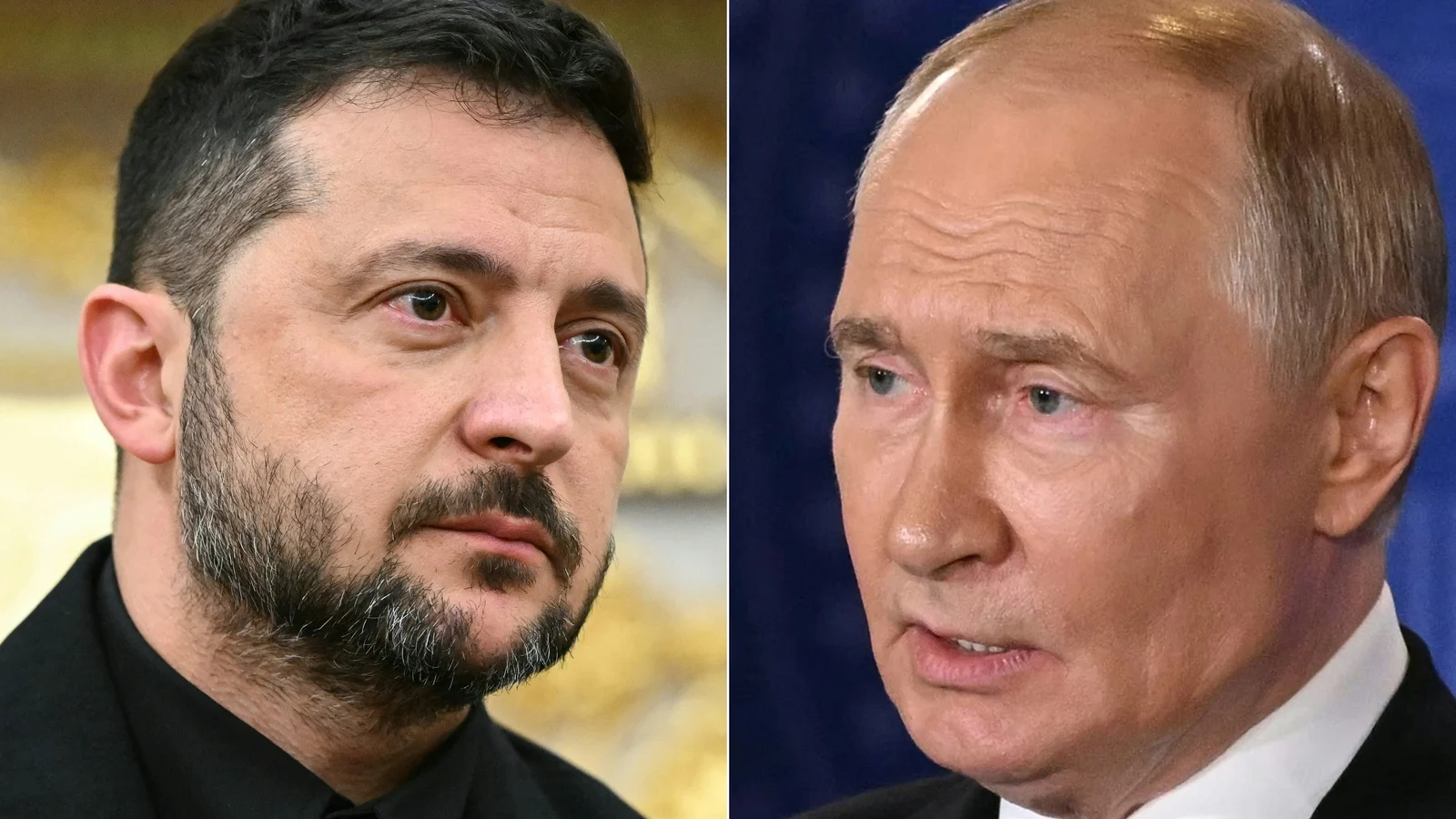
In the glass-and-marble calm of Abu Dhabi, beneath a sky that seemed indifferent to history’s urgencies, an unusual quartet of delegations converged. For the first time in nearly four years of war, Ukrainian and Russian representatives sat at the same table — not shadowed by intermediaries but facing a U.S.-brokered framework that promises, and threatens, so much.
It was the kind of diplomatic moment that television loves: suited figures arriving in motorcades, terse press statements, a clutch of aides with folders that might contain maps, timelines or ultimatums. Yet behind the choreography lay the blunt, immovable issue that has obstructed every ceasefire, derailed every draft and hardened hearts across two nations: territory.
Why Donbas still divides everything
Ask anyone paying attention and they will tell you the same thing in different words — conversations about security guarantees, weapons withdrawal, or economic aid all come to rest at the edge of a map. Who holds which towns and who decides the fate of people living under occupation are the questions that refuse to be sidestepped.
“Territory is not a bargaining chip for us,” Volodymyr Zelensky told reporters before boarding the flight to Abu Dhabi, stressing that any settlement would need to ensure Ukraine’s ability to deter future aggression. “War doesn’t end if borders are ambiguous.”
From the Russian side the message was equally blunt, if not more maximalist. Kremlin sources — speaking to journalists in Moscow — reiterated that Kyiv’s forces would need to withdraw from parts of eastern Ukraine known collectively as the Donbas. “This is a very important condition,” a Kremlin aide said in press remarks that emphasized their red line.
What’s at stake on the ground
The Donbas is not an abstraction. It is a region of ruined factories, small towns with scarred façades, and people who have lived for months and years under the whiplash of shifting lines of control. Since Russia’s full-scale invasion in February 2022, areas of eastern Ukraine have been occupied, contested and militarized — a patchwork that complicates any neat political solution.
Put simply: to concede territory is to concede the lives and futures of those who live there, and neither side can make that concession without risking political implosion at home. Kyiv fears that ceding ground would reward force and invite further assaults. Moscow has framed territorial control as the proof of victory.
Faces behind the headlines: voices from cities and villages
In a Kyiv neighborhood still smelling faintly of last winter’s smoke, Olena, a retired schoolteacher, pushed a wool scarf into place and said, “If we sign away my village, do we sign away my brother? My neighbors? What promise will keep them safe?”
Over in the Donbas, in a town whose name feels like a wound when uttered in Ukrainian households, a market vendor named Serhiy spoke quietly about exile and choice. “People want their roofs, their graves, their shops,” he said. “We have lived through sieges. We want no more marching orders from outsiders.”
These are the ordinary moral calculations that rarely make it into diplomatic briefs: a grandmother’s decision to return or not, a father’s worry about enlistment in a future conscript army, a teenager’s education interrupted for years. Negotiations that do not reckon with this human arithmetic will, history suggests, be brittle.
The American angle: a broker with clout and controversy
The United States, under the initiative pushed by political actors in Washington, has sought to nudge both capitals toward settlement. A small, highly visible delegation — including figures close to the U.S. president — flew into Moscow for late-night discussions and then headed to Abu Dhabi for the trilateral meeting.
“We are not here to impose a solution but to create one that holds,” a U.S. envoy told reporters. “That requires hard trade-offs and real guarantees, not slogans.” Whether the parties will accept those trade-offs is another matter.
Is this the right place for peace?
Abu Dhabi is an intentionally neutral-looking venue: luxurious hotels, tight security, a sense that time can be bought. But the desert setting cannot iron out the deep asymmetries between a nation fighting for survival and an aggressor that still wields greater firepower and strategic depth.
So what does “neutral” mean when one side controls land and lines and a significant portion of the combat power? This is a question analysts keep returning to.
Numbers that matter — and what they tell us
To understand the stakes, look at the labels beneath the headlines. As of mid-2024, millions of Ukrainians had been uprooted: millions across borders in Europe and millions displaced within their own country, according to UN and Ukrainian government estimates. Casualties — military and civilian — have reached into the tens of thousands. And the material toll? Critical infrastructure damaged across the east and south, with energy systems repeatedly targeted, plunging entire neighborhoods into cold during bitter winters.
In recent days, Russian strikes left many in Kyiv without heat or power. The city’s mayor reported that almost 2,000 apartment blocks were still struggling to bring warmth back to millions of residents in sub-zero conditions — figures that turned abstract strategy into frozen, shivering human need.
Is a deal possible — and at what price?
There are reasons for both skepticism and guarded hope. On one hand, diplomatic activity has accelerated, and negotiators are now, crucially, sitting in the same room. On the other, the gulf over territory is not simply negotiable ink on a paper: it is a crucible of national identity, memory and security. “Any agreement that papered over this without durable verification and enforcement would be dangerous,” said Dr. Marta Kovalenko, an international relations scholar. “Both sides need credible safeguards, and third-party verification is essential.”
What would those safeguards look like? International peacekeepers, phased withdrawals, referendums under neutral supervision — each carries its own logistical and political traps. Who would provide the guarantees? Who would police them? These follow-up questions are already making negotiators’ hairline fractures visible.
Looking beyond the map: why you should care
Wars redraw more than borders; they redraw global politics, economy and conscience. Energy markets wobble with every infrastructure strike. Refugee flows reshape cities across Europe. The rules of international order — norms about territorial sovereignty and the costs of aggression — are on trial.
And for the people living through this, the questions are painfully local. Will children return to school without bomb drills? Will pension payments arrive? Will families be able to keep the graves of loved ones accessible? These are the small metrics by which any “victory” will be judged.
What to watch next
- Whether the Abu Dhabi talks issue a concrete framework for verification and timelines.
- How both sides handle the question of referendums, resettlement and return of displaced people.
- Whether external guarantors can be summoned — and trusted — to enforce any agreement.
Final thoughts: hope, caution, and the texture of compromise
There is no clean exit from a war like this. Compromise will be messy; compromise will hurt. Yet sitting across from your adversary and speaking openly is a step that cannot be undone. “If peace is to come,” said one veteran diplomat who has spent decades in negotiation rooms, “it will be because someone learned how to translate pain into protection.”
So what do you think? Is it possible to design a deal that respects borders and protects people — or are we asking diplomacy to do the impossible? The answer will unfold in negotiations, in the cold nights of Kyiv, in the marketplaces of the Donbas, and in the minds of leaders who must choose between glory and the quiet, difficult work of ending a war.