When Davos Frost Met a Political Firestorm: The Strange Rise and Rapid Shrink of Trump’s ‘Board of Peace’
Snow dusted the alpine streets of Davos like a soft editing hand, and the World Economic Forum hummed with the usual blend of caffeine, optimism and guarded power-brokering. Then, in the space of a single day, a gesture meant to signal global leadership turned into a theatrical public spat—one that left diplomats, hotel concierges and baristas trading whispers over espresso about what “peace” really costs in today’s geopolitics.
A bold invitation, a sharper rebuke
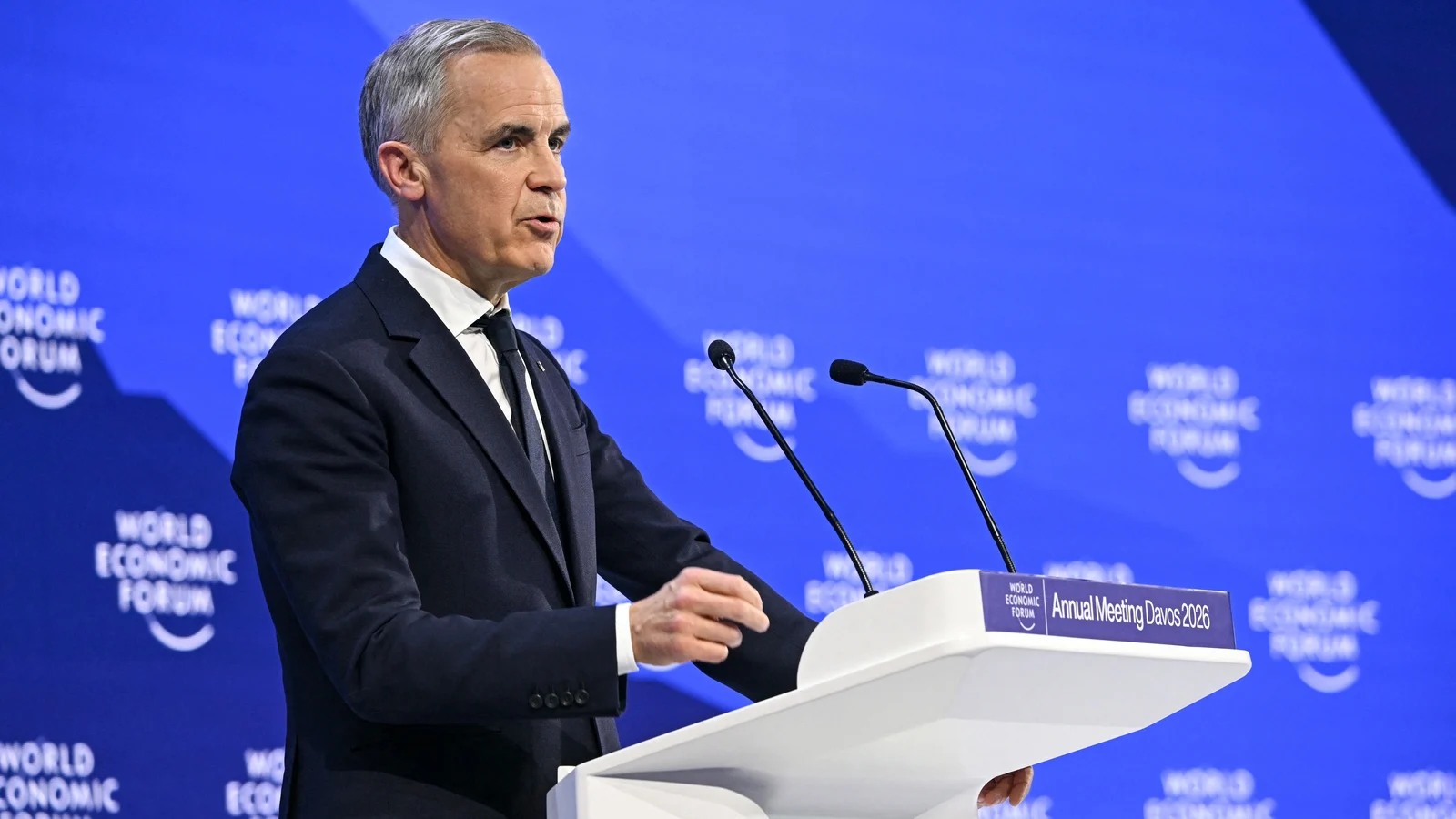
It began with an invitation. On paper, it was an offering of prestige: a seat at an initiative being billed as the “Board of Peace,” an assembly President Donald Trump framed as a new mechanism for conflict resolution. But the moment Canada’s leader, Mark Carney, used his Davos platform to denounce the weaponization of economic ties—tariffs held as leverage, trade used as geopolitical cudgel—the board’s brief warmth froze.
“Please let this Letter serve to represent that the Board of Peace is withdrawing its invitation to you,” Mr. Trump posted on his social channel, bluntly rescinding the offer in public view. It was a move equal parts policy and performance art—part Twitter-age diplomacy, part Davos showdown.
In the room where Carney spoke, the reaction was unmistakable: a rare, sustained standing ovation. His message—arguing that countries should not weaponize integration, and that middle powers can band together to resist coercion—struck a chord with delegates who have watched increasingly brittle global rules reshape commerce and security. “We cannot let economic ties become instruments of intimidation,” Carney told the Forum. “Canada will show another way.”
Short, sharp words—and longer echoes
The exchange that followed was personal and pointed. Mr. Trump, in a Davos appearance, reminded listeners that Canada “lives because of the United States,” admonishing Carney to remember American generosity. Carney fired back on home soil: “Canada doesn’t live because of the United States. Canada thrives because we are Canadian.” The lines were short. The implications long.
“This is more than a spat,” said Dr. Aisha Rahman, an international law scholar who has studied alternative multilateral structures. “It’s a test of whether new institutions will reinforce the UN system—or begin to pull at its seams.”
For locals in Davos, the spectacle felt oddly cinematic. “You get used to seeing big people say big things here,” joked Lukas Meier, a waiter at a small café near the congress center. “But this time, everyone kept craning their necks. It was like watching a slow-motion collision.”
What is the Board—and who’s signing the cheque?
Behind the performative headlines lay concrete mechanics. Mr. Trump insisted that permanent members of the Board of Peace would be expected to contribute $1 billion each (roughly €850 million) in seed money. His stated ambition was large: a board capable, he said, of “doing pretty much whatever we want to do,” working in coordination with the United Nations.
The ambition brought scrutiny. The initiative secured a form of endorsement through a UN Security Council resolution tied to a Gaza peace framework, but the U.N. spokesperson later clarified that any U.N. engagement would be circumscribed by that narrow remit.
Already, a partial roster of member states began to emerge: nations like Argentina, Bahrain, Morocco, Pakistan and Turkey signed on. But prominent Western allies—Britain, France and Italy among them—appeared hesitant, declining at least for the moment to participate. The European Union publicly voiced “serious doubts” about parts of the board’s charter, questioning its scope, governance and congruity with the U.N. Charter.
- Permanent-member contribution: $1 billion (~€850 million)
- Initial listed participants: Argentina, Bahrain, Morocco, Pakistan, Turkey
- UN member states: 193 (for context on the scale of global representation)
Why some countries balked
For several European capitals, the problem wasn’t the idea of peace—who could oppose that?—but the architecture. “We can’t join a structure that seeks to mimic or undermine the UN Security Council,” said Helen McEntee, Ireland’s Minister for Foreign Affairs and Trade, echoing a broader worry that the board’s remit might expand beyond Gaza to areas traditionally governed by the U.N.
Spanish Prime Minister Pedro Sánchez told reporters after the summit that Spain had “declined” the invitation. “Peace must be pursued without creating parallel institutions that distort international law,” he added.
Those objections hinged on deeper anxieties about legitimacy: who gets to shape post-conflict reconstruction, who decides the rules, and how accountability will be ensured when enormous sums are pooled outside established global institutions.
Middle powers, middle ground—or a new playing field?
Carney’s broader argument—visible in his Davos address and the domestic speech he gave in Quebec—was that middle powers can demonstrate governance alternatives. “Canada can’t solve all the world’s problems, but we can show that another way is possible,” he told a domestic audience, asking his countrymen to look to democratic resilience and inclusive institutions.
His example resonated with a subset of states wary of being caught between great-power demands. For countries that recently diversified trade—Canada’s agreement with China was cited as an example—there’s a growing interest in crafting a foreign policy that neither bows to nor is swallowed by a single superpower’s influence.
“There’s a real, quiet coalition forming among countries that want multilateralism to be more than a slogan,” said Marta Delgado, a geopolitical analyst. “They’re focused on operationalizing cooperation in ways that are transparent and accountable—not ad hoc frameworks priced for the highest bidder.”
Practical questions, human costs
Beyond high-level mechanics, skeptics asked pointed, practical questions: How will funds be spent? Who will be the auditors? What happens to local voices in Gaza if an external board adopts a top-down reconstruction plan? Such worries matter not just to technocrats but to ordinary people whose lives depend on the mechanics of aid and governance.
“We want rebuilding that listens to us,” said Samir, a shop owner in a Gazan neighborhood now reduced to rubble. “Money is important, but who decides what stays and what goes matters even more.”
Why this matters to you—and the rest of the world
At its heart, the Davos episode is a microcosm of a larger balancing act playing out on the world stage: the friction between emergent power centers, the stress test of post-war reconstruction, and the question of whether new, private or semi-private institutions can deliver peace without weakening the public, multilateral frameworks that have held global order in place since 1945.
Do we accept new structures that promise speed and decisive funding at the cost of traditional checks and balances? Or do we double down on an imperfect but universal system meant to ensure equal footing for smaller states?
Those are not merely academic questions. They shape whether humanitarian funds reach hospitals, whether rebuilding respects local culture, whether displaced families can return home under fair governance. They shape trust.
As the snow in Davos melted into spring runoff, the spectacle—the rescinded invitation, the standing ovation, the resonant speeches—remained a reminder that geopolitics is equal parts policy and performance. What comes next depends on whether states choose tempers or treaties, theatrics or transparency.
What would you demand of any new global body entrusted with peace—and would you trust money and power concentrated in the hands of a few to deliver it? Think about it the next time headlines promise fast solutions to slow problems.