When Winter and Federal Power Collide: A City on Edge in Minneapolis
It was the kind of Minneapolis cold that scours the cheeks and turns conversations brief—air so crystalline that every breath feels like it could break. Yet in that brittle air, heat erupted: anger, fear, and a kind of urgent grief that has become all too familiar in this city recently.
Federal agents shot and killed a 37-year-old Minneapolis resident in a tense exchange that officials say involved a handgun and magazines. It was the second fatal shooting by federal agents within weeks, and it landed like a thunderclap on a community already raw from weeks of protests and confrontations over a stepped-up immigration enforcement operation sweeping through the northern state.
The Scene: Volatility and Questions
There are two stories playing out at once here: the official account, terse and technical, and the human one, full of faces, names, and a history of mistrust.
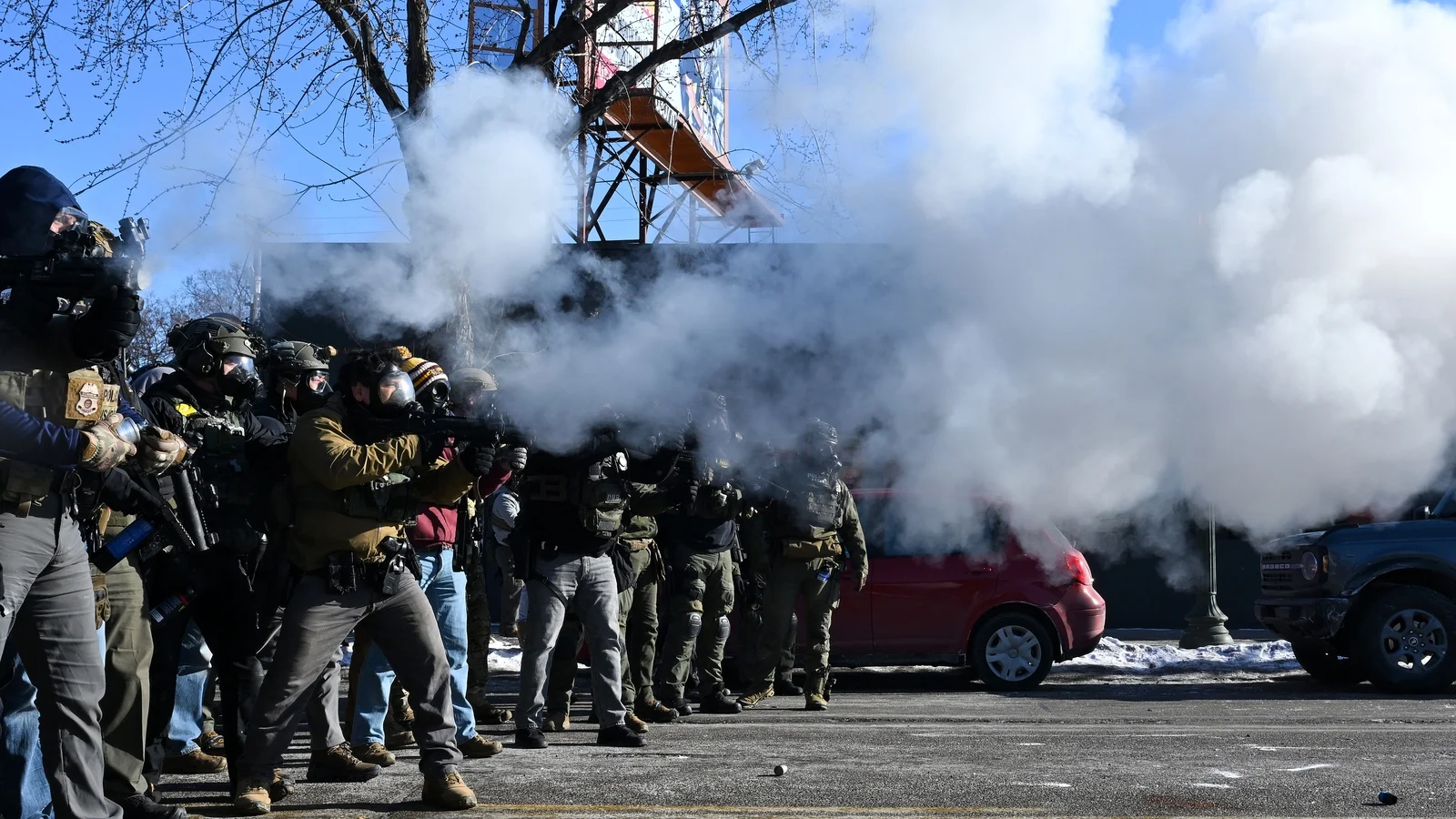
According to federal statements, Border Patrol agents fired “defensive shots” after a man approached them armed. Minneapolis police confirmed the man was a lawful gun owner, had no criminal record, and was believed to be a U.S. citizen. The department advised people to avoid the scene, calling it “volatile,” as investigators streamed in, sirens cutting through the snow.
But paper facts and the bruise of grief tell different truths for neighbors and activists. “We watched the footage as a community and felt our stomachs drop,” said Ana, a childcare worker who lives two blocks from where the shooting occurred. “You don’t expect to be afraid of federal agents down the street. Not here.”
A City Responds
Mayor Jacob Frey, visibly shaken, called for an immediate halt to the federal operation. “How many more residents, how many more Americans need to die or get badly hurt for this operation to end?” he asked at a press briefing, echoing the question that many in the city are now asking themselves late into the night.
Governor Tim Walz described the shooting as “horrific,” demanding that state authorities lead the investigation. “Minnesota has had it,” he declared on social media, his words capturing the deeper exhaustion across the state.
Democratic Senator Amy Klobuchar joined the chorus, urging federal immigration officers to leave. On the other side of the aisle, the president—briefed on the incident, according to the White House—accused local leaders of inflaming tensions; his social media posts framed the response as political performance rather than a cry for public safety.
On the Ground: Protests, Chilling Weather, and a City That Won’t Stay Silent
Less than 24 hours before the shooting, an estimated 50,000 people marched through Minneapolis in a protest that fused fury and bravery. Temperatures plunged to -29°C (-20°F) that day, but the crowd pressed on—scarves wrapped tight, breath visible like ghosts between shouts.
People marched for many reasons: to denounce the federal ICE and Border Patrol presence, to rally after what many called troubling incidents—detentions of U.S. citizens, children taken from classrooms, and the killing of a local resident—and to insist that Minneapolis’ values not be overwritten by a law-and-order surge they see as reckless.
Afterwards, the throng retreated indoors, filling the Target Center—its 20,000-seat arena more than half full as organizers moved the debate into a warmer, calmer space. Businesses across the city closed for the day, not out of convenience but out of concern; safety was the priority.
Voices from the Neighborhood
“We shut the shop because customers were at the demonstration,” said Omar, who runs a small grocery near Lake Street. His Somali-American community is one of the most visible and vocal in Minneapolis. “We can’t separate our safety from their safety. When ICE is pointed at our streets, everyone feels it.”
“This isn’t just political theater,” said Maya Ahmed, a civil-rights attorney who has worked with families affected by federal immigration operations. “When you bring a large, armed federal presence into communities without local collaboration, mistakes multiply. Oversight is essential.” Her voice is both weary and resolute—an echo of the larger debate about authority and accountability.
What the Numbers and the Broader Picture Tell Us
Across the United States, immigration enforcement has been a focal point of national politics. In recent years, border encounters and immigration-related arrests have surged into the hundreds of thousands annually, and federal agencies have periodically deployed personnel to interior locations for targeted operations.
Those deployments have consequences beyond statistics. They can change neighborhoods overnight, disrupting schools, workplaces, and the informal networks of trust that communities rely on. Minneapolis is not unique in this—but it is a sharp, vivid example of what happens when national policy becomes local reality.
- Protests: Tens of thousands marched in Minneapolis recently, despite extreme cold.
- Community impact: Major cultural institutions and small businesses closed in precaution.
- Political pressure: Local leaders demanded federal withdrawal and state-led investigations.
Culture, Memory, and the City’s Fabric
Minneapolis is a city of layered identities—Hmong bakeries, Somali markets, Native American gatherings, and a bustling arts scene anchored by institutions like the Minneapolis Institute of Art, which closed its doors for the day out of safety concerns. The city’s history of civic engagement runs deep; it’s a place where neighbors look out for one another, and where public grief has often sparked meaningful reform.
That history is part of why tonight feels different. When federal agents enter neighborhoods in force, they don’t just bring badges and radios; they bring a new dynamic into schools, into cul-de-sacs where children play in the snow, into the places where people have built lives. “You start watching your porch like it’s a courtroom,” a teacher named Luis told me. “It changes you.”
Looking Forward: Investigation and Questions
State leaders demanded that Minnesota authorities take charge of the probe into the shooting. The federal government says it will cooperate. Meanwhile, the city keeps breathing, but more shallowly. People gather, they grieve, they demand answers and safeguards. And they ask the bigger questions: What is the purpose of these operations? Who are they protecting, and who are they risking?
There is a global lesson here, one that resonates far beyond the Mississippi River’s bend: when national policy meets local communities, transparency and oversight are not optional. They are the scaffolding that keeps public trust from crumbling.
Questions for the Reader
What do we expect from the people who carry federal authority into our neighborhoods? How much power should be centralized for the sake of national policy, and how much should be held close to the communities affected by that power?
These are uncomfortable questions. They require us to weigh safety against sovereignty, justice against order, and statistics against human faces. Minneapolis is asking them now, in a winter that has made every sound sharp and every silence heavier.
As the investigation unfolds and the city waits, the real work will be building processes that prevent another agonizing headline. If you live somewhere where national policy lands in your backyard—literal or figurative—what protections do you want to see? And how do we, as citizens and neighbors, hold those in power to account?
For Minneapolis, the answer hangs in the cold air: it will require transparency, courage, and an insistence that human life and dignity are not collateral in a political project. The rest is for the city—and the country—to decide.