When a “Beautiful Piece of Ice” Became a Diplomatic Molotov
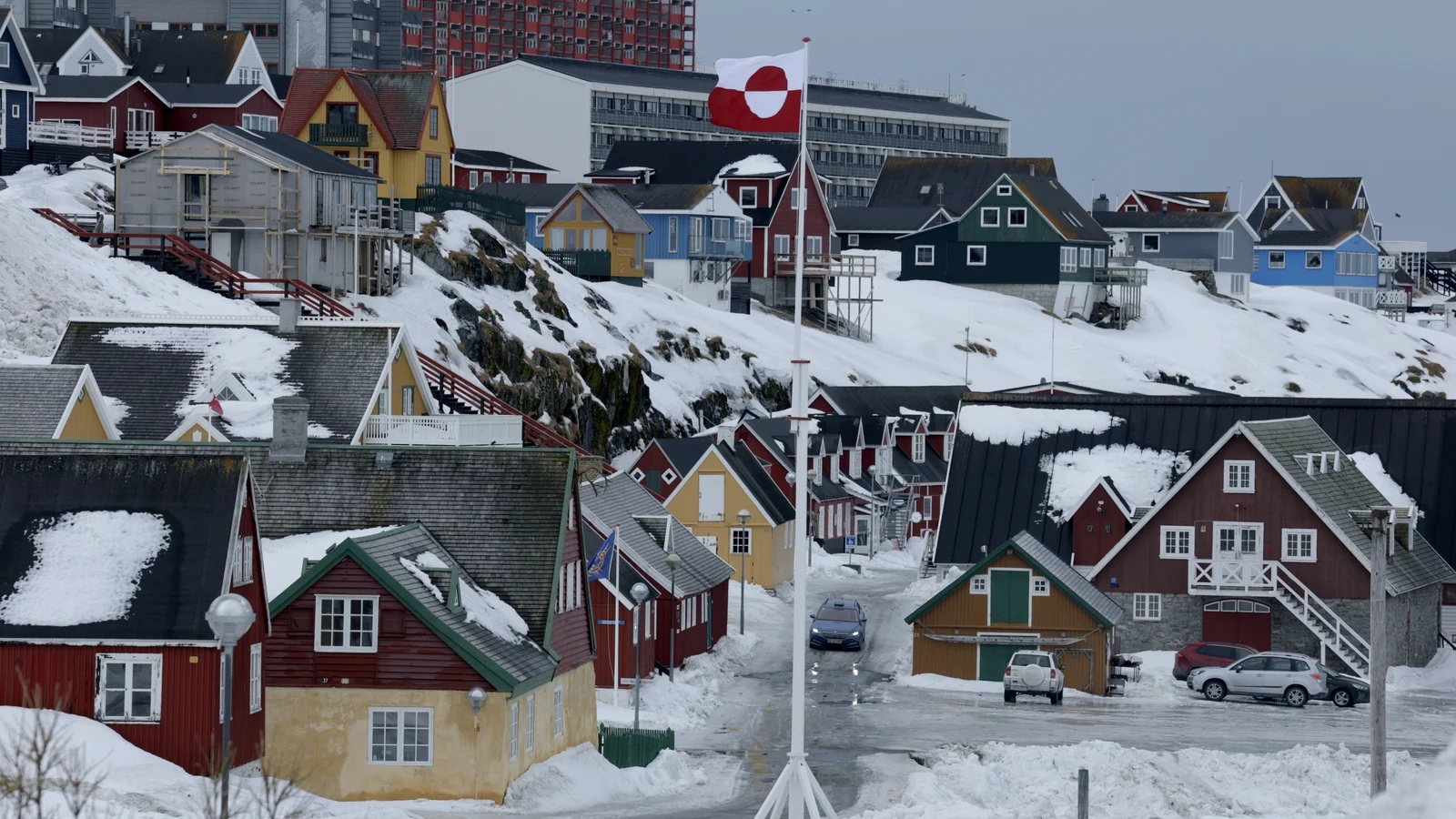
There is a particular light in Nuuk in late spring—a thin, pearly sun that makes the fjords glitter like shards of glass. Children skate on thawing inlets. Hunters mend their nets. In the cafés along the harbour, conversations drift from weather to politics the way tidewater drifts over stones: inevitable, shaping.
And then, like a sudden gale, a suggestion from halfway around the world swept through the town and the corridors of power in Brussels and Moscow: what if Greenland—the world’s largest island, home to roughly 56,000 people and governed within the Kingdom of Denmark—were to change hands?
That thought, tossed into global media as an offhand geopolitical wish, did more than provoke eyebrow raises. It cracked open seams between long-standing allies, emboldened adversaries, and forced Arctic residents into the glare of a debate that mixes climate, colonial history, mineral wealth, and raw strategic calculation.
Voices from the Ice
“We are not an item on someone’s shopping list,” said Aputi Jenssen, a fisherman in Sisimiut, his weathered hands folding around a paper cup of coffee. “Our elders have stories tied to this land. You cannot buy that.”
Across the island, reactions ran from bemusement to anger. An Inuit activist in Nuuk told me, “Greenlanders must decide our future. That is the only legitimate offer anyone should make.” The refrain echoed through meetings with municipal leaders and youth groups: sovereignty is not negotiable.
Greenlanders’ concerns are not abstract. The island is already contending with visible climate shifts—coastal villages watching sea ice fail to form on schedule, hunters having to travel farther, and infrastructure planned for a colder world showing its age. Warming here is not a distant scientific note; it’s a daily rhythmed change.
Why Capitals Beyond Nuuk Care
For Washington, Copenhagen, Brussels, and Moscow, Greenland is more than ice and culture. It is a strategic fulcrum.
There is Thule Air Base in northwest Greenland, established in 1951 and still operated by the United States, which monitors ballistic missile warning systems. There are the potential riches beneath the ground—the island is known to host deposits of rare earth elements, critical for everything from smartphones to military systems, and deposits such as Kvanefjeld have long attracted mineral exploration interest.
And then there are the shipping lanes. As Arctic temperatures trend higher—scientists point out that the Arctic is warming at roughly twice the rate of the global average—sea ice retreats may lengthen the navigation season across northern routes, shortening trips between Europe and Asia by as much as a third in certain scenarios. Those are futures that every maritime power is watching closely.
Numbers and Stakes
Consider a few anchored facts: NATO, which expanded to include Finland in 2023 and now counts 31 members, has long been a linchpin of transatlantic security. Greenland sits firmly within Denmark’s constitutional authority, yet the island’s geography places it on the frontline of Arctic geopolitics. Arctic sea ice minimum extent has declined significantly since satellite records began in 1979—altering coastlines, marine ecosystems, and strategic calculations.
Moscow’s Quiet Calculus
In Moscow, the response was measured and, to some, strategically restrained.
A senior analyst in St. Petersburg, Dmitri Volkov, explained over tea, “When old alliances wobble, new bargaining chips appear. If tensions rise between the U.S. and its European partners, Russia can exploit those divides in other theatres—Ukraine being the most immediate.”
Russian officials have publicly downplayed the idea of seizing Greenland, and the Kremlin’s tone suggested something else entirely: a willingness to let an allied squabble between democratic capitals fray the transatlantic partnership. “We favour any development that diminishes Western cohesion,” a foreign policy commentator close to policy circles told me. “A weaker NATO is a more pliable negotiating partner on Moscow’s terms.”
That is not mere geopolitics in the abstract. Analysts suggest Moscow may see advantage in a distracted or divided West when complex talks over territorial, military, and diplomatic outcomes—Ukraine chief among them—are on the table.
History, Colonial Echoes and Indigenous Agency
To thread today’s drama through history is to reveal uncomfortable continuities. Territories have been bought and sold before—the United States’ purchase of Alaska in 1867, Denmark’s sale of the Danish West Indies to the U.S. in 1917 are historical precedents. Yet Greenland’s present is shaped by a very different set of actors: the Kalaallit people and emergent self-government institutions that in recent decades have pushed for greater local control over resources and policy.
“We remember the past,” said Professor Nivi Jacobsen, a Greenlandic historian. “But we are not living in 1867. Any conversation about Greenland must begin with the islanders themselves. Colonial patterns cannot be repeated just because someone rephrases them as ‘strategic necessity.'”
What This Moment Reveals About the World
Here is the larger axis of meaning: climate change has made previously inhospitable places suddenly central to global strategy. It has given mineral and shipping value to landscapes that, a generation ago, were considered remote outposts. As a result, the old rules—where powerful capitals decided the fates of distant territories without local consent—face renewed testing.
At the same time, the Greenland episode underscores how fragile alliances can be when rhetoric outruns diplomacy. A single provocative suggestion—embarrassingly public or offhand—can fray relationships that took decades to knit. It asks of citizens and leaders alike: what are the limits of statecraft when spectacle starts to replace steady negotiation?
Questions to Sit With
Who has the right to decide the fate of a place: outsiders who have strategic interests, colonial heirs, or the people who have lived there for millennia?
How do we balance national security concerns with the rights of indigenous communities, climate justice, and long-term stewardship of fragile ecosystems?
And finally, do the fractures exposed by this skirmish over snow and stone signal merely a blip in transatlantic relations, or a deeper realignment in which the Arctic becomes an arena where old alliances are tested and new ones formed?
Closing Scene: Ice, Coffee, and Resolve
Back in Nuuk, as the sun dips behind a jagged skyline of ice and mountain, a young teacher named Malene smiles ruefully. “Politicians in far capitals will argue about maps and history and power,” she said. “We will keep living here. We will keep telling our stories. That is our resistance.”
Her words are both simple and profound. They remind us that global strategy must eventually reconcile with the lives of ordinary people—their histories, livelihoods, and hopes. Otherwise, the rhetoric of great power politics will be nothing more than loud wind over a beautiful piece of ice.
- Greenland population: ~56,000
- NATO members: 31 (including Finland, 2023)
- Arctic warming: roughly twice the global average