A Winter Street, a Phone, and a Question That Won’t Go Away
It was one of those thin, bright Minneapolis mornings where snow grinds the sound down and everything feels a little closer — breath, footsteps, the scrape of tires on packed ice. People were gathered on the sidewalk and in the road, some holding signs, some filming, when the scene shifted and then, devastatingly, snapped into silence. A 37-year-old nurse, later identified by family as Alex Pretti, would be dead before the day was out. What followed was a clash of narratives: a government statement calling a violent threat, a video that looks different, and a family that says their son was holding only a phone.
The Video and the Official Line
Within hours, the Department of Homeland Security posted a terse message on X: according to the agency, Mr. Pretti “approached US Border Patrol officers with a 9mm semi-automatic handgun” and “violently resisted” when agents attempted to disarm him. A photo of a handgun, DHS said, was recovered at the scene. The department suggested the incident had the hallmarks of an attack that could have caused mass harm.
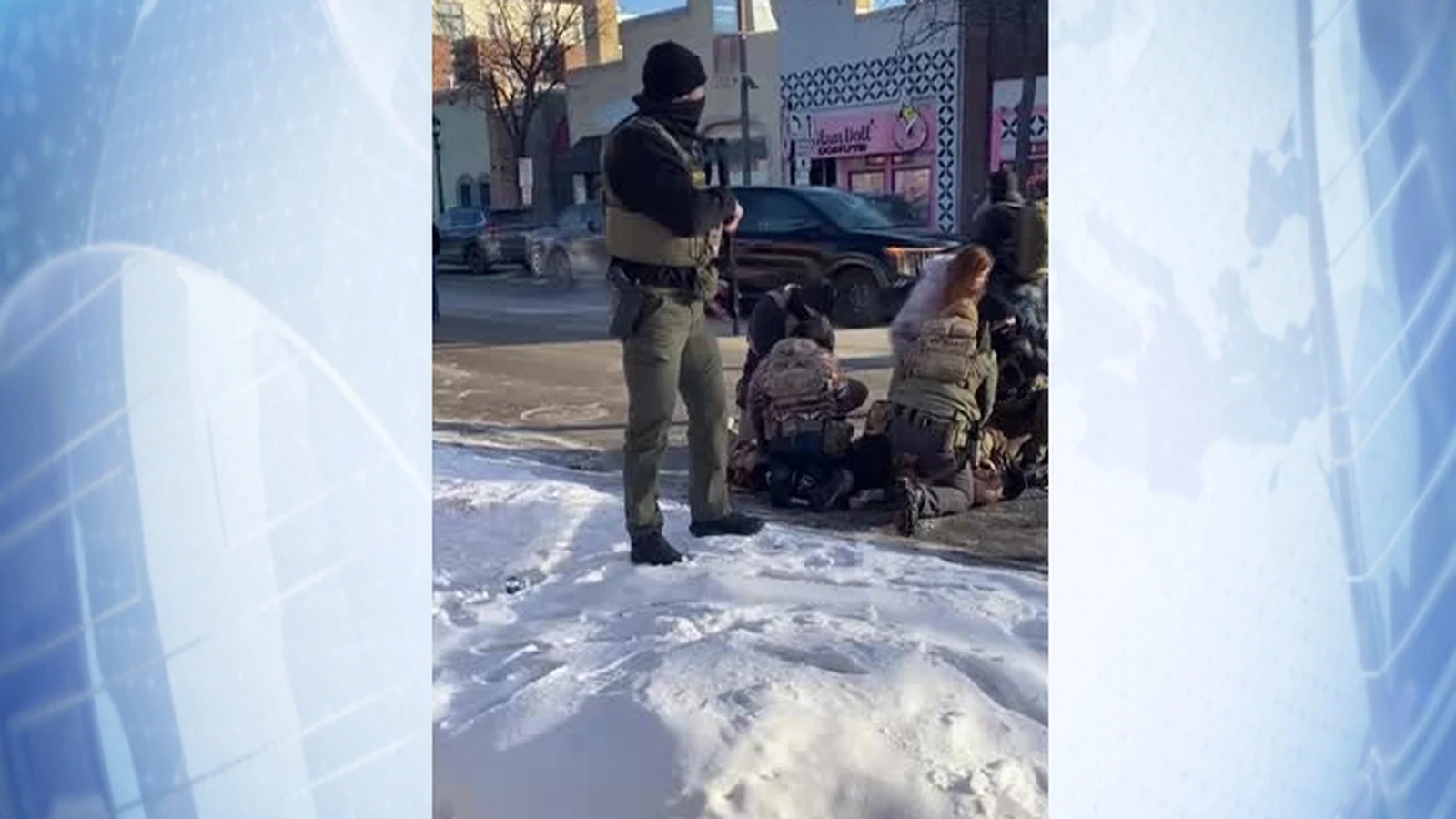
But the videos circulating online — footage that mainstream outlets replayed repeatedly and which the agency has said it will rely upon in its own account — present a scene that feels more complicated. In several clips, Mr. Pretti appears to be holding a phone, not a gun. He steps between a Border Patrol agent and a woman who had been shoved to the pavement, raises his hands, and is sprayed with a chemical irritant. Agents pull him to the ground; multiple officers wrestle with him on the iced roadway. Seconds later, as officers struggle to control him, something near his waist becomes visible to an officer in grey. Shots ring out. The video shows his body motionless. At least ten gunshots can be heard.
“Where’s the gun?” someone is heard asking in one clip, as the group of officers stands over him. The footage — raw and grainy, but forceful — is the sort of visual evidence that can both illuminate and confound.
What the family says
There is grief inside the official rhetoric. Mr. Pretti’s parents issued a statement denouncing what they called “sickening lies” from the administration. “Alex is clearly not holding a gun when attacked by Trump’s murdering and cowardly ICE thugs,” they said. “He has his phone in his right hand and his empty left hand is raised above his head while trying to protect the woman ICE just pushed down all while being pepper sprayed.”
Voices on the Street
On a day when Minneapolis still carries the memory of other high-profile confrontations between law enforcement and civilians, neighbors and witnesses struggled to make sense of what they had seen. “He was trying to help,” said one protester who had been near the woman shoved to the sidewalk and asked not to be named. “He stepped in and for a minute it felt like things might calm down. Then they grabbed him and everything changed.”
A woman who stood by the curb with a steaming coffee and a camera phone displayed the moment on her screen. “I could see a phone — clear as day,” she said. “This isn’t about supporting or defending anybody; it’s about wanting to know the truth.”
Not everyone sees the footage the same way. “We have to wait for the investigation,” said an adjacent business owner, rubbing his gloved hands against the chill. “Officials say there was a weapon. If that’s true, it’s a different story.”
The Bigger Picture: Accountability, Trust, and Use of Force
This is not an isolated question of one life taken in one city. It taps into broader global debates about the militarization of migration enforcement, the oversight of federal agents, and the crisis of confidence many communities feel toward armed authorities. In recent years, deaths and confrontations involving federal immigration officers have prompted calls from civil rights groups for clearer use-of-force standards and independent oversight.
Many Americans remember the images from Minneapolis that defined a national reckoning about policing — now the city is again at the center of a story that asks the same difficult questions: who gets the benefit of the doubt, and who is offered accountability?
Legal and investigative next steps
Federal shootings by immigration agents typically trigger reviews inside DHS, and sometimes independent inquiries by state or federal prosecutors. Civil rights advocates are already demanding an outside, transparent investigation in this case. “There must be a neutral, public accounting of what happened,” one advocacy director told me. “Communities deserve answers, and families deserve the truth.”
How to Read Video in an Era of Instant Judgment
Video is powerful. It can reveal what a written statement obscures. It can also be both incomplete and ambiguous. Angles, timing, and context matter. A frame that looks damning in one montage may tell a different story when you step back and watch the full minute or two. That is why independent forensics and chain-of-custody details matter so deeply in use-of-force cases — and why many calls for an impartial review are so urgent.
Consider this: within seconds, crowds form, statements are issued, and narratives harden. In a digital age, public opinion is guided as much by a social-media clip as by a formal press release. Who controls the first message can shape the debate for weeks.
Questions That Won’t Be Answered Immediately
- Was the handgun DHS posted indeed the same object described by agents in their initial statement?
- Where was the weapon at the moment officers opened fire — in his hand, on the ground, or elsewhere?
- Will an independent forensic review be carried out and its results made public?
- How will oversight structures within DHS respond to a case that pits agency claims against circulating video?
A Call to Look Closely, and to Care
What happens next matters. It matters to the family grieving in a Minneapolis living room, to the woman who was shoved and the neighbors who filmed and to an entire city still healing from earlier trauma involving law enforcement. It also matters to anyone who believes that the use of deadly force by agents of the state must be clear, accountable, and subject to independent scrutiny.
As you watch the clips and read the statements, ask yourself: when the state wields a gun in the name of security, what systems are in place to ensure the truth is found, not simply asserted? How do we balance the need for officer safety with the obligation to protect civilian life — and to make sure that each life taken is met with rigorous, transparent answers?
In the weeks to come, expect competing narratives, legal filings, and perhaps new footage or forensic findings. For now, the image that stays with me is quiet and terrible: a man on his knees in the snow, a phone in hand according to family and some video, and a city waiting for clarity.
For those who live here and for the many watching across the world, the task is not merely to watch but to demand that every aspect of this encounter be examined — carefully, independently, and with the humility to admit when an official account does not match what we can see with our own eyes.