Morning Frost and the Sound of Impact: A Small Town’s Loss Near Kyiv
The sun rose on a thin crust of frost, the kind that makes breath hang steady in the air and lends an ordinary morning a brittle clarity. In Bilogorodska, a community on the outskirts of Kyiv, that clarity was broken not by birdsong but by the blast of shells and the ragged, distant echo of jets.
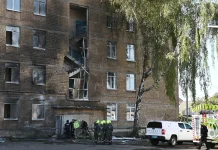
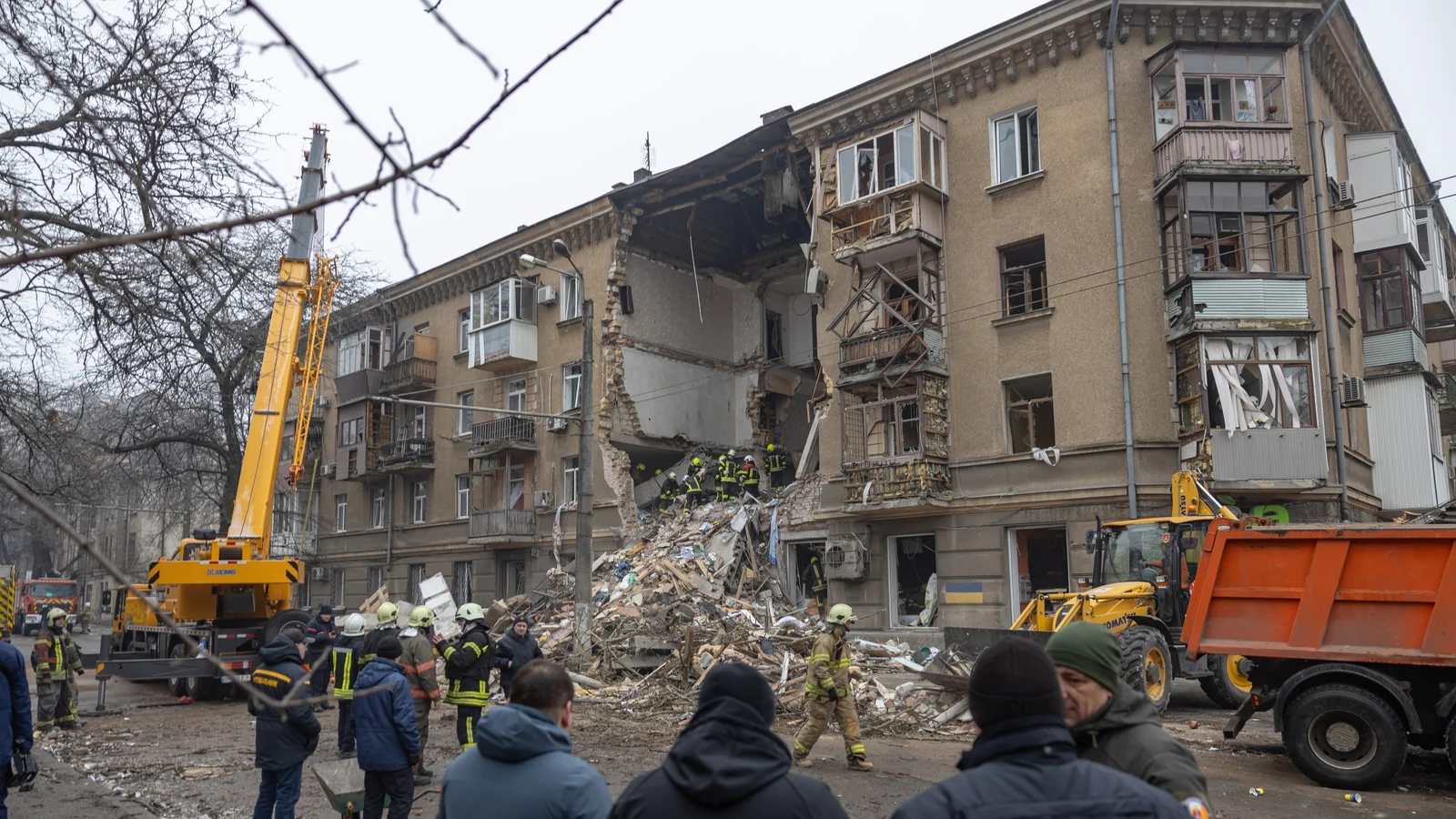
Local officials later reported two people dead and several more wounded after strikes hit the area overnight. For the neighbors who gathered on the snow-lined street outside a low-rise apartment block, grief looked like a woman with a scarf pulled tight across her face and a man looping a coat around himself as if to hold on to warmth in more than one sense.
“We were asleep. I heard the windows rattle and thought a truck hit something,” said Olena, 47, a schoolteacher who stood quietly by a neighbor’s door. “Then we smelled smoke and saw the glow. You learn to move quickly. You don’t think about life or death—only about where the children are.” Her voice steadied and then cracked. “Two of our people are gone. That is not a number. That is a mother and a neighbour.”
A Wider Night of Violence
Across Ukraine, the same night brought more anguish. Authorities said at least a dozen people lost their lives in strikes that hit multiple regions, and among the dead were passengers on a train that Ukrainian officials say was struck by a drone. The images circulating afterward—of scorched railcars and charred debris—forced a new round of questions about the cost of war at the busiest arteries of civilian life.
President Volodymyr Zelensky described the bombardment as a direct blow to diplomatic momentum, calling on Western partners to intensify pressure on Moscow. “Peace cannot be negotiated when people are being killed as the talks take place,” he said in a televised appeal. For many Ukrainians, each strike feels like a repudiation of any hope that diplomatic channels will protect ordinary life.
Winter Makes Everything More Dangerous
We are now in the season when the daily arithmetic of survival grows more painful. Freezing temperatures amplify the stakes of any outage: loss of power means no heating, no hot water, no safe place for families to gather. In the last few days, strikes have left thousands without electricity in regions already vulnerable to cold. Aid workers say they are racing to distribute generators, blankets and portable stoves, but distribution is slow in places where roads are damaged and supplies scarce.
“Winter turns shortages into emergencies,” said Kateryna Ivanenko, a coordinator for a Kyiv-based humanitarian NGO. “People die from exposure, not only from bombs. When the grid goes down, hospitals switch to backup systems that can only run for so long. Our job is to keep those systems alive and to find shelter for the elderly.”
Voices from the Ground
Not all the voices in Bilogorodska were of despair. There was fury, practical resolve and—surprisingly—humor that felt defiant more than flippant. A young volunteer named Mykola, who spent the night ferrying people to a makeshift clinic, laughed briefly when asked how he slept. “You make tea in the middle of the night and hope that tomorrow the world will be less mad,” he said. “We patch what we can. We carry each other.”
At the clinic, a retired paramedic who refused to give his name described the scramble to treat shrapnel wounds and hypothermia simultaneously. “You have to think like a machine: temperature, bleeding, breathing. But you can’t forget to hold a hand. That is the hardest part—reminding people that they are not alone.”
Diplomacy and Destruction: Talks in the UAE
These attacks came in the wake of diplomatic encounters in the United Arab Emirates, where Russian and Ukrainian delegations met in talks brokered by the United States. The meetings were cautious, the language measured. Yet for the families in Bilogorodska and the passengers on the train, meetings in faraway hotel rooms offer little consolation when violence scratches at the door.
“Diplomacy has to be matched by deterrence,” said Dr. Marta Radev, a conflict analyst with a think tank in Warsaw. “What we are seeing is a classic mismatch: negotiators talk about steps forward while tactical operations continue to inflict civilian harm. That undermines both trust and the practical mechanics of reaching an agreement.”
What the Numbers Tell Us
Since February 2022, the war has displaced millions and exacted a heavy toll on civilian infrastructure—factories, hospitals, schools and power stations have been repeatedly damaged. Humanitarian agencies warn that winter amplifies risks: every power outage, every targeted piece of logistics infrastructure, affects access to food, medicine and safe heating. Exact casualty figures fluctuate and are often contested; what remains indisputable is that the human cost is concentrated among ordinary people who must navigate survival amid political calculations.
Beyond Headlines: The Everyday Consequences
This is not a story that fits neatly into a scroll of headlines. It is a slow, layered erosion of ordinary routines. The cafe on the main street that once opened at 7 a.m. now opens at noon when volunteers have had time to check pipes and electrical lines. Children still go to school where possible, clutching thermoses of tea, but their laughter sounds different—hushed and careful. Farmers report missing harvest windows when they cannot get machinery fueled because supply chains are interrupted.
“We are not soldiers,” said one farmer, Ilya, wiping frost off his cap. “We are people making bread, paying for schoolbooks. War turned everything into a calculation I never learned.”
Small Acts, Big Meaning
In Bilogorodska, neighbors have begun a tradition of leaving a small bowl of porridge at the clinic door for those waiting through the night. It is a ritual of sustenance and solidarity. It is also, in its own modest way, an assertion of humanity against the logic of destruction.
- Immediate needs: warmth, shelter, medical care.
- Short-term priorities: restoring power, clearing roads, supplying fuel for generators.
- Long-term work: rebuilding infrastructure and restoring trust between communities fractured by violence.
What Can the World Do?
As you read this, ask yourself: how do distant policy debates translate into the small acts that keep people alive? Humanitarian organizations need steady funding, clear access corridors and political cover to work safely. Diplomacy needs leverage—sanctions, incentives, security guarantees—that translate into real changes on the ground, not just headlines.
“We must insist that talks mean something for people,” said Dr. Radev. “That requires a combination of pressure and protective measures for civilians. Otherwise, we are simply negotiating while the bombs fall.”
Closing: A Night Remembered
When the night finally receded and the frost began to glisten, the town of Bilogorodska gathered names. They said them aloud so that the people who had died would not be reduced to statistics. They are more than the news cycle’s casualties. They were parents, co-workers, bakers, teachers. Their loss ripples through kitchens and classrooms.
One of the neighbors lit a candle and placed it on a windowsill, its tiny flame barely warding off the chill. “We don’t know what the next day will bring,” she said. “But we will be here. We must be. That is all we can promise.”
Is that enough? It cannot be. But it is a start—a reminder that amid geopolitics and grand strategy, the clearest imperative remains the protection of human life. What will you do with that knowledge?