A procession toward something like closure
The van turned into Camp Shura under a low winter sun, its engine a steady, mournful hum that seemed to match the slow march of people waiting to see one last photograph or to touch a casket that had been away for too long.
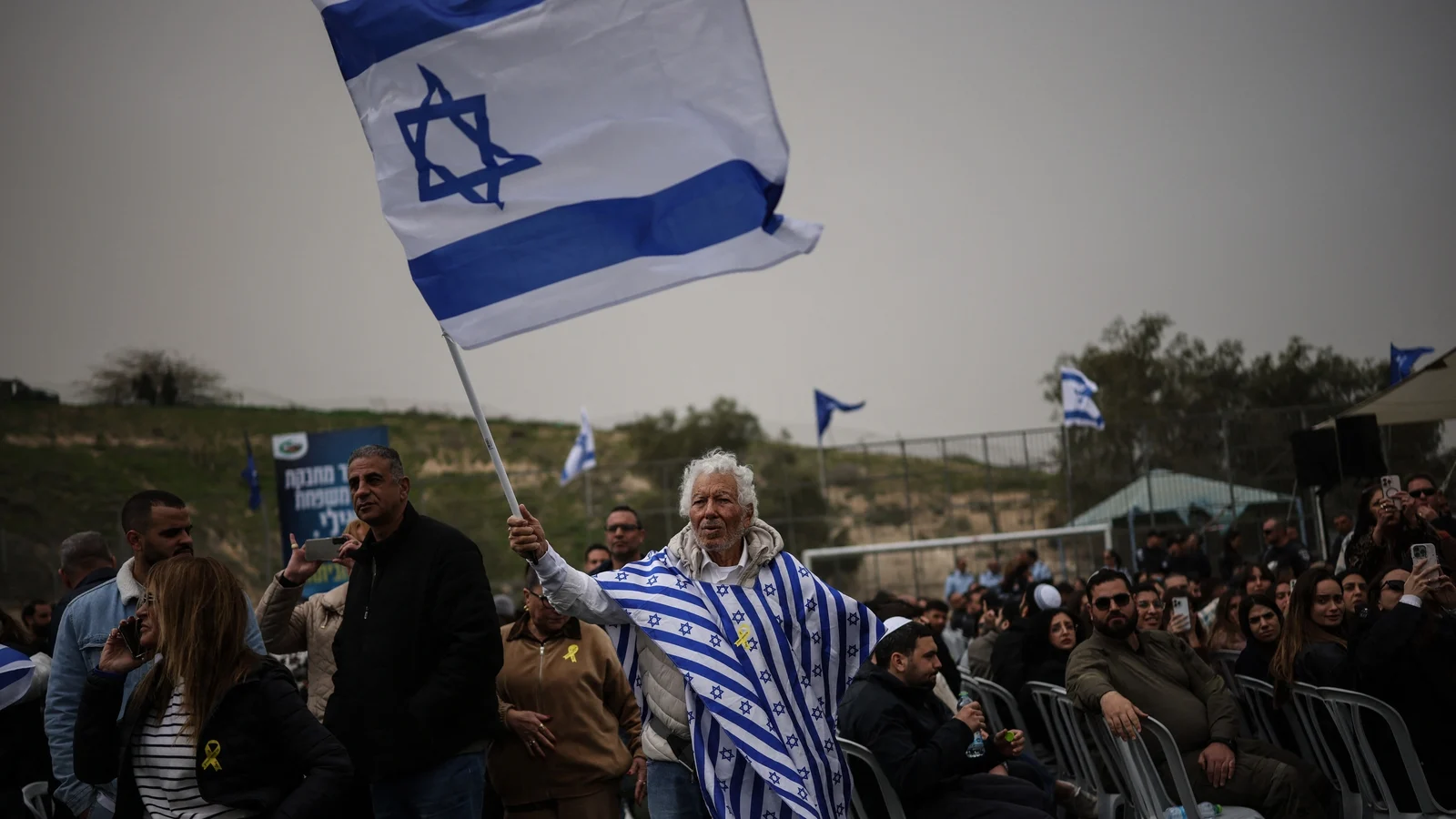
Hundreds gathered there, at a facility that has quietly become a way-station for grief — a place where identity is confirmed, remembrances are read, and the private work of mourning must be made public. A large screen flickered images of the procession. Rows of plastic chairs filled with uniformed officers. Children clutched small Israeli flags. Some people wore yellow ribbons, the symbol that has stitched together families and strangers for more than two years in vigil and pain.
They had come for Ran Gvili.
Who was Ran?
He was 24. An off-duty police officer on medical leave, scheduled for shoulder surgery, whose leave lasted only until the call of October 7, 2023, when militants struck across southern Israel. Family members and neighbours called him “the Defender of Alumim” — a young man who raced toward danger rather than away from it. Members of the elite Yassam unit, his colleagues, described him as the first to grab a weapon and the last to leave a fight.
“He ran toward the fence,” a neighbour told me, voice trembling. “He was our son, our brother. He could not stand the idea that others would be taken.”
Israeli officials say that Mr Gvili was killed in combat and that Islamic Jihad fighters carried his body into Gaza. For months the status of many abducted or missing people remained painfully unclear. Of approximately 250 people taken during that first day of slaughter — an assault Israeli tallies say killed around 1,200 people — dozens later died in captivity or were returned only after protracted negotiations.
The van that arrived at Camp Shura had previously been to a forensic centre in Tel Aviv. It carried the remains of the last Israeli hostage to be recovered from Gaza — a grim punctuation to a hostages chapter that has shadowed Israeli life for years.
In the crowd: faces of a country
There were veterans in uniform, mothers clasping rosaries, teenagers with eyes too old for their years. An elderly man, his hands rubbed raw by grief, said simply: “We have been counting days like prayers.” A kibbutz teacher wiped her cheeks and spoke of the quiet that will follow for the Alumim community. “He was ours,” she said. “The whole kibbutz felt he was a son and a brother.”
Prime Minister Benjamin Netanyahu — who addressed the nation in the hours before the burial — framed the return as the completion of a sacred duty. “We have fully completed the sacred mission of returning all of our hostages,” he said, lauding Ran as both the “first to charge” and “the last to return.” His words were meant to give shape to national sorrow: heroism, resolve, victory.
But not everyone heard triumph in that language. In the shaded corner where young parents stood with toddlers, several spoke of the long haul of trauma: sleepless nights, children who flinch at loud noises, families who have been reshaped by absence. “This is not finished,” one woman said. “The wounds are deeper than a single day.”
The exchange that closed a painful chapter — and opened others
The return of Mr Gvili’s remains marked the final act in a complex exchange born of negotiations between armed groups and mediators from several countries. Under terms reached last October — brokered by regional and international intermediaries including the United States and others — Hamas and allied groups agreed to return the remaining hostages, dead or alive, in exchange for the release of Palestinian prisoners.
Short pauses in the conflict had permitted the release of many hostages earlier. Two significant ceasefires allowed dozens to come home. But the negotiations were fraught and the human ledger remained heavy: dozens of those taken never made it back alive.
“Hostage exchanges are never clean. They’re messy and human and cruel,” said Dr. Miriam Halevi, a scholar of conflict resolution. “They leave open ethical questions: what do we trade for a life? Under whose terms do we decide? And what happens to the societies afterwards, when the bargaining has stopped but the grieving continues?”
Numbers that haunt a region
Statistics do not soften the edges of grief, but they do help us measure the scale of harm. Israeli authorities estimate roughly 250 people were abducted during the October 7 attack. Israeli tallies put the immediate death toll from that day at about 1,200 people. Meanwhile, Palestinian health authorities say that more than 71,000 Palestinians have died in Gaza since the war began — a figure that international groups warn reflects a humanitarian catastrophe.
These counts differ depending on who reports them, yet the pattern is clear: civilians have borne the brunt. Entire families have been shattered; cities and towns have been hollowed out. The challenge of translating these raw numbers into policy and action is one that diplomats, humanitarians, and ordinary people continue to wrestle with.
Meitar: a town marked and made
Ran will be buried in Meitar, a southern Israeli town tucked into the rolling hills that mark the Negev highlands. Meitar’s streets are both ordinary and marked by loss — playgrounds and small cafes rub shoulders with memorials and photographs taped to lampposts. People here speak of him with a kind of protective pride: bright, brave, too young.
“When we come to a funeral now, we are all trying to stitch back something that was torn,” said a local teacher. “We put flowers and flags, but what we really want is to be able to let our children grow up without alarms.”
What happens next?
The burial closes a grim chapter, and yet the story of the region keeps writing itself. U.S. officials have signalled the beginning of a second stage tied to the deal, including the reopening of the Rafah crossing between Gaza and Egypt — a move aimed at easing the flow of aid and people. Whether reopening borders, rebuilding homes, or addressing accountability will translate into lasting calm is an open question.
International human rights groups and humanitarian organizations warn that rebuilding must go hand in hand with justice and protection. “Reconstruction without rights is only a temporary fix,” said Amal Nasser, a humanitarian worker who has supervised relief convoys in Gaza. “If people are not safe, if the root causes are not addressed, we will see the cycle repeat.”
Questions for the reader — and for ourselves
How does a society honor a hero without sanctifying a cycle of violence? How does the world treat the return of a fallen person with dignity while also tending to the living who remain wounded and displaced? These are not questions with easy answers.
The funeral of Ran Gvili will be a private family moment inside a national frame. It will be a place where a community will try to say goodbye and remember who he was: a son, a colleague, someone who ran toward others in a moment of terror. For those who watched the procession, the images will keep returning — the yellow ribbons, the small flags, the slow cadence of marching feet.
And for the rest of us, this moment can be a reminder of how every headline is made of human lives. Close your eyes and picture a single name on a placard. What stories are behind that name? What does the path to healing look like for them, for their neighbours, for people on the other side of the fence?
In the end, the burial in Meitar is not merely about returning a body; it is about returning a story to the people who loved him, and about asking whether a society, and indeed the international community, can find ways to break cycles so fewer names will need to be read aloud in future.