Red Sky Over the Otways: When Heat Becomes a Living Thing
There was a peculiar hush in the Otways this week, the kind that presses against your chest and makes the air feel heavy before the first siren even sounds. The rainforest that usually breathes cold, damp relief into southwest Victoria smelled instead of smoke and scorched eucalypt. Locals described the sky as bruised—thin curtains of grey and copper—while engines roared along narrow country roads, hauling hoses and water tanks toward a line of flame creeping through understory and regrowth.
“It felt like the bush took a breath and forgot how to exhale,” said Leah Morrison, who runs a small guesthouse on the edge of the Great Otway National Park. “We packed what we could and watched the sky, waiting to see if the road would vanish into smoke.”
Immediate Danger: Evacuations and a State on Alert
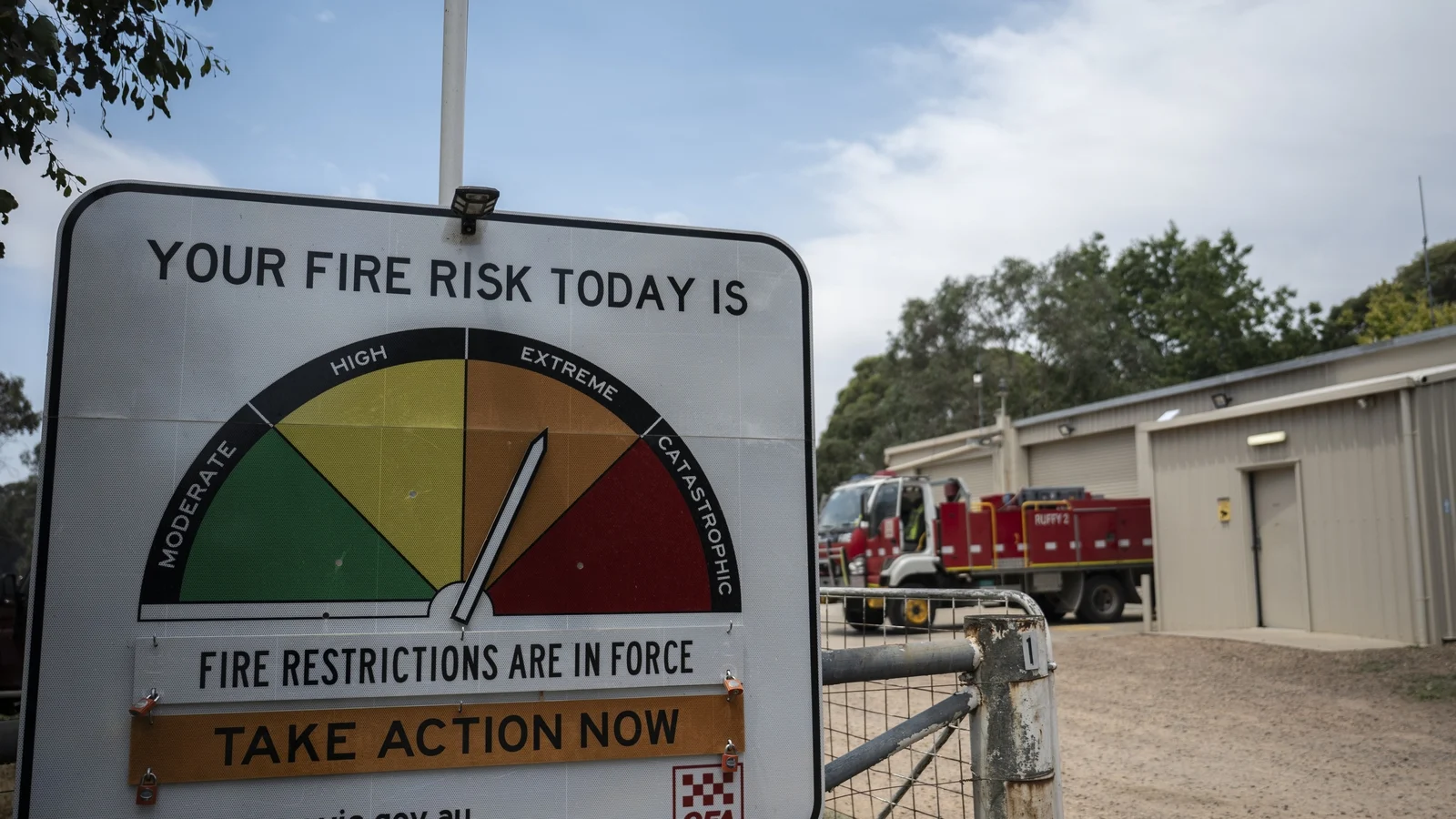
Authorities issued emergency evacuation warnings for hundreds of residents in four country towns after a bushfire, fanned by searing winds and prolonged heat, threatened communities in the Otways—southwest of Melbourne. Three other rural localities were urged to leave as conditions were forecast to change rapidly.
“When you see an emergency warning, that’s your cue to move now,” said a senior incident controller at the Country Fire Authority. “The speed with which a fire front can change under these temperatures and winds is terrifying.”
Across Victoria, a total fire ban was put in place as six major blazes burned in multiple regions. Roads were busy with people leaving early, supermarkets saw queues for ice and bottled water, and neighbourhoods that would normally be quiet on a weekday hummed with nervous energy.
Where the Mercury Broke the Thermometer
In the northwest, the mercury pushed to extraordinary heights. Preliminary readings from the Bureau of Meteorology showed Walpeup and Hopetoun recording 48.9°C—just nudging past the state’s previous figure of 48.8°C. Bureau forecasters stressed that such readings would later be verified before being formally recorded as a new state record.
Melbourne, where tennis and summer culture usually collide in a festival of sport, saw the Australian Open close the roof over its centre court as organisers tried to protect players and fans from the blistering heat. Forecasters had signalled daytime highs around 45°C for parts of the city, transforming the usually vibrant outdoor cafés into refuge zones for those who could flee the heat.
On the Ground: Firefighters, Farmers, and Families
At a nearby town hall turned evacuation centre, volunteer firefighters and emergency workers moved with practiced calm. The mood, though weary, was resolute.
“We’ve been running on grit and coffee for 36 hours,” said Samir Patel, a volunteer with a local brigade. “But when you see a family come through with nothing but a dog and a single bag, it reminds you what you’re doing it for.”
Local dairy farmer Tom Nguyen helped neighbours load trailers with animals and feed. “You learn to pack fast,” he said. “We’ve lost fences to fires before. You never think it will be the house next time, but you pack as if it will.”
There were also quieter stories: elderly residents helped up the steps at the evacuation centre; teenagers offered to walk dogs and keep older people company; a woman from a coastal caravan park boiled water for hot drinks because power was unreliable. Little acts of care threaded through the chaos.
Health Warnings: Heat Is More Than an Inconvenience
Public health officials were clear: extreme heat is not merely uncomfortable; it can be deadly. Victoria’s health authority reminded people that prolonged exposure to high temperatures increases the risk of heat exhaustion, heat stroke, and can worsen heart and respiratory conditions.
“When the heat goes on and stays on, the body can’t cope indefinitely,” said Dr. Aisha Bradley, an emergency physician who has worked multiple heatwave seasons. “We see dizziness, fainting, confusion, and people with chronic conditions decompensating quickly. The elderly, young children, pregnant people, and those on certain medications are especially vulnerable.”
Emergency departments prepared surge plans as public cooling centres opened in community halls and libraries. Advice was simple but urgent: stay hydrated, avoid strenuous activity during the hottest part of the day, and check in on neighbours.
- Stay cool: seek air-conditioned spaces where possible.
- Hydrate: water is better than sugary or caffeinated drinks.
- Protect: wear light, loose clothing and a hat when outdoors.
- Check: vulnerable neighbours, elderly relatives, and pets regularly.
Why This Isn’t Just a Local Story
For anyone following the arc of weather extremes globally, the scenes in Victoria are part of a worrying pattern. Australia’s average temperatures have risen significantly over the last century—long-term trends show more frequent and intense heatwaves, shifting the baseline of what communities expect in summer. With each degree of warming, the chance of record-breaking heat and associated fire risk climbs.
“This isn’t simply bad luck,” said Dr. Elena Marquez, a climate scientist specialising in extreme weather. “It’s the way a warming climate reshapes the landscape of risk—hotter days, drier soils, more volatile fire seasons. Communities and emergency services are adapting, but the scales are tipping.”
The global lesson is stark: heatwaves and wildfires strain not just firefighting resources but health systems, supply chains, and civic confidence. From villages in Victoria to cities around the world, the question becomes: how do we build resilience quickly enough?
Communities Adapting—And the Limits of Preparedness
Across the Otways, locals have developed informal networks: phone trees, key-holder lists for at-risk houses, and neighbourhood watch groups that double as evacuation teams. Still, many told me their hearts sank when they saw the direction and speed of the wind—elements you cannot pack into a kit.
“You can plan all you like, but if the wind changes and a fire accelerates, that’s a different crisis,” said Leah Morrison. “We need better warning systems and more resources, but we also need bigger conversations about land management, building standards, and where we allow development.”
What You Can Do—Whether You’re Here or Watching from Afar
If you’re in an affected area, heed evacuation orders. If you’re far away, consider this a moment to reflect on how climate shifts are affecting communities worldwide—and what solidarity looks like in practice: donations to reputable relief funds, support for climate-adaptive infrastructure, and advocacy for stronger local planning.
“We don’t want people to panic,” said Samir Patel, the volunteer firefighter. “We want them to be prepared, to think ahead, and to look out for each other. That’s how a community survives the worst of it.”
So ask yourself: what would you grab if you had ten minutes to leave your home? Who would you call? Where would you go? These are uncomfortable questions, but the more honest we are with the answers, the more lives we might save when the next red sky rises.
For now, firefighters continue to hold lines, evacuation centres offer shelter, and communities wait—listening to distant creaks of trees and the low hum of generators—hoping for a change in wind, or a relief that seems, for the moment, just out of reach.