An Unsettled Country: Portugal After Storm Kristin
The streets of Leiria still smelled of wet earth and burned eucalyptus. Bent streetlights leaned like tired sentinels; roofs wore bandages of tarpaulin and freshly tied ropes. In the markets, vendors—faces crinkled from wind and salt—spoke in quick, practical sentences about what needed fixing first. “We don’t have time to be sentimental,” one woman said as she tied down a stall awning. “The rain is coming back.”
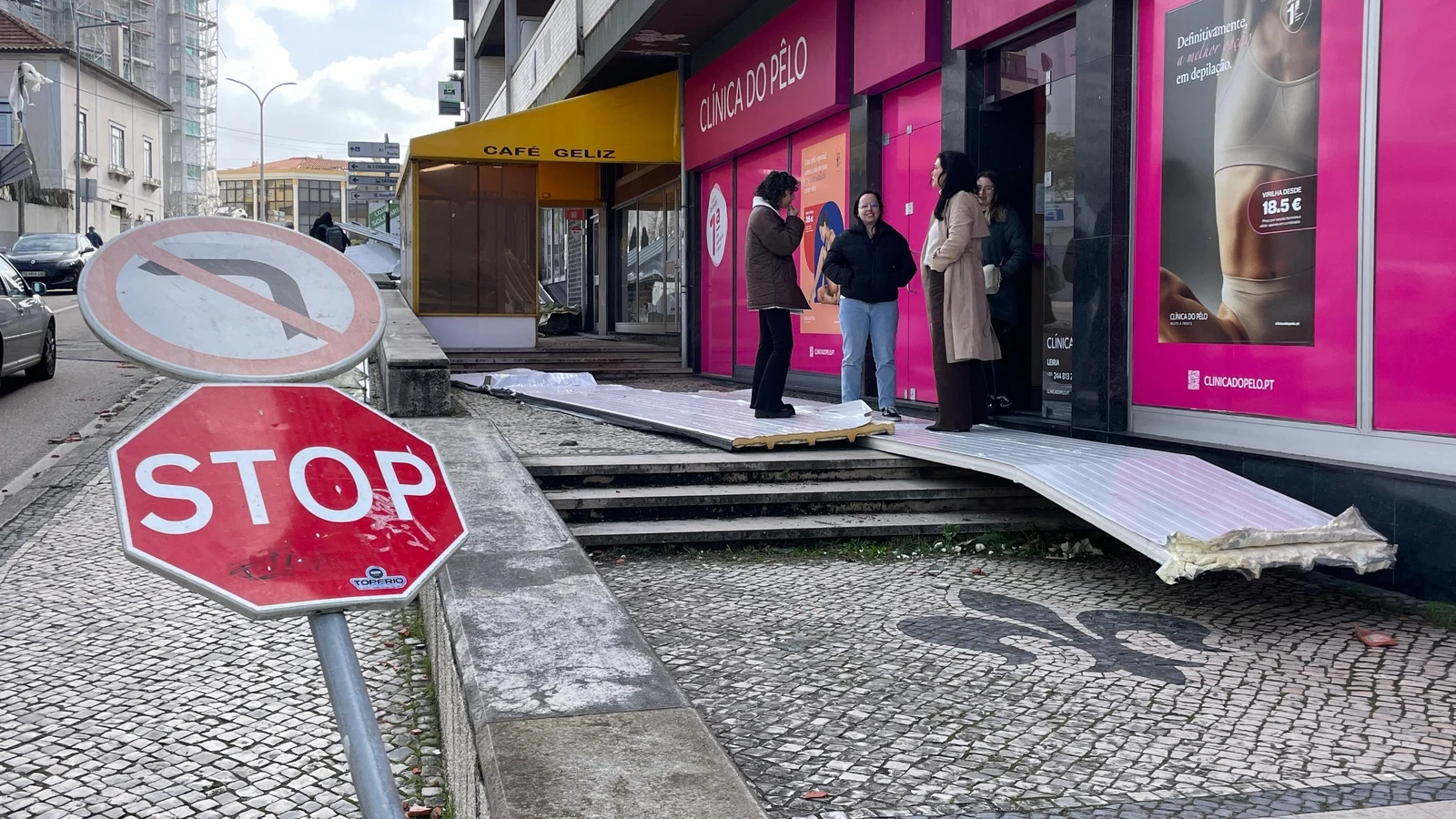
Portugal spent the weekend bracing. Storm Kristin, a fierce system that tore through central and northern regions with hurricane-force gusts and drenching rain, left a wake of toppled trees, damaged roofs and lives upended. Official tallies put the death toll at five. Power company E-Redes reported nearly 200,000 customers without electricity at the weekend’s height, concentrated in the Leiria district. The national weather agency (IPMA) put the whole mainland on alert for further heavy rain and winds up to 100 km/h.
What the maps didn’t show
Maps and forecasts can tell you where a storm will go, but they rarely capture the human texture that follows. In Batalha—famous worldwide for its gothic monastery whose glazed stone tiles glimmer in sunshine—the most intimate tragedies were small and sudden. A 73-year-old man, climbing to replace tiles before the next band of rain, fell and died. “He was taking care of his house like many here do,” said a neighbor, voice low with shock. “We all chip in when someone gets hurt.”
Elsewhere, emergency services said they had completed 34 land rescues and 17 water rescues. Crews cut through a forest of downed trunks—E-Redes estimated about 5,800 trees toppled countrywide—while teams patched roofs and shored up riverbanks where swollen waters whispered of more danger to come.
Voices from the ground
“We are exhausted but we are not defeated,” said Gonçalo Lopes, the mayor of Leiria, in a video appeal that rippled across social media. “We need volunteers to secure roofs, to help elderly neighbors, to clear drains before the next rainfall. Bring gloves, bring determination.”
On a narrow street under a row of buildings with blue azulejo tiles, a volunteer group—young and old, strangers and neighbors—worked quietly, passing tiles hand to hand like a chain of care. “It’s what you do when the storm comes,” said Maria, a retired schoolteacher. “You take bread to someone who has nothing. You hold the ladder for the person on the roof. This is how we mend things.”
A meteorologist at IPMA, speaking by phone, urged caution. “Rivers are saturated, soils are already waterlogged. When additional heavy rain falls, urban flash floods and landslides are a real and immediate risk,” she explained. “It’s not just about wind anymore—hydrology is the danger now.”
Practical realities and human costs
It is easy to measure storm impacts in kilowatts and fallen trunks, but harder to account for the economic and emotional toll. Small businesses that rely on weekend trade—the cafés, surf schools, and family-run B&Bs—faced cancellations and lost income. For seniors living alone, the lack of power is more than an inconvenience; it is a medical risk and an isolating failure of safety.
Energy resilience experts note that storms like Kristin are testing the limits of aging grids and the dependence on overhead lines. “Trees and lines are a bad combination in extreme winds,” said an energy analyst. “Undergrounding lines is expensive but it reduces outages in the long run. The question is whether governments will treat that as a priority.”
The larger picture: climate, infrastructure and collective response
Storm Kristin didn’t appear in a vacuum. Scientists have documented that a warming atmosphere holds more moisture, making heavy precipitation events more intense. The Intergovernmental Panel on Climate Change has repeatedly warned that extreme rainfall and coastal storms will become more frequent in many regions. For Portugal—a country with long coasts, steep inland rivers, and historic towns built before modern drainage—this presents a confluence of risks.
But infrastructure is only one part of the story. The other is social infrastructure: neighbors who show up at dawn with ladders; municipal workers who reroute traffic and sandbag low bridges; volunteers who help reattach tiles. “It’s the glue,” observed a local civil protection officer. “We can build barriers and reinforce power lines, but the willingness of communities to mobilize quickly saves lives.”
Simple actions when the skies darken
- Secure loose objects: garden furniture, signs and tarpaulins can become dangerous projectiles.
- Avoid vulnerable areas: riverbanks and low-lying coastal roads are particularly at risk during heavy rain.
- Check on neighbors: older residents and people with mobility issues may need help closing shutters or moving supplies to higher ground.
- Follow official advisories: IPMA alerts, municipal notices and emergency services are your best sources for local, timely information.
Why this matters to the world
When a storm like Kristin hits Portugal, the local ripples can be global signposts. Coastal communities around the world are confronting similar challenges: how to protect lives and livelihoods in places where weather patterns are changing. The choices that national and local authorities make now—investing in resilient grids, restoring natural floodplains, retrofitting buildings—will shape how often headlines read “devastating storm.”
For readers far from Leiria’s cobbled lanes, ask yourself: what would your community do if the lights went out for days? Do your local authorities and networks have a plan? How connected are your neighborhoods?
After the rain
When the storm has passed, the work will continue. Roofs will be rebuilt, trees replanted, and, hopefully, debates about adaptation and spending will turn into action. For now, the people of Portugal are answering the question with gestures both large and small—polite offers at the bakery, a borrowed ladder, a municipal truck delivering generators to a clinic without power.
“We are tired, yes,” said João, a volunteer who returned to his van for another roll of tarpaulin. “But when this is over, when the sun comes back, we will have done what we could. That is what matters.”
And as Portugal waits for the next alert from IPMA, the country reminds us all of something true and stubborn: communities are the first responders to climate change, and compassion is their most effective tool.