The Weight of a City: Gaza after the Rubble
Walk through Gaza today and your shoes grind on history: ceramic tiles from a childhood kitchen, a rusted refrigerator door with a cartoon magnet still clinging to it, shards of concrete that once framed classrooms and clinics. The air tastes of dust and salt and a stubborn, human defiance. For the 2.1 million people who call this narrow coastal strip home, daily life has been reduced to the mathematics of survival—how many liters of water, how many blankets, how many days until the next knock on a tent wall.
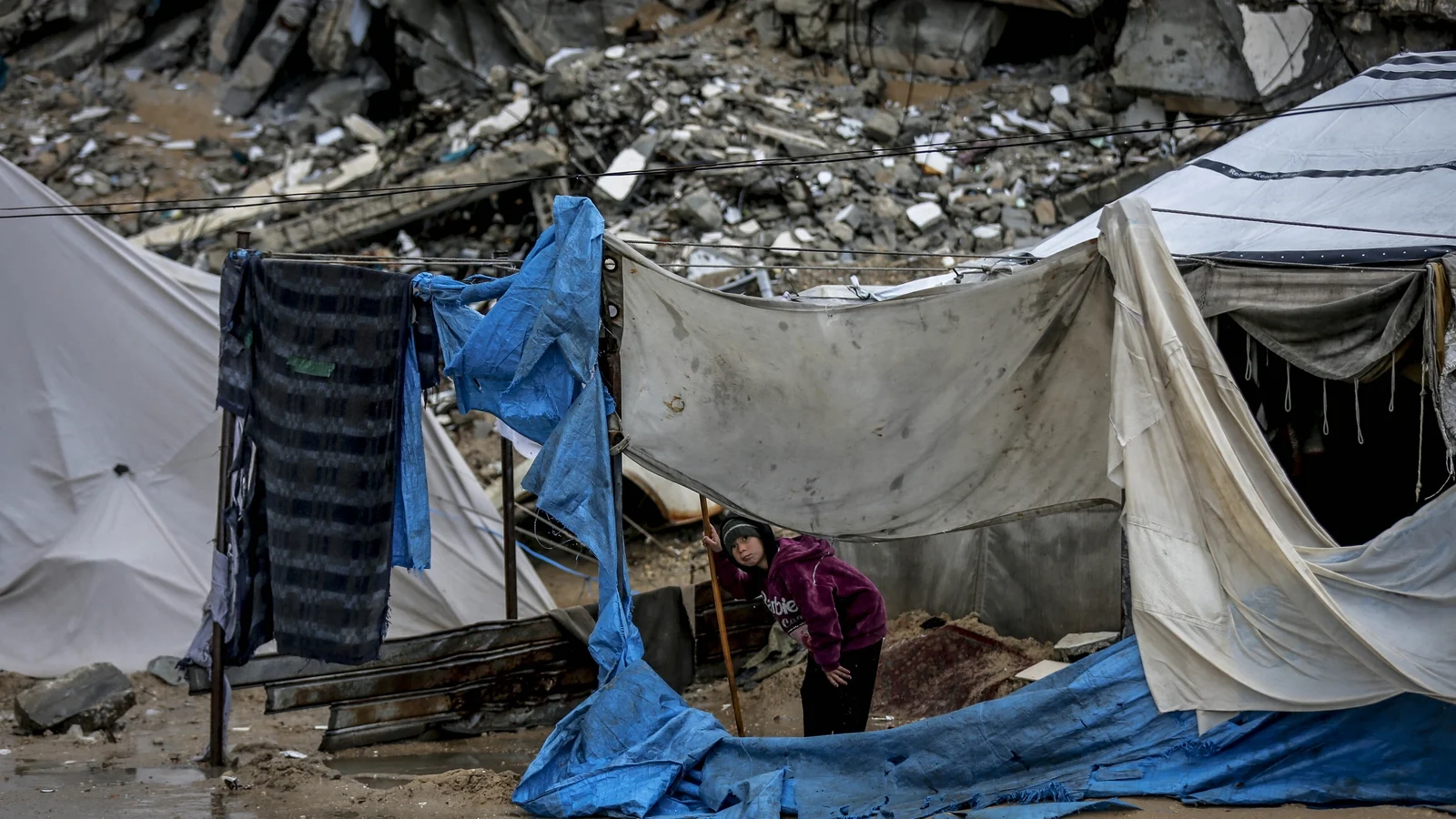
The numbers are brutal but essential. More than 80% of Gaza’s buildings have been damaged or destroyed; roughly 60 million tonnes of debris now litter a land mass little larger than a large city borough. The United Nations pegs the reconstruction bill at north of $70 billion spread over decades. At least 1.5 million people—about three-quarters of the population—are living in tents or improvised shelters, exposed to winter rains and the humiliation of displacement.
Rubble as a Problem and a Resource
“This is not simply rubble. Every pile is a household, a school, a life,” says an engineer who has been coordinating salvage operations in northern Gaza. “But it is also raw material. If handled rightly, it could be a foundation—literally—for rebuilding.”
Clearing the debris is an unenviable logistical nightmare. To picture it: the ruins could fill nearly 3,000 container ships. At the current UNDP pace of crushing about 1,500 tonnes a day across a handful of sites, it would take more than a century to process everything. Mosul’s post-ISIS cleanup, by comparison, was only a fraction—Gaza’s pile is several times larger.
Recycling crushed concrete into aggregate, reusing steel when safe, and turning demolition waste into roadbed material are all possible. Yet doing so requires machinery, permits, trained teams and—importantly—safety. The debris may hide human remains, and more immediately dangerous, unexploded ordnance.
Hidden Killers: Human Remains and Unexploded Ordnance
“There are things under that dust that will stop you in your tracks,” a deminer explains, voice ragged from long shifts. “Bodies. Bombs that did not go off. We don’t just remove the rubble; we have to find what it is hiding.”
Gaza’s health authorities estimate thousands of people may still lie beneath collapsed buildings—some estimates point toward as many as 10,000 missing. In the first three weeks after the ceasefire, UN teams recorded 560 unexploded ordnance items; demining experts caution that a conservative average is that about 10% of munitions fail to detonate on impact, creating a long tail of risk for any clearance operation. Add the complexity of underground tunnels and collapsed infrastructure, and the task becomes a delicate choreography between recovery and safety.
Where Do You Put a City’s People?
Camps have long memories. In Gaza they are not temporary by inclination but by circumstance: the refugee camps that were planted across the territory in 1948 hardened into permanent slums over decades. That history is a warning.
“If you set up makeshift camps with no view of permanence, you lock generations into poor housing, poor sanitation and poor opportunity,” says a humanitarian planner who has worked on displacement responses across the Middle East. “Yet, people need roofs now.”
Designers and aid agencies are pushing for “future-oriented” interim settlements—layouts that can evolve into real neighborhoods, complete with plots reserved for permanent homes, pre-laid infrastructure corridors and connections to employment hubs. The alternative is the slow accretion of poverty: tarpaulins to tin shacks to congested alleys that become slums for decades.
Property, Law and the Long Tail of Conflict
Underpinning every decision about who gets what plot of land is a thicket of legal claims. Land records in Gaza interweave Ottoman-era deeds, British-mandate registrations, Palestinian civil law, Israeli military orders and informal claims. Untangling ownership is not merely bureaucratic; it is political and deeply personal. For displaced families, the fear is that “reconstruction” will erase their right to return to what remains of their neighborhoods.
Water, Sewage and the Skeleton of a City
Before anyone can raise new walls, the veins of a city—the water and sewer pipes—must be mended. Gaza City reports more than 150,000 metres of ruptured pipes and the destruction of roughly 85% of water wells within the municipal boundary. The result: roughly 70% of Gaza City’s water production is disrupted, compounded by constraints on importing steel and other “dual-use” materials necessary for repairs.
The collapse of sanitation systems is not just an inconvenience; it is a public-health emergency with global echoes. Cholera outbreaks, groundwater contamination and the loss of agricultural irrigation are all downstream effects that will ripple beyond Gaza’s borders unless addressed quickly and comprehensively.
Security, Politics and the Myth of Rapid Rebirth
Visionary presentations in distant conference halls often clash with what happens at builders’ feet. When lofty plans for glass towers and data centres are pitched as a “New Gaza” that can be built in three years, the response from locals is often a rueful shake of the head.
“They can show you renderings on a screen,” a displaced shopkeeper says, “but who will be able to afford those apartments? Who will own the land? We’ve seen blueprints before—what we need is stability and dignity for ordinary people.”
Practical reconstruction depends on stable security, clear governance, and sustained imports of materials and expertise. Yet on-the-ground reports show checkpoints, shifting lines of control, and intermittent violence that makes large-scale projects risky. Even troop withdrawals have been conditioned on disarmament talks, the terms of which remain undefined. The simple fact is that cranes and concrete need protection and consent to operate; without that, rubble-clearing teams and builders cannot work safely.
What Would Real Recovery Look Like?
It would start modestly and humbly: clearing priority corridors (hospitals, water pump stations, shelters), training community-based clearance teams, and scaling rubble recycling plants. It would pair emergency housing that can upgrade to permanent homes with legal clinics to mediate property claims. It would be financed in tranches that tie reconstruction to measurable benchmarks of safety and local participation, not as a corporate branding exercise for luxury developers.
Globally, reconstruction is an ethical test. How do wealthy donors balance the impulse to “do something big” with the need to respect local agency and ownership? How do we make sure that the jobs and contracts generated by rebuilding actually go to Gazans, and that the new Gaza does not become a sanitized showcase for outsiders while leaving ordinary people behind?
- Physical scale: More than 60 million tonnes of rubble—enough to fill nearly 3,000 container ships.
- Damage: 80% of buildings damaged or destroyed; UN estimate of over $70 billion in reconstruction costs.
- Displacement: At least 1.5 million people living in tents or makeshift shelters.
- Clearance pace: Current crushing rate—about 1,500 tonnes/day—would require more than a century to process all rubble.
A Question of Who Rebuilds and For Whom
When planners stand before a model of glass towers and seaside promenades, I ask you: who are those promenades for? For the people who have known rationed water for years? For families with few legal titles? Or for an ideal of urban glamour that has never existed here?
Reconstruction is not only an engineering challenge; it is a moral and political journey. If the world cares about Gaza, action must be patient, rooted in local leadership, and informed by the memories embedded in every cracked tile and every closed schoolyard. The stakes are not only buildings but the shape of a society that could either heal—or harden into a new, prolonged injustice.
So, what kind of future do we want to help build? One that goods and logos can claim, or one that listens first to the people who lived in those neighborhoods before they were reduced to dust? The answer will define not only Gaza’s skyline but the conscience of the international community. Which will we choose?