When the Rivers Forget Their Place: Storm Leonardo’s Wake Across Iberia
By late afternoon, a kind of stunned hush settled over towns that had never expected to see their main streets become rivers. Cars sat half-submerged; market stalls that had sold oranges and olives for generations lay waterlogged and silent. This was not a gentle inconvenience. It was Storm Leonardo—another chapter in a brutal season that has left parts of Spain and Portugal reeling.
The numbers that make your chest tighten
In a 24‑hour stretch, some areas took more than 40 centimetres of rain—the kind of downpour that turns channels into torrents and drains into death traps. Authorities confirmed one fatality in Portugal: a man in his 60s swept away while trying to drive through flooded terrain near a dam in the municipality of Serpa.
Across Andalusia, Spanish weather service AEMET raised the alarm to the highest red level in parts of the south, describing the rainfall as extraordinary. In the nearby mountains of Grazalema, forecasts warned of up to 35 centimetres of rain in a single day.
The human toll is measured not only in lives lost but in disruption. About 3,500 people were evacuated from Andalusian communities. In Portugal, civil protection teams logged more than 3,300 incidents since the weekend—flooding, landslides, trees down—and deployed more than 11,000 responders to the crisis. Tens of thousands remained without power after a previous storm, and officials braced for more rain, gusting winds, and rising rivers.
On the ground: places and people
Drive through southern Spain and you meet whitewashed villages perched on hills and serried rows of olive trees sliding into soggy earth. Ronda’s cobbled streets are famous for their dramatic gorge; this week the gorge seemed to have been filled with the weather’s anger. “We’ve never seen the soil give up like this,” said Maria Paz Fernández, the city’s mayor, her voice threaded with exhaustion. “Landslides are cutting off rural hamlets—people are frightened.”
In Cádiz province, the Guadalete swelled and spilled over at Las Pachecas, turning fields into lakes and forcing residents to retread the familiar ritual of sandbags and hurried evacuations. In Jaén, the Guadalbullón ramped up, sweeping through Puente Tablas and reminding farmers—some who have worked the same plots for decades—of how quickly a season can be erased.
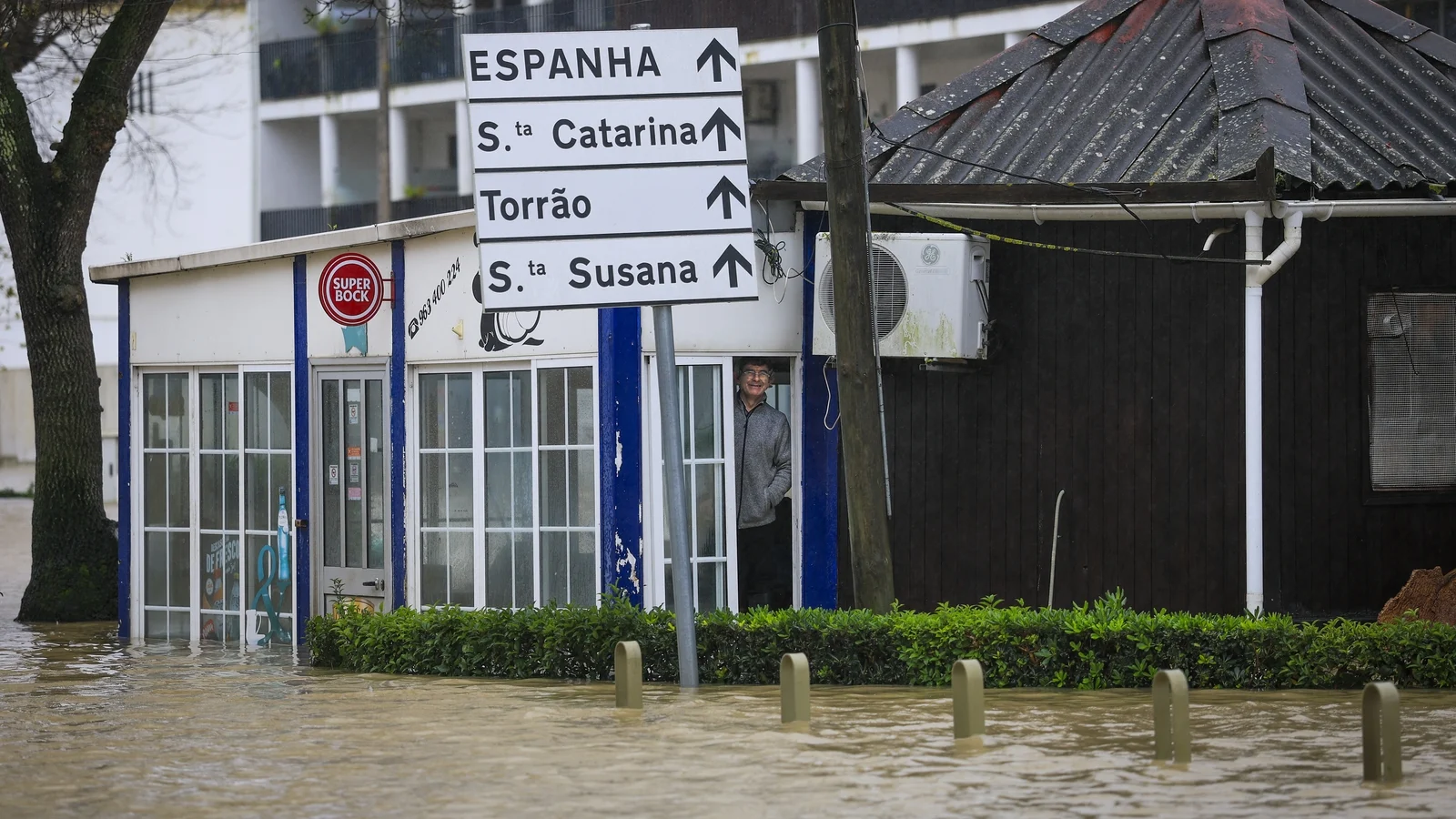
Alcácer do Sal, south of Lisbon, looked like a town inside a painting that had been left out in the rain. The Sado river had climbed onto the main avenue, submerging storefronts and the polished stone where elders once sat and discussed local politics. One resident, a retired teacher named Helena, stood on the pavement and said, “We talk about droughts and hot summers, and then the sky turns and comes down like that. It’s as if the moods of the weather have turned meaner.”
Transport and schools halted
Everyday life was choked off. Renfe, Spain’s state rail operator, cancelled almost all suburban, regional and long‑distance train services across Andalusia. With roads closed by landslides and floods, bus replacements were often impossible. Nearly all schools in Andalusia were shuttered—except those in the easternmost province of Almería, where the storm’s teeth had not yet bitten as hard.
Soldiers joined emergency teams; footage circulated of troops hauling people from rooftop terraces and shepherding families into dry buses. Police shared dramatic scenes of fields being submerged and cars floating helplessly in torrents.
Voices from the floodlines
“I woke to the sound of water like a freight train,” recalled a 34‑year‑old olive oil mill worker in Grazalema, who gave his name as Manuel. “We tied ropes to each other and helped guide our elderly neighbours. People are scared—but they’re also helping. That’s what keeps us going.”
A civil protection official, speaking at foresters’ shelter, explained the logistics: “We are rotating teams, prepositioning boats and pumps. But when the ground is saturated from previous storms, every valley is a potential floodplain. It’s a race against time.”
Environmental scientists say this pattern—back‑to‑back extreme storms—is not an accident. “Warmer air holds more moisture,” said Dr. Inés Moreno, a climatologist at a university in Madrid. “That allows for heavier downpours when conditions trigger them. What we’re seeing is consistent with the projections of a warming planet: more intense, less predictable rainfall events impacting the same regions repeatedly.”
History and context: a season of extremes
This winter has not been an outlier but rather part of a worrying trend. October 2024’s floods in eastern Spain were among the deadliest in decades, with more than 230 people killed—most in the Valencia region. Just weeks ago, Storm Kristin slammed into the Portuguese coast, killing five people and injuring hundreds. Those events already strained emergency services and left communities vulnerable when Leonardo arrived.
Insurance firms and local governments are asking hard questions: Are flood defenses adequate? Are early‑warning systems reaching elderly and rural residents? Are we investing sufficiently in nature‑based solutions—restored wetlands and river corridors that can act like sponges during intense rain?
Local color: how communities adapt and remember
There is a cultural thread in these places that tempers panic. In Andalusian villages, community centers and church halls morph almost overnight into support hubs. Neighbours roast coffee on stoves powered by generators and trade news of broken windows for news of dry blankets and clean drinking water. In Portugal, a practice that once saved families during forest fires—community solidarity networks—reappears as people ferry pets and babies to safety.
“We have songs about the weather, poems about drought, prayers for rain,” Helena, the retiree from Alcácer do Sal, said. “Now we need songs about rebuilding.”
What the future asks of us
How should societies respond to storms that are becoming more frequent and ferocious? Hard engineering—dams, levees, reinforced embankments—is part of the answer. So too are early‑warning systems, smarter land‑use planning, and the restoration of natural floodplains that can absorb peak flows.
But there’s a political dimension as well. Investment choices reveal priorities. Will governments fund short‑term emergency relief, or will they commit to long‑term adaptation that could reduce future tragedies? And at home, what responsibilities do households and businesses have to prepare?
Closing thoughts: a moment for reflection
Walking through one town after the water receded, a volunteer offered a simple line: “Water takes with it the small certainties of life—photos, recipes, the sound of children playing in the street. Our job is to stitch those certainties back together.”
Storm Leonardo is more than a headline. It is a reminder that landscapes are changing, human systems are vulnerable, and collective action—local, national, global—will determine whether these moments become rarer or more regular. What will you ask your leaders to do differently? What will you do in your own community when the rain next arrives?