A Room of Drafts, a Link to Lviv, and a City Waiting to Be Reimagined
On a gray Warsaw morning, the workshop room at the Warsaw University of Technology hummed like a beehive. Tables were strewn with tracing paper, 3D-printed models, and coffee cups. A loudspeaker crackled every hour to connect two cities: Warsaw and Lviv. On one side of the screen, students in striped scarves and paint-stained jackets laid out layered plans of housing blocks. On the other, Ukrainian colleagues—many from Kharkiv but now living in Lviv—tapped their screens and pointed to satellite images, their voices steady, their hands betraying the urgency of people designing for a city that still feels under siege.
“You don’t just draw buildings,” said Peter Carroll, head of architecture at the University of Limerick, as he moved between groups. “You listen. You listen to memories, anxieties, and the rhythms of daily life. The design becomes a promise—fragile, but necessary.”
Why Kharkiv?
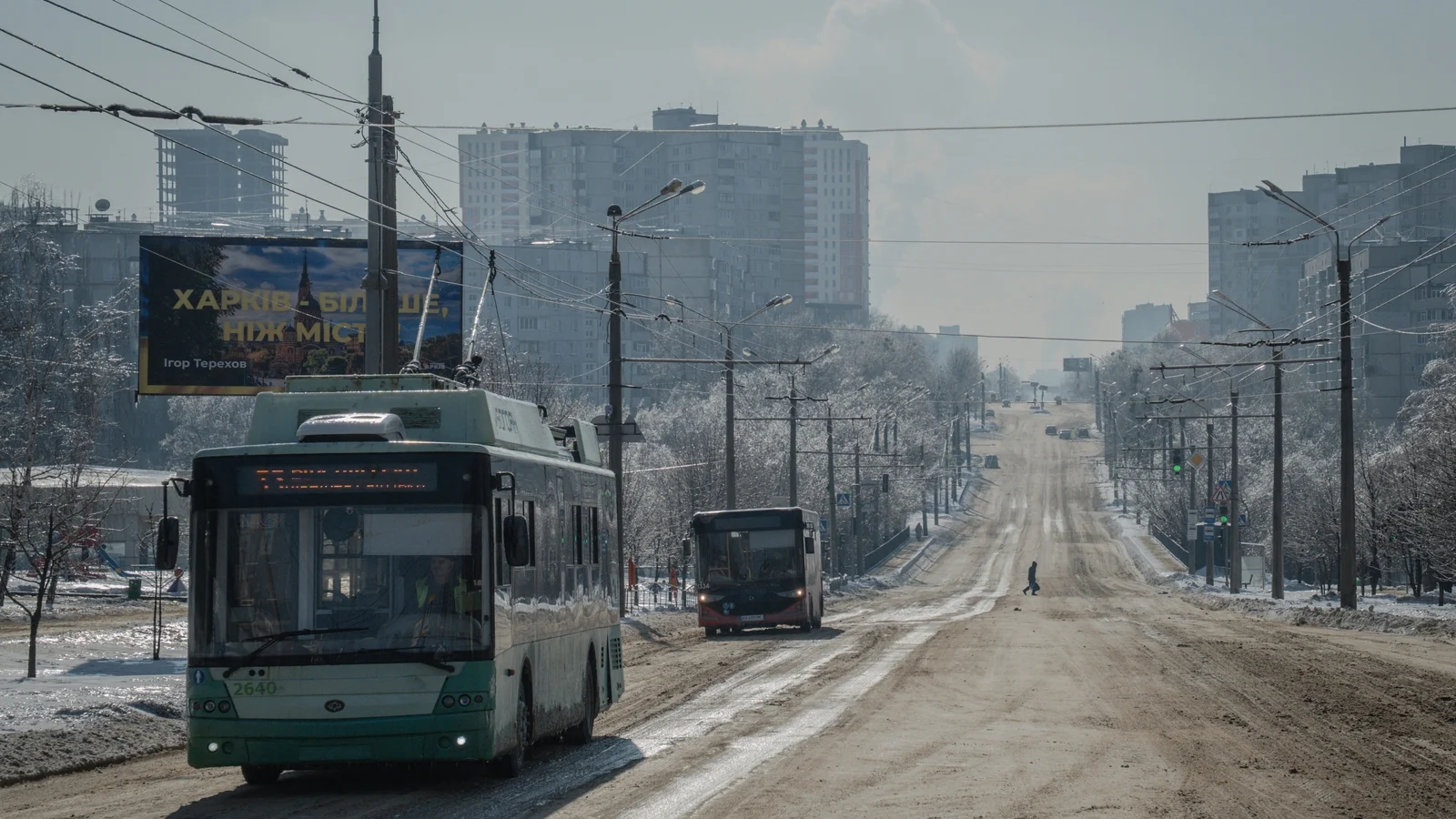
Kharkiv, before the war, was a bustle of industry and learning—Ukraine’s second-largest city, home to universities, theatres, and bold interwar modernist architecture like the Derzhprom building. Since Russia’s full-scale invasion in February 2022, the city and its surrounding oblast have been regularly shelled. The frontline sits shockingly close: roughly 30 kilometres away. Recent strikes have continued to exact a civic toll—residents injured, streets scarred, and, in a heartbreaking reminder of the stakes, a passenger train struck by drones that killed six people in a recent attack.
So the workshop is not an abstract studio exercise. It’s a two-week, transnational effort called “Building Back Better,” convened by Warsaw University of Technology with the Kharkiv School of Architecture and supported by universities from Ireland and the Czech Republic. More than 100 students, academics, and practicing architects have gathered in Warsaw and Lviv to imagine Kharkiv’s future: apartment-by-apartment, neighbourhood-by-neighbourhood, city-wide, and regionally.
The International Classroom
Fifteen students from the University of Limerick and two from University College Dublin have made the trip to Warsaw, their travel and accommodation underwritten by the European Union’s Erasmus programme. They work in mixed teams alongside peers from Warsaw and Brno, and with Kharkiv students who are teaching and learning from Lviv. Zoom lines thread through the project like lifelines—sometimes delayed, sometimes pixelated, but always bringing together voices with a fierce, shared purpose.
“For many of us it’s a crash course in a place we only ever read about in headlines,” said Alexander Gniazdowski, a fourth-year student from Limerick, as he spread out maps of Kharkiv’s grid. “But once you learn the streets, the names of parks, the monuments—your responsibility changes.”
Scales of Thinking: From Windowsills to Region
The teams were given different lenses: some focused on the micro—material choices and apartment retrofits—while others looked to the macro—transport corridors, ecological buffers, and the fragile interface with a contested border region. That scale-shifting trained them to think like both emergency responders and long-horizon planners.
- Apartment-level: adaptive reuse and blast-resilient modifications.
- District-level: community hubs, shelter distribution, and local economies.
- City-wide: mobility, heritage conservation, and resilient energy networks.
- Regional: floodplain management, supply corridors, and refugee return strategies.
Voices Inside the Project
Not all participants are newcomers to Ukraine. Three of the Irish-based students were born in Ukraine and moved to Ireland since the invasion. “This project lets people from outside get to know Ukraine better,” said Oleksandra Deineha, a third-year UCD student originally from Khmelnytskyi. “It’s about understanding, and possibly helping rebuild in ways that respect people’s lives.”
From Lviv, architect Andrii Hirniak joined the conversations with the pensive calm of someone who still has family in the city the teams are designing for. “We need new ideas and hope,” he said. “We need projects that are not only technical, but that bring dignity back into everyday life.”
Another Lviv-based collaborator, Nataliia Liuklian, emphasized how safety has reshaped architectural priorities. “Before the war, we designed for light and openness,” she said. “Now we design for refuge—fast, adaptable, human. Bunkers, yes, but also kitchens that can cook for twenty people and windows that turn into reinforced shelters.”
What Are They Learning?
For non-Ukrainian students, the workshop has been a fast, sometimes humbling immersion into the region’s history, the politics of identity, and the gritty details of reconstruction—from sourcing local materials to understanding the cultural significance of public squares and Orthodox church plazas.
“Kharkiv sits at a crossroads of identity,” observed one Warsaw-based professor. “It’s a Ukrainian city with Russian-language communities, Soviet architecture, and centuries of exchange. Rebuilding here is not just about walls; it’s about memory.”
From Sketch to Legacy
By the workshop’s close, teams in Warsaw and Lviv will present their research and design concepts—documents, models, and narratives the organisers intend to publish. The hope is tangible: that these ideas will outlive the two-week sprint and feed into longer-term, implementable plans.
“The intention is to produce something durable,” Carroll said, “to create input that can affect policy and practice long after the last coffee cup is cleared away.”
Why This Matters Globally
This workshop is one node in a wider global conversation: how cities rebound after conflict; how young professionals shoulder the complex moral tasks of reconstruction; how international cooperation can be operational, not just symbolic. It raises durable questions: What must a rebuilt city protect—the past, the future, or both? How do you design public space for communities fractured by trauma?
These are not questions for architects alone. They affect planners, humanitarians, policymakers, and residents who will return to their streets only if those streets feel safe, familiar, and able to sustain livelihoods. In an era of climate emergencies and geopolitical shocks, resilience is as much social as it is structural.
So What Can You Do?
Ask yourself: where do I see architecture as a moral act? If design can shape recovery, how should international education programs be organised to ensure they truly serve affected communities, not only the CVs of visiting students?
For now, the students fold their plans and tag the models, the Lviv link goes quiet for the evening, and the city they’ve been imagining—Kharkiv—remains full of contradictions: wounded, stubborn, and waiting. If these two weeks produce only one permanent outcome, perhaps it is this renewed sense that rebuilding is possible when we listen more than we talk, when we co-design rather than impose, and when young hands sketch futures for those who remain at the sharp edge of history.