A storm over the barn door: why Europe’s farms are suddenly unsure of tomorrow
On a damp morning in County Clare, a grey tractor idled at the edge of a field while its driver, Niall Kearney, sipped tea from a chipped mug and scanned the rows of winter barley. “You plan your year like a school term,” he said, “but when the payments are a mystery, you can’t even book the seed.” His voice carried the impatience of someone who counts every euro and every hour of labour.
This mixture of anxiety and practical frustration is spreading from the hedgerows of Ireland to the vineyards of Spain, the olive groves of Greece, and the market towns of Poland. At the heart of it is a proposed overhaul of the European Union’s agricultural funding under the next Multiannual Financial Framework (MFF) — a plan to reorganise payments that support farmers, fisheries and rural development across the bloc. The change is sweeping: the familiar Pillar One and Pillar Two split, which has guided CAP (Common Agricultural Policy) payments since 1962, would be dismantled in favour of a single, national envelope managed jointly by member states and the European Commission.
What’s changing — and why it matters
The proposed MFF for 2028–2034 envisages a roughly €2 trillion budgetary landscape for the EU, and within that the biggest chunk is a consolidated European Fund estimated at about €865 billion. For the first time in modern CAP history, agriculture would not sit in a separately labelled pot.
Under the Commission’s outline, every member state would receive a pre-allocated national financial envelope to be implemented through National and Regional Partnership Plans (NRPPs). Some monies would be ringfenced: direct payments — the lifeline for many farms — are marked at around €293.7 billion. The rest, non-ringfenced funds (about €453 billion in proposals), would be shared with cohesion, fisheries and other regional supports, and could cover familiar programmes like LEADER or the school fruit scheme.
On paper, this promises flexibility: countries could tailor actions to local needs, fold in innovation and competitiveness measures, and potentially better marry agricultural policy to climate goals. But the road from proposal to payout is where the dispute begins.
Auditors warn: clarity, predictability and fairness are at risk
The European Court of Auditors — the EU’s independent budget watchdog — has issued a blunt message: the new governance architecture is not ready for harvest. Their assessment is procedural, but the consequences are very human. If national plans must be negotiated and approved before budgets are finally known, farmers could face delayed payments, complicated paperwork and uncertainty that chills investment.
“A common policy must be predictable and fair,” the auditors said in a careful analysis. “When funding becomes tied to bespoke national plans, we open the door to diverging rules, delayed disbursements and a patchwork of support across Europe.”
Auditors fear that the flexibility designed to help regions may instead create an uneven playing field: where one country prioritises competitiveness and direct aid, another might channel funds into rural infrastructure or coastal fisheries. The result could be competition distortions and confusion for beneficiaries accustomed to clearer lines between direct payments and rural development measures.
Practical risks they name
- Payment delays while National and Regional Partnership Plans are assessed and negotiated;
- Uncertainty for farmers who need predictable cash flows to buy seed, fertiliser and energy;
- Potential divergence in CAP implementation across member states, risking a loss of the “common” character of the policy;
- Confusion caused by the scattering of CAP interventions across several legal proposals, complicating compliance with climate and eco-scheme objectives.
Voices from the fields, the farms and the corridors of power
In a pub near Limerick, farmer Mary O’Connell lamented the turmoil in folk terms. “Farming is not a lottery,” she said. “You plant by the calendar and you live by the cheque. If the cheque is late, the calendar is ruined.” Her worry was echoed by younger farmers too, who see secure public support as essential to keep them on the land.
Across the EU, farmers’ unions have been vocally critical. The Irish Farmers Association, for example, argues the proposals would amount to a cut exceeding 20% in agricultural funding for Ireland — a reduction they say would depress incomes and trickle through to local shops, contractors and rural jobs. “This isn’t just about subsidies; it’s about the food economy that sustains our villages,” said one IFA spokesperson.
From Brussels, the Commission’s agriculture representative acknowledged the need for dialogue. “This is not a sprint; it is a marathon,” an EU official told a committee hearing, urging co-legislators to fine-tune governance and clarify uncertainties. He emphasised that the proposals were meant to modernise the CAP and to link it better to innovation and climate ambition, but admitted that rules would need work to avoid unintended outcomes.
Policy experts fear that efforts to simplify engagement with climate targets — for instance, by merging eco-schemes with agri-environmental measures — could paradoxically produce greater complexity. “When responsibilities are diffused across multiple legal texts, implementation becomes a puzzle,” said Dr. Elisa Romano, an agricultural policy analyst. “National authorities and farmers need simple, operational rules, not a legal maze.”
Local color, larger themes
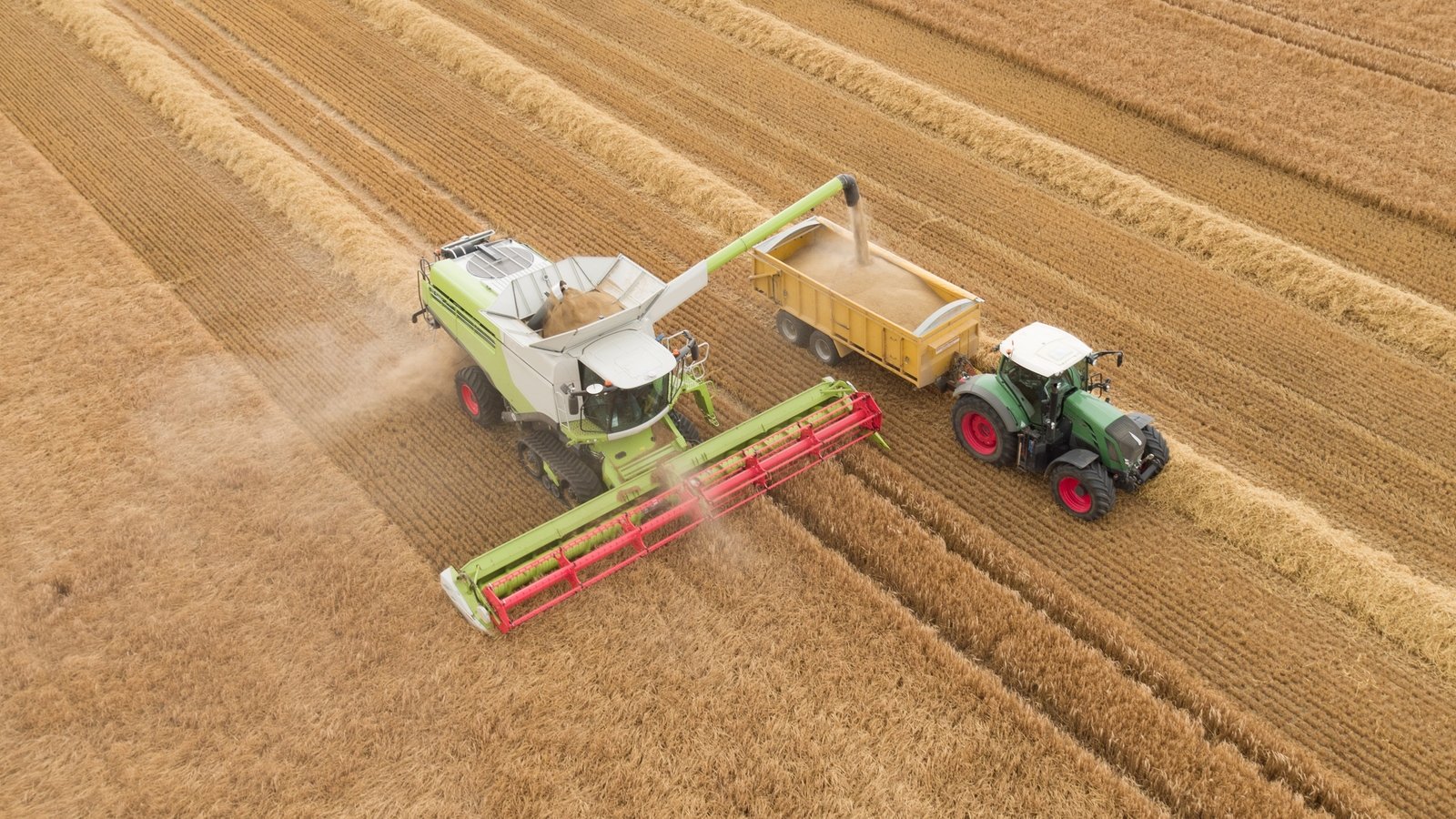
Walk through many European villages and you see the larger stakes: tractors lining narrow lanes, cattle tags glinting, and the scent of fresh hay. Rural economies are about more than food; they are about identity, landscape stewardship, biodiversity and social cohesion. Changes to CAP governance intersect with broader global debates about decentralisation, the green transition and fairness in a single market.
Will nations use the flexibility to leap forward with targeted green investments and digital farming? Or will bespoke NRPPs become bargaining chips that leave smallholders exposed and young farmers alienated? Those are not abstract questions. They determine whether rural schools stay open, whether hedgerows are restored, and whether rural Europe remains vibrant rather than hollowed out.
What happens next — and how readers should watch
Negotiations are ongoing. Member states and European institutions must decide whether to move core rules back into a CAP regulation or to leave more authority in NRPPs. The transition timeline matters: adoption delays could push payments into limbo. Meanwhile, advocacy groups and farming unions are preparing to press their case at national capitals and in Brussels.
For the everyday reader, the revelation is this: budget architecture is not mere bureaucracy. The way funding is designed and delivered matters to the price of bread, the survival of small farms, and the stewardship of landscapes that define communities.
Ask yourself: do we want a CAP that guarantees a baseline of support across the EU, or one that lets national governments tailor help at the risk of fragmentation? How should the EU balance the needs of competitiveness, climate action and social fairness?
Closing thought
As the mist lifted over the Clare field, Niall climbed into his tractor. “We can change,” he said, a farmer’s pragmatism shining through. “But change needs a map. Without it, we’ll get lost.” Europe’s policymakers now have to draw that map — clearly, fairly, and with an eye on the people who will live by its roads and plant by its seasons.