A Morning of Loss on Libya’s West Coast: The Sea That Keeps Taking
At first light, the shoreline between Zawiya and Zuwara looks like any other Mediterranean fishing town: men sorting nets, women selling tomatoes and bread, kids chasing one another along the sand. But on this morning the sea was quieter than usual, and the air heavy with a kind of stunned silence that settles after something that should not have happened has happened.
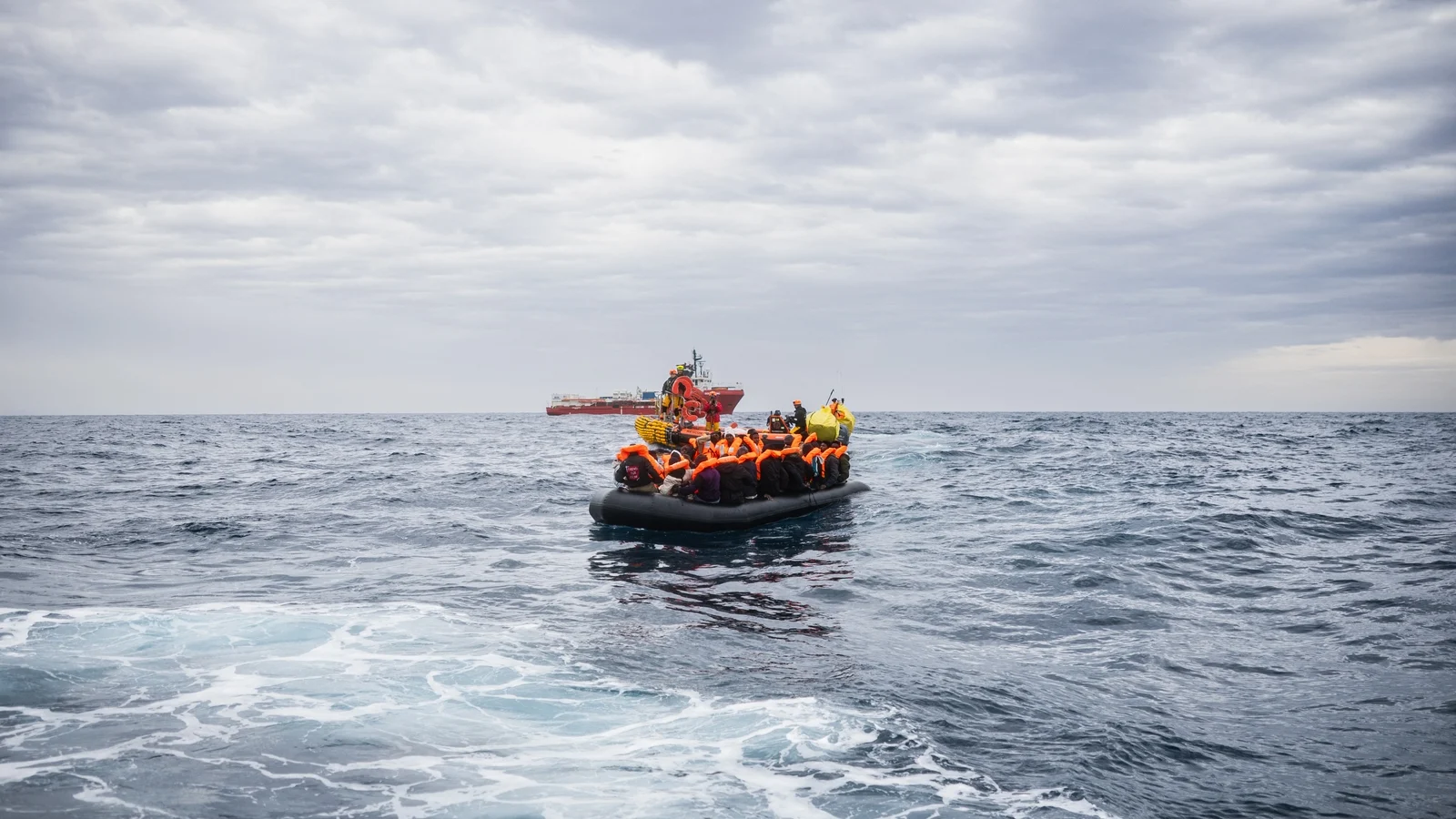
Not long after dawn, the wreckage of a rubber boat washed ashore — a deflated hull, a single child’s sweater tangled in seaweed, lifejackets scattered like fallen leaves. Only two people survived. Fifty-three others were either dead or missing. The International Organization for Migration (IOM), which has been tracking Mediterranean crossings for years, said the boat left Zawiya on Thursday and overturned off Zuwara on Friday. Among the missing were two babies.
Voices from the Shore
“I had dreams for my children,” said one of the women rescued by Libyan authorities, her words translated by an aid worker. “I held them as long as I could. The sea took them.” The other survivor, who was found with signs of shock, told rescuers she had lost her husband during the capsizing.
“There was nothing but night and water,” a local fisherman, Ahmed, told me, his hands still smelling faintly of diesel and salt. “We go out for fish. We have seen many boats before. But when we saw this, even the older men shook their heads. It is shameful to think human lives go like driftwood.”
Numbers That Don’t Capture the Full Cost
Numbers help us measure the scale, but they cannot hold the weight of the people behind them. The IOM reports that more than 1,300 migrants went missing in the Central Mediterranean in 2025. In January alone, at least 375 people were reported dead or missing during a string of shipwrecks amid ferocious weather, and many more are believed to have perished without being recorded.
With this latest tragedy, the agency says at least 484 migrants have been reported dead or missing on the Central Mediterranean route in 2026. Add to that the human stories of loss, and the tally grows immeasurably larger.
- Boat capacity: 55 people
- Survivors: 2 (both Nigerian women)
- Dead or missing: 53 (including two infants)
- Reported missing on Central Mediterranean in 2025: >1,300 (IOM)
- Reported dead/missing in January storms: ≥375
The Geography of Despair
Libya has, since the fall of Muammar Gaddafi in 2011, become a corridor — a perilous highway for men, women and children fleeing conflict, persecution and grinding poverty across Africa and the Middle East. The route is not simply a patch of ocean; it is a gauntlet that begins in detention centers and deserts and ends, for too many, in watery graves.
Zawiya and Zuwara, the town and port of departure for this latest group, sit to the west of Tripoli. Zuwara, with its winding streets and coastal fisherfolk, is home to a strong Amazigh community — people whose histories are braided into the sea and the land. In the cafes there, conversations move from the price of sardines to the latest arrival of migrants ashore, sometimes with a weary fatalism.
Beyond the Waves: Captivity, Abuse, and a Broken System
The story of loss at sea is only part of the wider tragedy. In recent months, reports have emerged of mass graves and secret prisons across Libya. Mid-January brought the grim discovery of at least 21 bodies in a mass grave in eastern Libya; survivors from that group bore signs of torture. Days later, security forces freed more than 200 migrants from a secret detention site in Kufra, southeast Libya. Testimonies gathered by local advocates describe beatings, forced labor, and extortion at the hands of smugglers and armed groups.
“This is not just about the sea,” said Nadia El-Sayed, a human rights advocate working with displaced people in Tripoli. “People are being trafficked, detained, and abused on land before they even reach the boats. Then, when they’re sent off, they are loaded into unseaworthy vessels that are meant to fail.”
International pressure has mounted. At a UN meeting in Geneva, states including Britain, Spain, Norway and Sierra Leone urged Libya to close detention centers where, they said, migrants and refugees face torture, abuse, and sometimes death. Yet demands from the international community have often been met with opaque promises and half-measures.
What Drives People to Risk Everything?
Put yourself in their shoes for a moment — or rather, try to imagine the forces that make such a desperate gamble seem preferable to staying. Many migrants embark because conflict has burned their neighborhoods to ash; others flee crumbling economies where jobs and services are rare. Climate stressors and food insecurity nudge families toward an already perilous route. Smugglers sell dreamlike promises of safety and work that turn into horror.
“I left because my son was hungry every day,” one mother whispered through a translator. “In Libya I had no work; in our country there were bombs. What choice did I have?”
What the World Owes Them
This is a crisis that is first and foremost human, but it is also a test for international policy and moral imagination. How do we respond to people driven to the sea by poverty and violence? How do coastal nations balance deterrence with rescue? How do we dismantle the smuggling networks that profit from misery?
Rescue at sea requires resources and political will. It requires safe disembarkation points, coordinated search-and-rescue efforts, and legal pathways for asylum and resettlement so that people do not feel compelled to buy death in a dinghy. It also requires confronting abuse behind the scenes: the detention centers, the traffickers, and the local and transnational networks that feed this business.
“No policy can ignore the humanity of these people,” said Dr. Marco Leone, a migration researcher. “Protective, legal routes need to be expanded. Without that, the central Mediterranean will continue to be a graveyard.”
A Call to Witness
Walking the beach after the rescue boats left, I found a worn shoe with a child’s cartoon design half-buried in the sand. It seemed absurd, almost obscene, that such a small object could carry so much evidence of a life snuffed out mid-journey. A neighbor came by, made the sign of the cross, and wrapped the shoe in a napkin before burying it in a small hole. “We do what we can,” she said. “It is not much, but it is something.”
What can you do where you are? Ask your representatives to fund humanitarian responses and legal pathways for asylum seekers. Support organizations doing rescue and advocacy work. And above all, keep these people in view — not numbers on a page, but mothers, fathers, children, and elders whose stories deserve to be told and whose losses demand accountability.
The Mediterranean has long carried sailors’ tales of storms and fortune. Lately, it has become a ledger of sorrow. Until the world treats migration as a symptom of deeper global failures rather than a problem to be policed at the waterline, more mornings like this will follow.