A Washington envoy, a wounded alliance, and the smell of chimney smoke in Budapest
There is a particular winter air in Budapest that carries a hundred histories: chimneys breathing soot over the Danube, tram bells clattering, the metallic echo of politics ricocheting off the facades of a city that has long learned to live in the shadow of great powers.
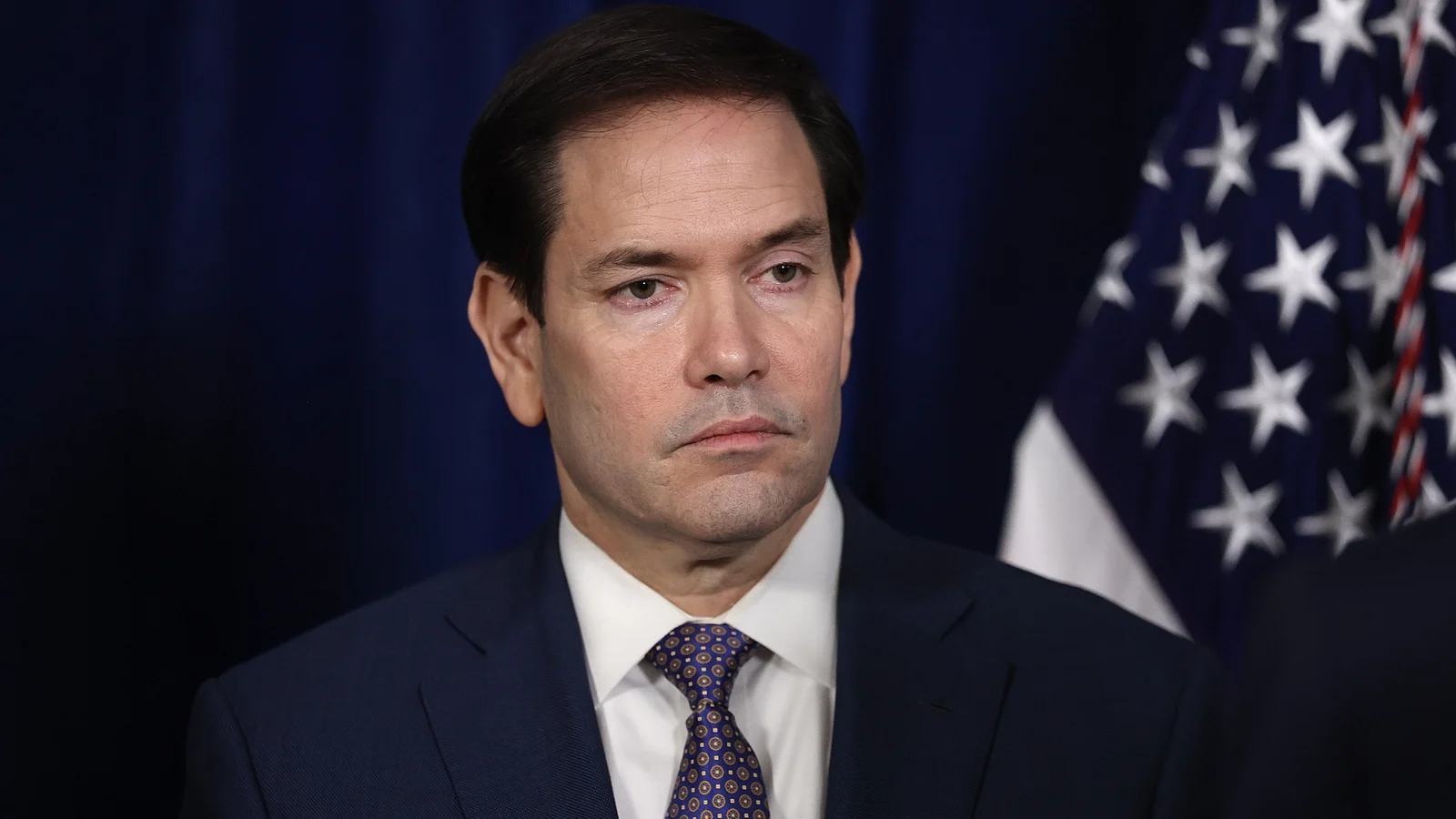
Next week, that air will feel even more charged. According to the State Department, US Secretary of State Marco Rubio will travel to Hungary and Slovakia after attending the Munich Security Conference. It is a short diplomatic circuit with long echoes — a visit broadcast not just as routine statecraft, but as a signpost in a fraught transatlantic moment. President Donald Trump has openly endorsed Hungary’s prime minister, Viktor Orbán, calling him “a true friend, fighter, and WINNER.” That endorsement landed like a pebble in a still pond, sending concentric waves across capitals and kitchen tables alike.
On the ground in Hungary: intimacy and unease
Walk through the neighborhoods of Budapest and you will meet people whose responses to these developments resist neat categorization. In the VII district, a cafe owner named Gábor Nagy pours espresso with the practiced ease of someone who has heard every political pitch and seen most of them change. He shrugged when asked about Mr. Rubio’s impending visit.
“We drink coffee, we look at the news,” Gábor said. “Some people are happy when a strong friend comes. Others are worried. There is fatigue here — not just political fatigue, but a fatigue about being watched and judged by capitals far away.”
Gábor’s words capture the strange intimacy of Hungary’s moment: a country of roughly 9.6 million people, led for more than a decade by Orbán, who has become an emblem of Europe’s rightward drift. Orbán’s government has courted a politics of cultural defense — closing borders during the Syrian refugee crisis, promoting conservative family policies, and tightening control over media and public institutions. To some Hungarians, those moves feel like protection. To others, they read as the slow accretion of authoritarian habits.
Diplomacy where energy and security meet
The State Department says Rubio’s agenda will include bolstering bilateral and regional interests, a renewed focus on energy partnerships, and support for peace processes. In Slovakia, he will discuss nuclear energy cooperation, military modernization, and NATO commitments. Those are tidy diplomatic bullet points; beneath them lies a web of tangible anxieties.
Energy, more than any other single issue in recent years, has remade Europe’s strategic map. When the White House granted Hungary an exemption from US sanctions on Russian oil and gas imports last year, it underscored how energy dependencies can be leveraged into geopolitical leeway. Hungary imports a substantial share of its natural gas and relies on long-standing pipelines that run eastward. For policymakers in Washington and Brussels, that matters. For families heating their homes in a hard winter, it is existential.
Numbers that matter
- Hungary’s population: ~9.6 million.
- Orbán’s premiership: in power since 2010 and now seeking another term.
- Energy dependency: Central Europe’s reliance on Russian gas has been central to post-2014 security debates across the EU and NATO.
“Energy is not an abstract commodity here,” said Dr. Elena Voros, a Budapest-based analyst who studies Central European geopolitics. “It’s heat in the winter. It’s a factory that keeps running. When diplomats talk about energy diversification, that translates on the ground into pipelines, contracts, and sometimes political favors. That’s why these meetings matter.”
Collision of personalities and political markets
Donald Trump’s endorsement of Orbán — a leader who has nurtured warm ties with Vladimir Putin and resisted some EU initiatives in support of Ukraine — has heightened sensitivities across Europe. Orbán’s proposed fifth consecutive term, with elections set for April 12, faces an unusually robust challenge from Peter Magyar, a former insider turned critic. Polls have suggested the race may be tighter than in past cycles.
“This is not simply about personalities, although personalities color everything,” said Marta Kovács, a math teacher in Debrecen who volunteers on a local election campaign. “It’s about what kind of Hungary people want: closed and protected, or open and messy?”
There is also the wider theatricality of transatlantic politics at play. Last year, Vice President JD Vance delivered a blistering critique of the European Union at Munich; this year, Rubio — often viewed domestically as a more tempered face of Trump-aligned diplomacy — will step into that spotlight. The optics send messages: to Hungary, to Slovakia, to the EU, and to Russia.
Slovakia: echoes and dissonances
In Bratislava, Prime Minister Robert Fico has also found points of sympathy with Trump-era rhetoric. But controversy followed Fico’s reported Florida visit after Politico cited anonymous diplomats saying he had voiced concern about the US president’s mental fitness. Slovakia publicly denied the account, and the episode revealed how quickly a single report can ricochet through diplomatic circles.
Rubio’s meetings in Slovakia are slated to touch on nuclear energy cooperation — a salient issue for Bratislava, which relies on the Mochovce nuclear power plant for a large share of its electricity — as well as military modernization and NATO obligations. For a country that shares a border with Ukraine and has a population of around 5.4 million, those are not academic concerns.
Why this visit matters beyond map lines
Ask yourself: what is the purpose of diplomacy in a time when alliances seem transactional and public trust in institutions is frayed? Is it to calm, to cajole, to prod, or to shore up interests before they calcify into irreconcilable positions?
Rubio’s trip is all of those things. It is a reassurance to allies who worry about the coherence of US policy; it is a bid to keep Hungary and Slovakia anchored to NATO and transatlantic security projects; and it is a reminder that energy and security remain entwined. But it is also a political gesture, audible in the tremor of endorsements and the silence of things unsaid.
“Diplomacy now feels like defusing a chain of small fires,” said Dr. Voros. “Each meeting can prevent a spark from leaping to the next pile of tinder.”
Local voices and the global conversation
Back at the market in Budapest, vendors sell cabbage and kolbász as they always have. An elderly woman, Erzsébet, wrapped in a heavy coat, looked at the newspaper and offered a brittle, wry smile.
“We watch the news like weather,” she said. “We decide whether to carry an umbrella.”
Her metaphor is apt: diplomacy predicts storms and sometimes moves to shelter people. But umbrellas only do so much. The deeper question — the one that ripples out from the cafes of Budapest to the halls of Munich and the corridors of Washington — is whether alliances can reinvent themselves for a world where energy security, populist politics, and shifting loyalties redraw maps faster than institutions can adapt.
When Rubio sits across from ministers in ornate government chambers, he will find polished protocol and raw politics intertwined. Will those meetings push toward practical cooperation — on energy diversification, on NATO modernization, on conflict resolution — or will they simply become another line in a longer narrative of mistrust? The answer will matter not just for diplomats and politicians, but for the families heating their homes, the teachers and shopkeepers, and the cafe owner who just wants consistent customers and less political noise.
So watch the skies. And ask yourself: in the new architecture of 21st-century alliances, who gets to hold the umbrella?