When a Mountain Town Went Quiet: Tumbler Ridge After the Unthinkable
There are towns that live by the rhythm of the seasons—snowmelt in the spring, long summer hikes, the steady hum of a single main street. Tumbler Ridge is one of those towns, carved into the foothills of northeastern British Columbia, where conversations at the post office drift into questions about trail conditions and where the local café knows your order before you finish saying your name.
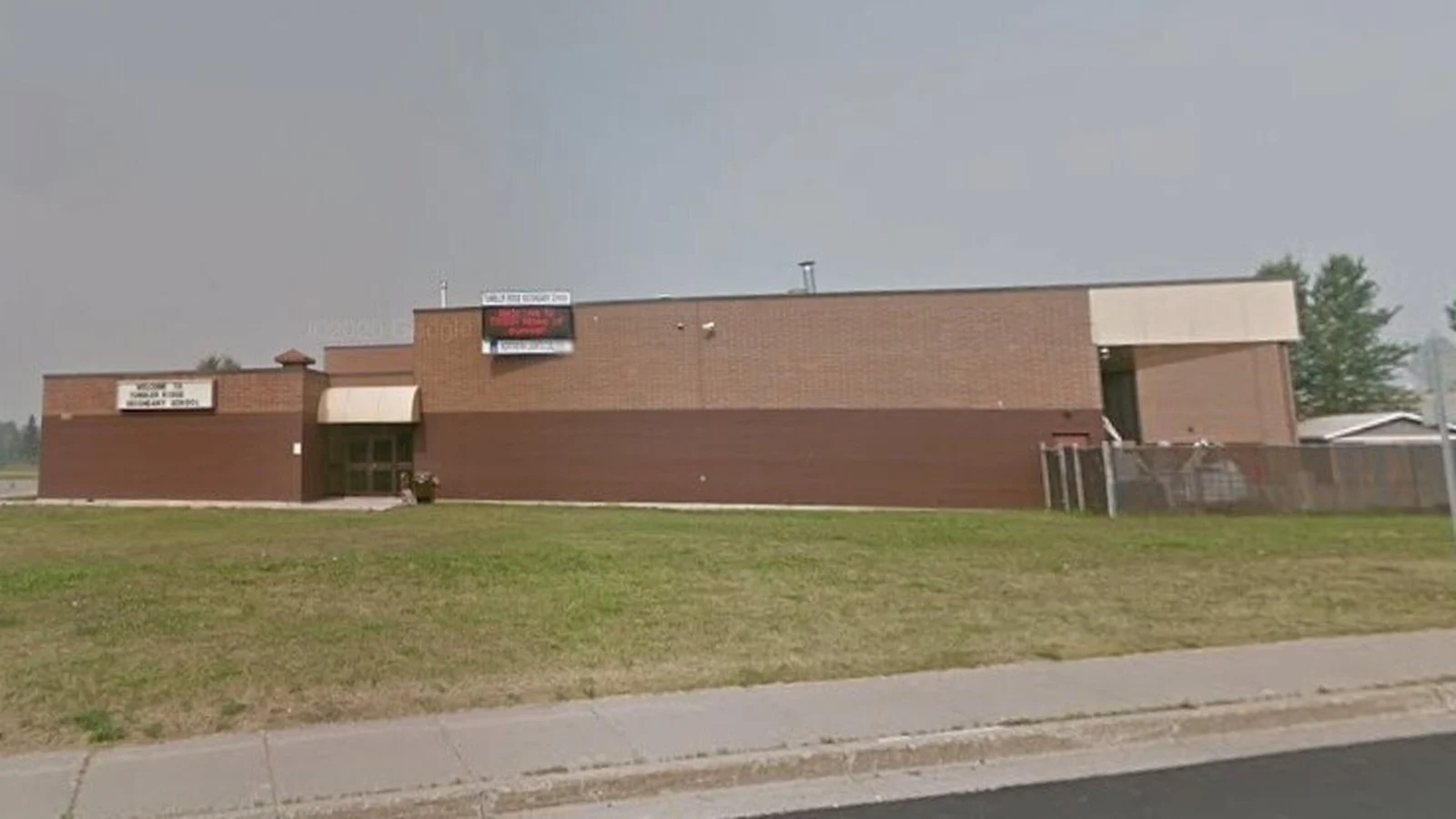
On an ordinary afternoon, that comfort was shattered. News arrived first as an emergency alert: stay inside, keep doors locked. Minutes stretched into hours. By nightfall the count was heartbreakingly simple and yet impossible to place in the vocabulary of a town so small—nine people were dead, 27 others wounded. Six of the dead had been shot at the high school where many in the community had learned and taught; another died while being taken to hospital. Police later found two more bodies in a nearby residence. Authorities say the suspected shooter took their own life.
“Beyond comprehension”: A pastor’s grief becomes the town’s
“We raised our children in that school. I taught there for eight years,” said George Rowe, the town’s pastor and a face familiar to many. His voice, even over the radio, carried the kind of exhaustion that comes when words don’t match the scale of loss. “It’s a beautiful town. Why this happens… we’ll be waiting for answers.”
Rowe walked the lines between ritual and emergency duty—offering comfort at the recreation centre, sitting with families who’d watched the worst possible fears unfold, fielding donations poured in from across the country. “People will grieve in different ways,” he told a national broadcaster. “Some may never find their footing again. But we will make sure no one falls through the cracks.”
Faces at the centre
At the recreation centre, a volunteer who asked to be called Elena described the scene as both pastoral and surreal. “You could smell the coffee and antiseptic, hear trainers snapping and people whispering names. Someone kept setting out mugs with the names of the missing—like talismans,” she said. “I watched a man trace the edges of a child’s picture with his thumb, the way you would a gravestone.”
Another resident, a high school teacher who had been at the school in previous years, told me she couldn’t shake the image of an empty classroom. “I keep imagining lockers, backpacks, an ordinary day. It’s trivial and it’s the only thing that makes sense,” she said. “We went from baseball games and parent-teacher nights to this. How do you stitch that back together?”
What we know — the facts behind the headlines
- Deaths: Nine people confirmed dead—six at the school, one who died while being transported to hospital, and two discovered at a residence.
- Injuries: 27 people wounded; reports indicate two with serious injuries and 25 with non-life-threatening wounds.
- Perpetrator: Police indicate the suspected shooter appears to have died by suicide at the school.
- Emergency response: The federal-provincial emergency alert system was used to instruct residents to shelter in place while police secured the scene.
Numbers are cold by necessity, yet they are also the scaffolding on which we hang stories: whose names will we learn, who will speak at a memorial, who will keep the tradition of pancake breakfasts alive? For a town of roughly 2,500 people, this level of loss ricochets through every household.
How a community responds: rituals, practicalities, and solidarity
In Tumbler Ridge the response was immediate and intimate. Neighbours checked on neighbours. The local food bank switched from donations to prepared meal deliveries. Volunteers combed through lists to make sure every family impacted had someone with a phone number and a car. “There’s no charted path for this,” said a municipal councillor. “You learn by doing: if someone cries in your grocery line, you bring them tea. If someone needs childcare, you bring it.”
From Vancouver to Ottawa, messages poured in. “We’ve received offers of grief counselling, financial support, and even a temple sending blankets and fragrant prayers,” Rowe said. The country’s small-town solidarity is not merely sentimental; it will be operational—helping pay funeral costs, providing therapy, sustaining families who might otherwise be left adrift.
Emergency alerts and the new geography of fear
We live in an era where a phone can become both a lifeline and a harbinger. The alert that flashed on screens during the Tumbler Ridge incident—part of Canada’s Alert Ready system—saved lives by keeping people indoors while police moved to secure the area. But it also meant hours of frozen uncertainty: do you go to help? Do you huddle in your basement? Do you try to reach loved ones?
“Those messages are a double-edged sword,” said Dr. Amina Sayeed, a trauma psychologist who has worked in rural crisis response. “They can prevent immediate harm but they also amplify a population’s sense of vulnerability. In small towns, where pathways and faces are familiar, the psychological dissonance of someone ‘unknown’ committing a local atrocity is deep.”
Questions that reach beyond town limits
As the community of Tumbler Ridge begins the slow, private work of mourning, larger questions are already taking shape in the public imagination. What drove this person to violence? Could anyone have intervened? What do we owe each other when tragedy flows out of everyday life?
Canada’s recent history includes painful precedents. In 2020, Nova Scotia experienced one of the country’s deadliest mass shootings, which led to national soul-searching about firearms policy, emergency response, and mental health care. Policymakers have since tightened certain regulations; yet, as experts like Dr. Sayeed note, laws are only part of the story. “You can legislate guns, but you also need networks of care, community awareness, and sustained investment in mental health—especially in remote areas,” she said.
What can readers do? A short guide to meaningful action
It’s easy to scroll past tragedy and feel helpless. Real help is practical and sustained. If you want to help communities like Tumbler Ridge, consider:
- Donating to verified local relief funds rather than ad-hoc collections.
- Supporting national mental health organizations that funnel resources to rural areas.
- Advocating for policies that blend safety with community-led prevention work.
- Checking in on your own neighbours—particularly in tight-knit communities—because small acts of care accumulate into lifelines.
Closing: holding a town in mind
Soon there will be memorials; perhaps small gatherings in the high school gym where the community hosts its potlucks, or a vigil lit beneath the blue of the northern sky. There will be lists of names, and stories—how a teacher stayed behind to help, how a neighbour drove someone to safety, how a community that prided itself on the sound of laughter learned the language of grief.
“We will mourn in different ways,” Rowe said, and that phrase—plain and fierce—hung with me. It is an instruction and a promise. If you find your thoughts returning to this town, let them be active. Write to an elected official, support a vetted relief effort, or simply call someone you care about. Grief insists on being attended to. Solitude is the opposite of recovery.
When the trails of Tumbler Ridge open again and the school bell rings, the town will be forever altered. The work of rebuilding will be both deeply local and quietly universal: a small town asking the rest of the country—and the world—to stand with it, not for a moment, but for the long haul.