When the Lights Go Out: Ukraine’s Winter Under Siege
They wiped frost from the inside of a bus this morning and called it a warming station. Across Kyiv, improvised tents glow with borrowed heat, the hush of the city yearned for the whirr of a refrigerator or the hiss of a radiator. Instead, there are queues for hot tea and strangers sharing power banks like currency.
“You learn to be small and grateful for small things,” said Olena, a retired teacher who wrapped a wool scarf around her face as she juggled a thermos and her grandson’s mitten. “A kettle that boils is a small miracle now.”
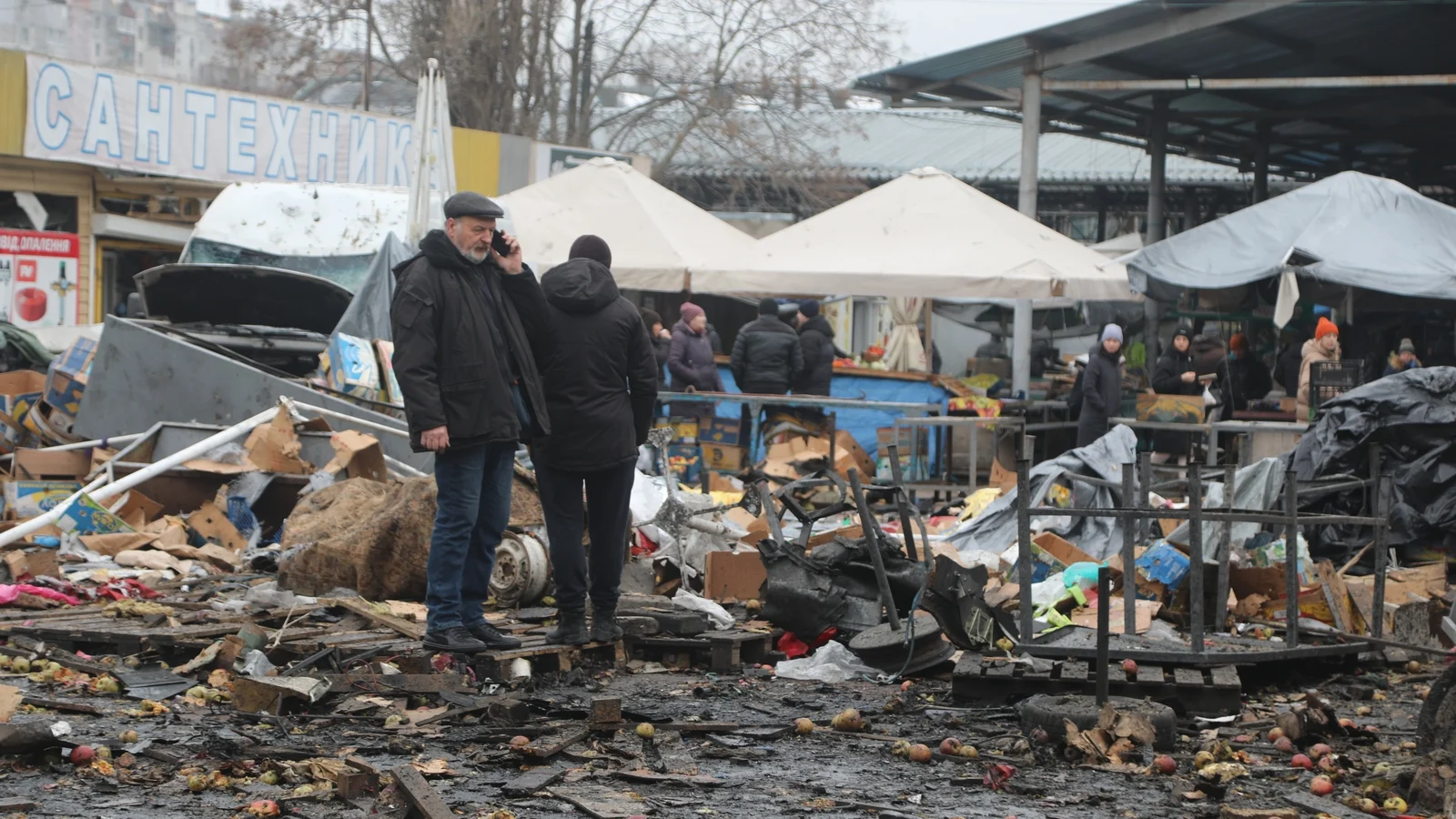
This week’s mass outages were not an accident of weather or chance. They followed a large-scale wave of strikes on Ukraine’s energy infrastructure — missiles, drones, and debris that plunged neighborhoods into darkness as temperatures plunged toward minus 20C. The United Nations’ human rights chief, Volker Türk, called the attacks “relentless,” stressing that such strikes deprive civilians of “adequate warmth, water and electricity in an unbearably bitter and dark winter.”
Numbers That Tell a Brutal Story
The figures are stark and clinical, but they map onto aching lives. Ukraine’s air force reported that Russia launched 24 missiles and 219 drones in the most recent assault; air defenses intercepted most of them, downing 16 missiles and 197 drones.
Yet interception is rarely perfect. In Kyiv, Mayor Vitali Klitschko said nearly 2,600 more buildings lost heating after infrastructure damage — adding to more than 1,000 of the city’s roughly 12,000 apartment blocks already without warmth in recent weeks.
Elsewhere, in the southern Odesa region, around 300,000 people were left without water after systems were hit. In Lozova, in eastern Ukraine, an attack killed two people and cut power; Dnipro reported wounded residents and 10,000 customers without heating. Restoration Minister Oleksiy Kuleba framed the strikes bluntly: “This is yet another attempt to deprive Ukrainians of basic services in the middle of winter. But restoration efforts continue nonstop.”
Quick facts
- Reported attack: 24 missiles and 219 drones
- Air defenses claimed to have shot down: 16 missiles and 197 drones
- Temperatures reported in affected areas: down to -20C
- Approximately 300,000 people left without water after the Odesa attack
- Thousands of apartment blocks in Kyiv affected by heating outages
The Human Geography of Cold
When infrastructure falters, routine life fragments. Schools, expected to be warm and humming with children’s voices, close. Hospitals scramble to run on limited generators; operating rooms become time-boxed, schedules compressed. Urban apartment blocks, where often multiple generations live under one roof, grow dangerously cold after one radiator stops working.
“I took off my boots when I came into the tent,” said Mykola, a father of two who now sleeps in a municipal warming center. “My daughter keeps asking if winter will ever end. For her, it’s not about politics — she wants to go to school and have hot soup.”
Locals have turned city squares into communal hubs: volunteers hand out bread and batteries, NGOs coordinate generators and blankets, and churches open their halls. Yet these are stopgaps. The relentless nature of the strikes — repeated, targeted, calculated — means relief is often temporary.
Isolated Attacks, Global Consequences
What happens when an adversary weaponizes the grid? It is not merely the immediate cold that matters. Water treatment plants go offline; sanitation falters. Electronic records become inaccessible. Economic activity slows to a trickle when factories and small businesses cannot operate. In short: civilian life becomes a logistical nightmare.
International law is clear: intentionally targeting civilian infrastructure is prohibited. “The targeting of civilian infrastructure is prohibited under international humanitarian law,” Volker Türk said, urging the Russian Federation to cease the attacks immediately. Humanitarian agencies have echoed that sentiment, warning of cascading effects on health, nutrition, and displacement.
Allies Step Up — But Is It Enough?
As Kyiv reels, allies have mobilized new aid. The UK announced a package of support that includes about £150 million (€172m) to a NATO-backed scheme for purchasing American weaponry and 1,000 British-made lightweight missiles worth over £390 million (€447m). British Defence Minister John Healey said the move underlines that “allies are more committed than ever to supporting Ukraine” as the conflict edges into its fifth year.
Germany’s Defence Minister Boris Pistorius did not mince words: “It’s just terrorism against the civilian population of Ukraine,” he said, arguing for stepped-up support in terms of defensive capabilities.
Yet military aid is only one part of a broader solution. Building back power stations, securing water systems, and ensuring supply chains for fuel and parts are long, expensive undertakings that outlast the headlines. And while Western Europe debates the scale and timing of aid, thousands in Ukrainian cities face immediate suffering.
On the Ground: Repair, Resilience, Resistance
Electricians and engineers in gas-stained jackets become frontline workers. Their daily briefing is a map of broken substations and frozen valves. “We have teams working round-the-clock,” said Kateryna, a power plant mechanic in Dnipro. “Sometimes we get a few hours to fix a transformer, sometimes we work in -15C. We are exhausted, but we cannot stop.”
The community response is inventive. Cafés plug into mobile generators and become communal kitchens. A volunteer group called “Warm Hands” dispatched vans of blankets and charging stations across neighborhoods. Schools that can’t open pivoted to block-based micro-shelters where children can stay warm for a few hours.
Still, resilience shouldn’t be romanticized. Reliance on goodwill and improvisation is a fragile buffer against a campaign meant to sap morale and survival itself.
What Does This Mean for the Rest of the World?
When infrastructure becomes a weapon, every city with an aging grid, every coastal town with a single water plant, every hospital dependent on a fragile supply chain should sit up and take note. These are not isolated consequences — they are a reminder that in modern conflict, civilians and civilian systems are perilously exposed.
How do democracies protect their people and their infrastructure? How do humanitarian law and political will translate into practical defense and recovery? The Ukrainian winter is a brutal case study with lessons for every capital that depends on interconnected networks of power and water.
As you read this, where do you live warm and well-lit, perhaps indifferent to a kettle that never sits cold? Imagine living without that small luxury at -20C. What would you miss most? A hot meal? A warm bedtime story? A phone call that reaches through?
Closing: Light, Again
For now, people will keep sharing blankets and batteries. Engineers will keep climbing into substations. Volunteers will keep the tea flowing. And diplomats will keep talking in Brussels and New York.
But the scene in Kyiv — flickering tents, cordoned-off power stations, whole neighborhoods waiting for the return of heat — is not just a local tragedy. It is a test of international resolve, of how the world values civilian life when war becomes a battle for the lights themselves.
“We are cold, but we are not defeated,” Olena said, tucking her grandson closer. “We just want the world to remember we are human.”