When a Fishing Boat Becomes a Diplomatic Spark
A gray morning at sea, the kind that smells of diesel and thick brine, is not where most world-changing headlines are born. Yet off the jagged silhouette of the Goto archipelago, 166 kilometers south‑southwest of Meshima island, a routine fisheries inspection turned into an arrest and a fresh strain on an already brittle relationship between Tokyo and Beijing.
Japanese fisheries officials say they ordered a Chinese fishing vessel to stop for inspection. It did not comply. It fled. By evening, the boat’s captain had been detained and the vessel seized — a sentence that reads like maritime bureaucracy but that ripples through geopolitics.
A small incident with big echoes
“The captain was ordered to stop for an inspection by a fisheries inspector, but the vessel failed to comply and fled,” a Japan Fisheries Agency statement said. “Consequently, the vessel’s captain was arrested on the same day.”
The arrest occurred well inside Japan’s exclusive economic zone (EEZ), a buffer that extends up to 200 nautical miles — roughly 370 kilometers — from a nation’s coastline and grants coastal states rights over marine resources. The boat was about 166 kilometers out, or roughly 90 nautical miles, comfortably within Japanese jurisdiction under the law of the sea.
For locals in the Goto islands, the moment had a familiar ring. “We see Chinese boats often, sometimes skirting the edge, sometimes closer,” said Hiroshi Tanaka, a fisherman who grew up in the archipelago. “But an arrest like this — it brings memories of 2010 back. People here remember how loud and ugly that got.”
Memory lanes and minefields: Why 2010 still matters
The islanders’ unease is not just nostalgia. In 2010, a similar arrest of a Chinese fishing captain near the disputed Senkaku/Diaoyu area escalated into a full-blown diplomatic crisis between Tokyo and Beijing. Vessels, paperwork, and pride suddenly became proxies for deeper, unresolved tensions: history, sovereignty, and strategic rivalry in the East China Sea.
“Maritime incidents have a way of ballooning,” said Dr. Keiko Mori, a maritime law scholar at a Tokyo university. “On the water, one captain’s choices can become national symbolism. An inspection and arrest are legal acts, but they can be interpreted politically in ways that neither side wants.”
Local color at the edge of contested waters
On Meshima, where narrow streets revolve around tiny markets and the cry of gulls punctuates dawn, people talk quietly about the global forces that touch their lives. A shopkeeper named Yumi brought out tea and said, “We are used to foreign trawlers. We worry about our catch, not headlines. Still, when governments tangle, it is our food and our kids who feel it.”
Fishing here is not just work; it is identity. Boats with painted names bob in harbors ringed by concrete sea walls. People judge weather with a look at the swell and recall the old Japanese adage: the sea gives, the sea takes. Now it gives a story that will be read in capitals far from these coves.
The political backdrop: a sharper edge to Tokyo-Beijing ties
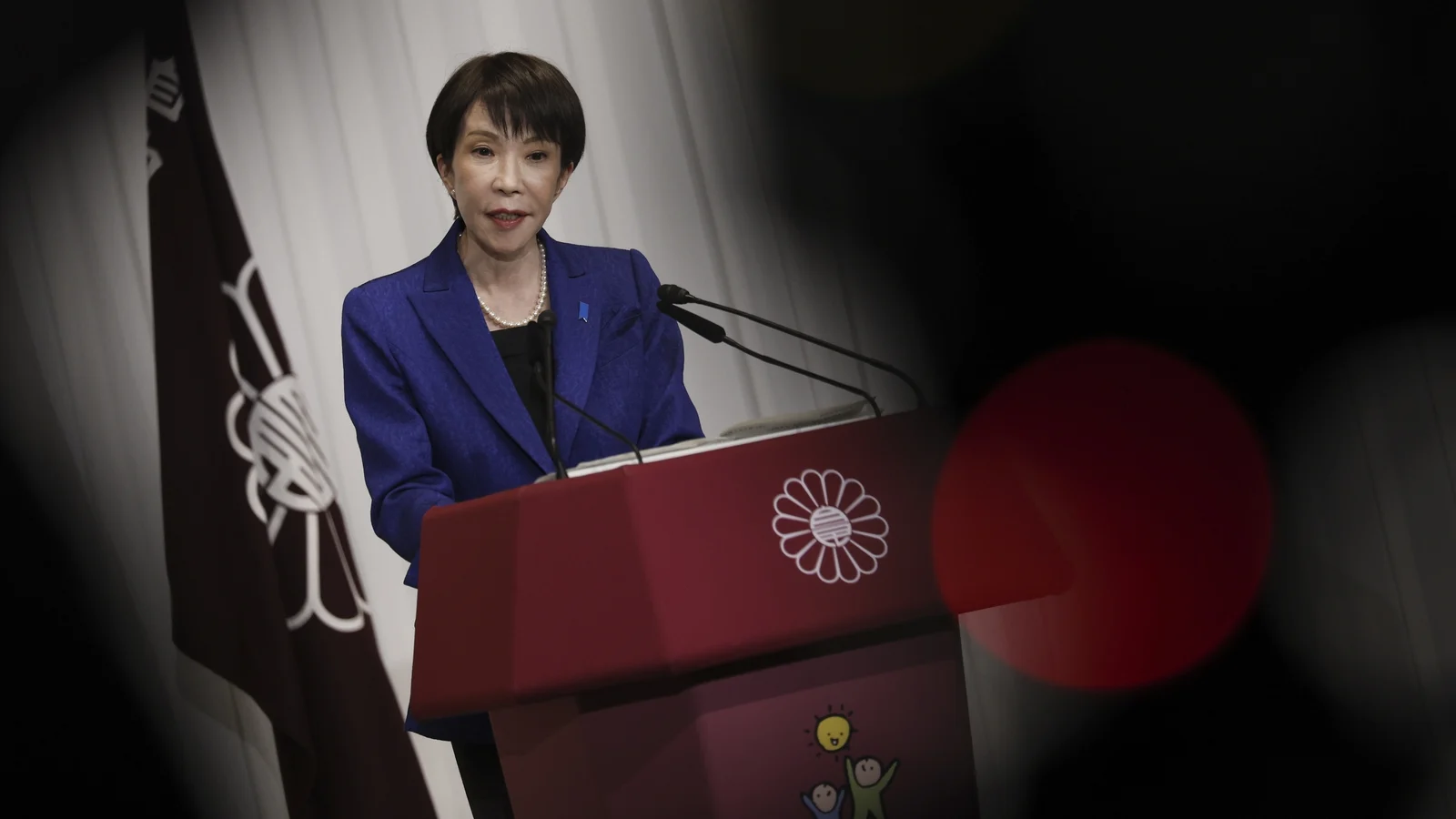
This arrest did not happen in a vacuum. It comes months after Prime Minister Sanae Takaichi — who, as the story goes, became Japan’s first woman prime minister last October and just won a resounding victory in snap elections — suggested Japan might intervene militarily if China attempted to seize Taiwan by force. Those comments have tilted an already delicate relationship.
Beijing has reciprocated with a mix of diplomatic pressure and signaling: summoning Tokyo’s ambassador, advising Chinese citizens to reconsider travel to Japan, and conducting joint flights with Russia. In December, China’s J‑15 jets from the Liaoning carrier reportedly locked radar on Japanese aircraft in international airspace near Okinawa — incidents that raise the stakes beyond fishing disputes.
Trade levers, too, have been used. China has tightened controls on some exports to Japan, including items with potential military applications, reviving fears about access to critical materials like rare-earth minerals. Even cultural touchstones have been affected: Japan’s last two giant pandas were returned to China recently, a symbolic moment for people who follow such softer strands of diplomacy.
Numbers and realities
Consider some context: Japan hosts roughly 60,000 U.S. military personnel, a fact frequently cited when Tokyo speaks about deterrence and regional security. Japan’s EEZ spans roughly 4.47 million square kilometers, one of the world’s largest — a maritime expanse that invites both commerce and conflict. Small-scale incidents, when frequent, can create an environment of mistrust that chips away at economic ties worth hundreds of billions annually.
Analysis: Law, leverage, and the thin line of escalation
“Legally, Japan can board and inspect foreign fishing vessels in its EEZ if it has reason to suspect violations,” explained Professor Daniel Reyes, a maritime security analyst. “But in the political theatre of the Indo‑Pacific, these legal actions are rarely received purely as legal.”
Experts warn of a twofold danger: normalization of confrontations at sea, and the weaponization of trade and sentiment on shore. “When rhetoric escalates, routines — inspections, seizures, even air intercepts — become pivots in a larger strategy,” said Reyes. “And strategies like that are not always predictable.”
For the ordinary people who live by the ocean, the concerns are practical and immediate: Will restrictions on Japan-bound tourism hit local economies? Will tightening export controls on materials choke industries? Will younger islanders still find work in fisheries if political pressures push fleets away?
What this moment asks of us
At its core, the episode is a reminder that globalization is not a smooth, frictionless surface but a network of nerves. One tug — a political remark, a fishing arrest, an aircraft lock-on — can send a shudder across economies, families, and futures.
As readers, we can ask: How should nations balance enforcement of maritime law with the art of de‑escalation? How do small communities survive when the currents of geopolitics surge past their harbors?
“We want peace,” said Tanaka, the fisherman. “We want our nets full and our kids safe. Politics happens in Tokyo and Beijing, but the sea is where we live with the consequences.”
Where to from here?
The immediate aftermath will be diplomatic notes, internal reviews, possibly more boards and inspections. But if history is any guide, leaders will need both resolve and restraint: resolve to protect rights and resources, restraint to avoid turning routine enforcement into a casus belli.
And for the rest of us — neighbors, consumers, policymakers — the episode is a small, stark lesson: in a world of interlocking interests, even a single fishing vessel can illuminate the fragile architecture that holds great-power relations together. How we tend that architecture may define the seas — and the future — for generations to come.
- Where: 166 km SSW of Meshima island, Goto archipelago (inside Japan’s EEZ)
- Action: Chinese boat seized; its captain arrested after refusing inspection
- Context: First seizure by Japan’s fisheries agency since 2022; follows heightened tensions after remarks on Taiwan by Prime Minister Sanae Takaichi
- Broader stakes: territorial disputes, military posturing, trade controls, and local livelihoods