When Access to a Lawyer Becomes a Luxury: Inside Minnesota’s ICE Surge
On a cold January morning in Minneapolis, lawyers huddled outside the Bishop Henry Whipple Federal Building with steaming cups of coffee and crisp legal pads, their breath hanging in the air like the questions they could not yet answer. They had come prepared — folders full of case files, a list of numbers, a calendar packed with hearings — only to be told that many of their clients had already been moved, sometimes hours earlier, sometimes without a forwarding address.
It is an image that refuses to leave the mind: skilled advocates left in the lobby while people they represent are shuffled through a system so opaque that even those who run it lose track. Last week, a federal judge in Minneapolis stepped into that breach. Judge Nancy Brasel issued a temporary—but urgent—order requiring U.S. Immigration and Customs Enforcement (ICE) to stop sweeping detainees out of Minnesota in a manner that, the court found, “all but extinguish[es] a detainee’s access to counsel.” The order will remain in effect for 14 days as the case proceeds.
A surge that scattered people and lawyers alike
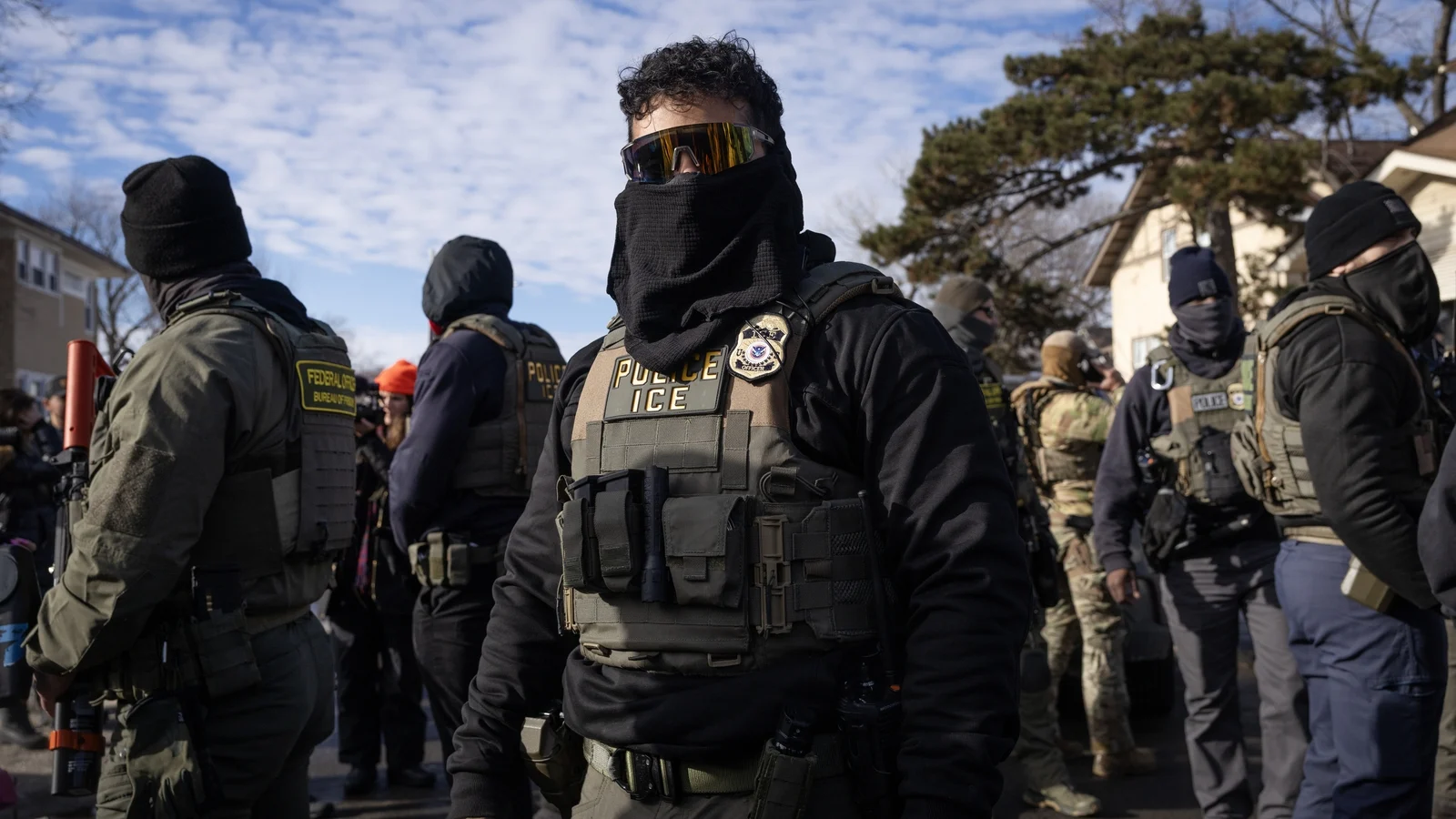
The case centers on a recent enforcement initiative dubbed Operation Metro Surge. According to filings and testimony reviewed by the court, ICE deployed thousands of agents to the region, detained thousands of people, and used facilities not intended for long-term custody. What emerged in litigation was not merely a logistical mess but a pattern: detainees routinely moved quickly and silently out of state; phone calls were restricted or monitored; attorney-client visits became difficult or impossible.
“We had clients who literally vanished from our docket,” said Maya López, an immigration attorney who has represented detainees in Hennepin County for seven years. “One day I prepare for a bond hearing; the next, I’m told they were transported to a facility three states away with no notification. How do you mount a defense, how do you prepare a family, when people are relocated like chess pieces?”
The plaintiffs — a class of noncitizen detainees — argued their constitutional access to counsel had been infringed. In court, ICE acknowledged that detainees have a right to counsel but defended its practices, pointing to resource constraints and operational priorities. Judge Brasel did not find that explanation convincing. “Defendants allocated substantial resources to sending thousands of agents to Minnesota,” she wrote, “and cannot suddenly lack resources when it comes to protecting detainees’ constitutional rights.”
What the judge ordered — and why it matters
The temporary court order is straightforward on paper but seismic in effect. It requires ICE to stop rapidly & covertly transferring detainees out of the state; to permit private attorney-client visits; and to allow detainees confidential phone calls with their lawyers. For lawyers who had been running in circles, it was at once relief and vindication.
“The right to counsel is not optional,” said Skye Perryman, president of Democracy Forward, the nonprofit that filed the suit on behalf of detainees. “You can’t detain people in a building never meant for long-term custody, put them in shackles, move them in secret, and call that due process.”
Advocates say the case lays bare a broader problem: enforcement strategies that prioritize rapid arrests and removals over procedural fairness and oversight. In practice, that can mean families lose contact with loved ones, legal claims go unfiled, and courts lack the information needed to ensure people’s rights are protected.
Lives in transit: stories behind the headlines
Listen to the people, and the legal language becomes visceral. There is Amina, a mother who called her sister from a detention center phone and heard static on the line. By the time her lawyer could track her, she was in a facility three states away, her case calendar a blank space. “They moved her like luggage,” Amina’s sister told a reporter. “She could not tell us where she was. My children ask for their mother. What do we tell them?”
There is also Jacob Ramirez, a community organizer who spent the night in the cold outside the federal building representing volunteers checking on detainee welfare. “People think this is far away from them,” he said, rubbing his hands against his coat. “But the neighbors who bring soup, the kids who go to school here — they are connected. When counsel is cut off, the whole community feels it.”
And then there are the attorneys who learned ingenuity the hard way: establishing circle-of-trust contacts at detention centers, building phone trees, and even coordinating with social workers to piece together where someone might have been taken. “It’s detective work,” said an attorney who asked not to be named. “But it shouldn’t have to be.”
Context and consequences
On a structural level, the Minnesota case raises questions about how modern immigration enforcement balances speed and scale against legal safeguards. Enforcement surges are not new; they are often framed as necessary for public safety. But judges and civil-rights advocates increasingly warn that surges can lead to corners being cut.
Consider some of the stakes:
- Legal representation dramatically improves outcomes in immigration proceedings: studies show that noncitizens with lawyers are far more likely to obtain relief or avoid deportation than those without counsel.
- Transparency and consistent tracking of detainees are essential to prevent family separation and to allow oversight of detention conditions.
- Rapid transfers complicate access to medical care, delay case processing, and can undermine the integrity of the legal process itself.
These are not abstract risks. They affect parent-child bonds, employment and housing stability, community trust in institutions, and the United States’ ability to live up to its legal commitments.
Bigger questions: What kind of system do we want?
We can read the court’s order as a narrow injunction concerned with access to counsel, but the ripples run deeper. What obligations do enforcement agencies have when carrying out large-scale operations? How do we ensure accountability when power is concentrated and actions are shrouded behind logistical rationales?
Ask yourself: is speed worth the cost of due process? When systems trade notice and transparency for operational advantage, who bears the harm? The detainees shuffled across state lines are not faceless statistics — they are parents, workers, dreamers, neighbors. Their access to legal counsel is the hinge on which fairness swings.
Looking ahead
The immediate relief provided by the judge’s order is only temporary. The litigation will continue, and the broader policy debates will not be resolved in two weeks. But the spotlight on Minnesota has already pushed questions into public view: whether enforcement strategies can be retooled to preserve legal access, and whether oversight mechanisms are robust enough to catch and correct abuses.
“This isn’t about being soft on enforcement,” Maya López said. “It’s about being faithful to the rule of law. We can have enforcement and we can have fairness — the two are not mutually exclusive.”
As the legal clock ticks, lawyers will keep knocking on detention doors — and families will keep waiting by the phone. For a democracy that prides itself on legal process, the outcome in Minnesota will resonate well beyond its courthouse walls.
It asks us, quietly and insistently, to decide what we’re willing to sacrifice in the pursuit of order: efficiency, perhaps — but not the right to be heard.