A Sea of Green-White-and-Red: Munich’s Rally and the Politics of Longing
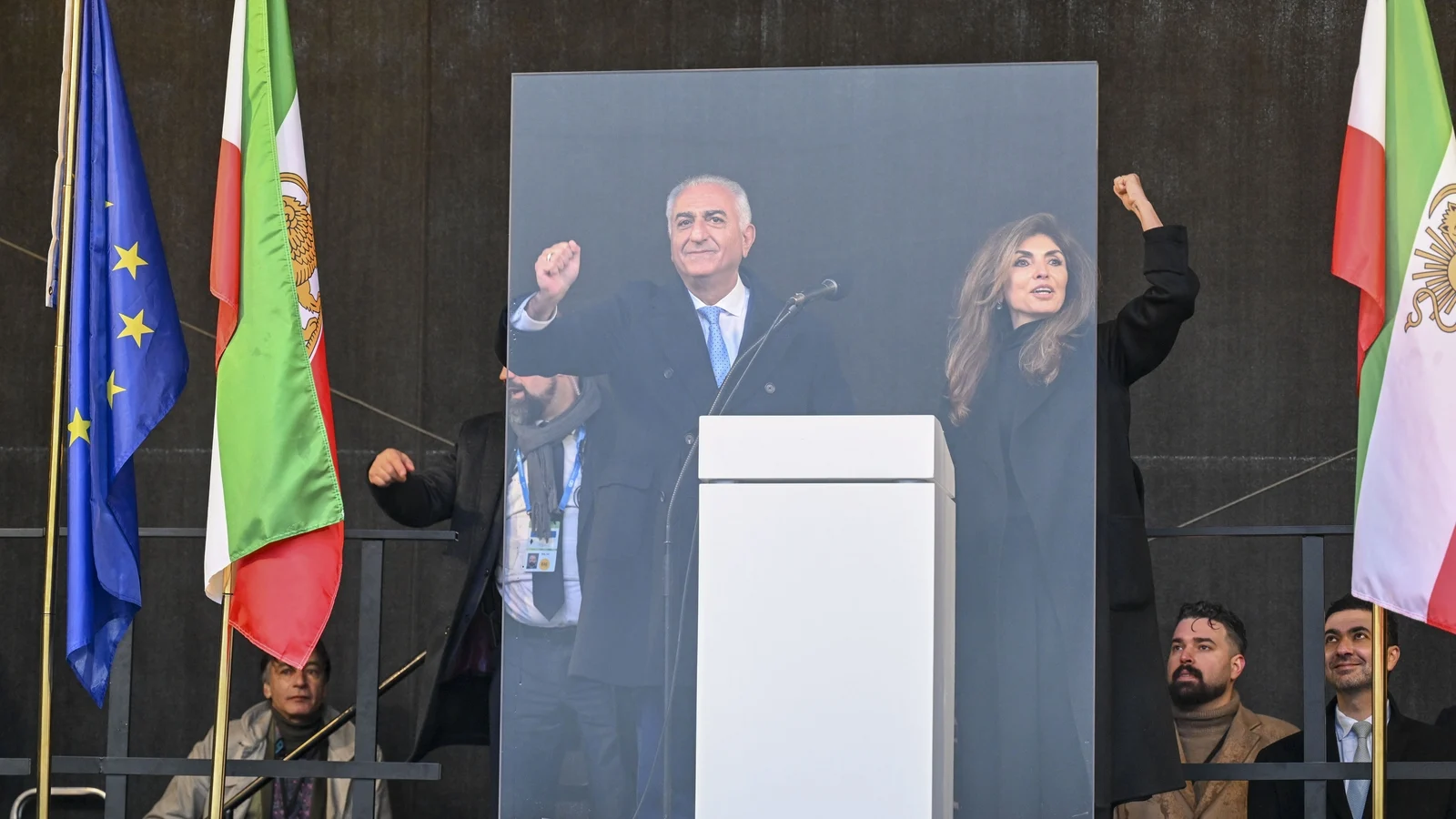
On a cold Munich afternoon, under skies swept clean by the Alps’ chill, a human tide gathered: flags stitched with a golden lion and sun fluttered like relics of another century, voices rose in a chorus that felt equal parts prayer and manifesto, and a figure who has lived most of his life in exile stepped forward to promise a different Iran.
Reza Pahlavi—son of Iran’s last shah and a man whose name still makes some inside his homeland wince and others weep with nostalgia—told an estimated 200,000 people that he was ready to lead a transition to a “secular democratic future.” The scene, on the sidelines of the Munich Security Conference, looked and sounded like a historical crossroads: chants of “Javid shah” (long live the shah) mixed with newer refrains demanding an end to the Islamic Republic.
Faces and Flags
“We are tired of fear,” said Maryam, a 47-year-old dentist from Tehran who travelled to Munich after securing a visa. Her voice trembled not with cold but with a stubborn hope. “We need someone to hold the bridge while we walk back to the ballot box.”
In the crowd, the same story unfolded in many languages. A 62-year-old man, Said, who gave his name only as a shape of memory, told me bluntly: “This regime is finished. We have been patient too long.” Others held up hand‑written signs with the names of loved ones lost in crackdowns, a quiet human ledger against the roar.
There is theater in exile politics. There is also urgency. Pahlavi’s call for rooftop and home chants—simple acts of public solidarity—was taken up across continents: protests in downtown Los Angeles, marches on the National Mall in Washington, and a spirited demonstration in Toronto where protesters shouted, “Trump act now!” The moment felt viral, global, and dangerously charged.
The Diplomatic Tightrope
At the same time as chants for monarchy and change echoed in Europe and North America, diplomats were quietly laying another kind of groundwork. Switzerland conveyed that Oman would host a fresh round of talks in Geneva next week—a tacit reminder that dialogue, however fraught, has not been precluded even as rhetoric heats up.
These parallel tracks—street politics and behind‑the‑scenes diplomacy—capture a paradox of our age. Public leaders and exiled figures play to cameras and crowds, while statesmen calibrate responses that could prevent escalation. President Donald Trump, who publicly declared that a change of government in Iran would be the “best thing that could happen,” also ordered a second aircraft carrier to the region, a muscular signal intended to deter but easily read as provocation.
“Hard power and soft power are being used at once,” observed a veteran Middle East analyst who asked to remain anonymous. “That mix makes outcomes less predictable. Diplomacy can succeed—but only if steps are taken to avoid misreading signals on the ground.”
Numbers That Hurt
The protests in Iran have not been ceremonial. Human Rights Activists News Agency, a US‑based group, reported at least 7,010 people killed in the security forces’ crackdown—most of them protesters—and more than 53,845 arrests. Rights organizations warn these figures may understate the true toll.
“Every number is a person,” said an activist in exile. “A young life taken, a family left to grieve. Numbers tell the scale; names tell the cost.”
- No diplomatic relations between the US and Iran since 1979.
- Reza Pahlavi has not returned to Iran since the 1979 Islamic Revolution.
- Reported casualties and arrests during the crackdown number in the thousands and tens of thousands, respectively, according to human rights monitors.
Divisions Within the Opposition
If the street scenes offer drama, the politics behind them carry awkward nuance. Pahlavi’s calls for return to monarchy—explicit or symbolic—resonate with some emigrant communities who remember the shah’s era with nostalgia. But many inside Iran do not want to import the baggage of the past.
Critics point out that Pahlavi has never formally distanced himself from his father’s autocratic rule and that his highly publicized visit to Israel in 2023 fractured an attempt to unify opposition groups. “You cannot build a bridge on remembered glories alone,” cautioned Dr. Amir Hosseini, a scholar of Iranian politics. “Opposition movements must answer two questions: what are they replacing, and who will they include?”
Inside Iran, the opposition landscape remains fragmented. Young Iranians who led recent protests often speak more of civil liberties, economic dignity, and an end to clerical rule than of restoration of the monarchy. Their slogans—sung from rooftops and verified in videos circulating online—are raw, local, and at times unpredictable.
Where Do We Go From Here?
So what should the international community do when a people’s cry collides with geopolitics? When demonstrations are answered with bullets, and when exiles offer themselves as patchwork leaders for a home they barely know? These are not rhetorical questions. They matter to diplomats, to ordinary Iranians, and to anyone watching the fragile architecture of the Middle East.
“External support for human rights must be principled, not transactional,” said a Geneva‑based diplomat. “If outside powers try to pick winners, they risk undermining the very democratic processes they claim to champion.”
Readers might ask themselves: would you entrust a nation’s fate to a figure who has been away for decades? Or is continuity with the past less important than a safe path to a free ballot and basic protections? There are no easy answers, only urgent responsibilities.
A Final Thought
In Munich, the crowd dispersed as twilight fell—some to head back to hotels, some into the cold to keep chanting—and the lion-and-sun flags folded away like stage scenery. But the questions the day raised will not be so quickly put aside: about exile and home, about the limits of slogans, about the difference between symbolic leadership and the messy, patient work of building institutions.
Whether Iran’s future bends toward the monarchy’s shadow, a secular republic, or something else entirely will depend as much on the courage and creativity of Iranians themselves as on the diplomacy and restraint of the world around them. Will the bridges that were promised be built? Or will they remain dramatic gestures in chilly plazas far from Tehran’s rooftops? For now, the answer is being written in both chants and quiet negotiations—and every observer is a witness.