A Diplomat’s Suitcase and a Mountain of Evidence: When a Tiny State Takes On a Soldier Regime
There is a photograph I cannot stop seeing: a modest embassy office in Dili, sun slanting in through louvered windows, a young Timorese diplomat closing a battered leather suitcase. He told a colleague not to forget the jar of coffee beans from his hometown and a rosary tucked into the pocket—small comforts against an abrupt departure. “We were given seven days,” he said quietly. “Seven days to take home everything we could carry.” That image — intimate, human, oddly defiant — captures the strange ballet of power that has just unfolded between two Southeast Asian nations.
At the heart of that suitcase is a legal paper trail that a community battered for generations says will not be folded away. The Chin Human Rights Organization (CHRO), representing Myanmar’s Chin ethnic minority, has handed Dili a dossier of alleged atrocities — gang rape, massacre, the killing of religious leaders and even reports of a hospital struck from the sky. Those allegations, the CHRO says, are “irrefutable evidence” and have now been passed to Timorese prosecutors under the principle of universal jurisdiction. A small nation, newly seated among regional peers, is moving to try to hold a military junta accountable for crimes committed thousands of kilometers away.
Why this matters
Every legal strategy has a geography. Universal jurisdiction is one that lets states — regardless of where a crime occurred or the nationality of the accused — seek accountability for the gravest international crimes: war crimes, crimes against humanity, genocide. It has been used sporadically over the years, by Spain, Argentina and others, often to pierce the shield of impunity when victims’ homelands cannot or will not prosecute.
Timor-Leste, also known simply as East Timor, conducts itself in these parts of international law with an urgency born of experience. Its citizens remember the Indonesian occupation and the struggle for independence that cost tens of thousands of lives; its constitution and its politics are shaped by the memory of a people who once turned to the international community for justice. So when activists came with a file, the state paid attention.
The junta’s response — and the expulsion
In Naypyidaw, Myanmar’s military — the Tatmadaw, which wrested control in a 2021 coup and has since been accused of systematic abuses — reacted with a swift diplomatic rebuke. A junta statement described Dili’s move as a breach of sovereign norms and accused East Timor of “violating the principles of non-interference” that have long undergirded the Association of Southeast Asian Nations (ASEAN).
Within days, East Timor’s top diplomat was summoned and told to leave the country within a week. “They told me to pack only what I could carry,” the diplomat later recounted. “No time to say goodbye to colleagues who have hidden survivors in their homes.” The message — one of forced distance, of diplomatic isolation — was loud and clear.
Voices from the ground
“We have watched our villages burn and our priests killed,” said a Chin community leader in a voice that folded between anger and exhaustion. “For years, we whispered names of the dead. To see those names on paper and heard by others — that is something we felt we had to do.” His hands are callused from farming on steep ridges, and his eyes still crinkle remembering the festivals where women wear traditional hemp skirts and the hills echo with hymns; those rhythms have been interrupted by violence and displacement.
“This is not just a legal case—it’s a plea,” said a Timorese prosecutor assigned to the file. “Small countries have to show that justice is not the preserve of the powerful.” An ASEAN analyst in Jakarta observed, “What we are seeing is a collision between regional norms and evolving global norms—non-interference versus the imperative to act on mass atrocities.”
Context: Myanmar today and the long shadow of Rohingya
Myanmar’s modern history is crowded with episodes that test the world’s conscience. The 2017 crackdown on the Rohingya in Rakhine State drove an estimated 700,000 people into neighboring Bangladesh and has been at the center of a case at the International Court of Justice (ICJ), where The Gambia accused Myanmar of genocide in 2019. In response, a 2020s ICJ ruling ordered provisional measures to protect the Rohingya; the broader legal battle continues.
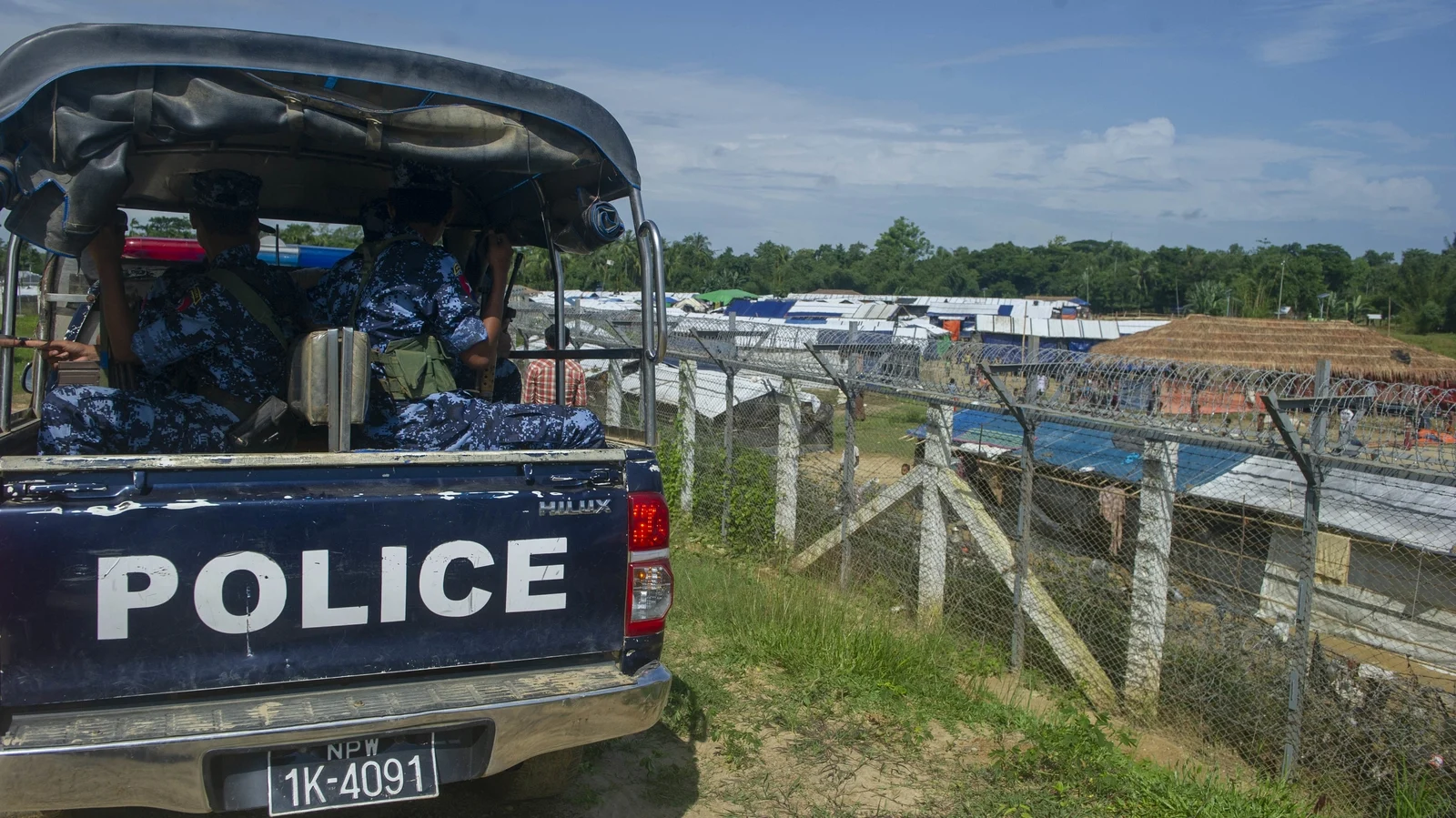
Since the 2021 coup, Myanmar has lurched into deeper turmoil. Thousands have been killed and tens of thousands detained or displaced according to UN estimates and human rights organizations. Ethnic minorities like the Chin, Kachin, Karen and others have borne the brunt of heavy-handed tactics that include village burnings, forced displacement and—allegedly—sexualized violence used as a weapon of war.
ASEAN’s dilemma: solidarity, sovereignty, or something new?
For decades ASEAN’s glue has been a doctrine of non-interference — a pact that allowed diverse regimes to sit around the same table without fear of being judged. But as human rights catastrophes become more transnational, that doctrine fractures. East Timor, which the junta claims has violated ASEAN’s charter, only recently became the bloc’s newest member. Its accession marks an ironic twist: a state born of international legal advocacy is now using those same tools to seek accountability for others.
“If ASEAN wants to be relevant in the 21st century, it cannot simply hide behind principle when people are dying,” said a Southeast Asia scholar. “There needs to be a balance between respect for sovereignty and protection of human rights.”
How this ties into global trends
Beyond regional geopolitics, the episode illuminates a larger shift. The past decade has seen a rise in creative legal strategies and alliances that bypass traditional power centers. Small states, civil society groups and international prosecutors are increasingly leveraging courts to contest impunity. The technology of documentation has also evolved: satellite imagery, survivor testimonies, and mobile-phone footage make it harder for atrocities to be fully concealed.
Consider the simple arithmetic: East Timor’s population hovers around 1.3 million, while Myanmar counts roughly 54 million people. In most geopolitical scenarios, the larger state’s muscle would prevail. But the court of public opinion, evidence, and legal mechanism can level unexpected playing fields.
What comes next
There are many possible futures. The junta may double down on diplomatic retaliation, expelling more staff or imposing restrictions. East Timor may pursue a full criminal investigation and, if warranted, bring suspects to trial if they are ever within reach. Human rights organizations will continue to gather testimony, and the victims — always central to the story — will press for recognition.
And the rest of us? What do we do when the rules of sovereignty and the imperative to protect human life collide? Can regional bodies such as ASEAN evolve from a club of cautious diplomats into a forum that can respond to atrocity without splintering?
Perhaps the most vivid thing about this episode is how it reframes courage. It is not only the courage of those who pick up rifles or take to the streets. It is the quiet, stubborn courage of a tiny nation deciding to turn a file of horrors into an instrument of law, of a Chin mother who keeps the names of her children in a notebook, of a Timorese prosecutor who knows the risks and presses on anyway.
What would you do if you were asked to choose between realpolitik and the memory of the dead? That is the question now confronting leaders in capitals from Jakarta to Geneva. The suitcase has been closed for now. But the paper inside it — testimony, evidence, a demand for accountability — has been set in motion. And once such a case begins to travel, it rarely returns to its original home unchanged.