Geneva’s uneasy calm: diplomacy, winter, and a war that refuses to warm
Geneva in winter is a peculiar kind of serenity: the lake mirrors the Alps like a polished plate, the streets smell faintly of roasting chestnuts and diesel, and the city’s famously neutral hotels hum with hushed negotiations. On this particular morning, a low-slung jet cut through that quiet and parked at the airport, its passengers stepping into a conference loop that has defined, in fits and starts, Europe’s most dangerous dispute in a generation.
Trilateral talks between Ukrainian, Russian and US delegations were due to begin here, and the mood was a blend of brittle hope and weary realism. “Diplomacy works only when it is backed by justice and by strength,” a Ukrainian spokesperson told me—his eyes tired, his hands steady—summarizing a sentiment that has become a mantra in Kyiv. “You can’t bargain with impunity.”
What’s on the table — and what’s not
The items being ferried between the negotiators are not just maps and memoranda; they are lived realities: cities hollowed by shelling, families who no longer recognize their neighborhoods, grids that fail when thermometers plunge below -20°C. Russia seeks a withdrawal of Ukrainian forces from swathes of the Donetsk region; Kyiv rejects any unilateral pullback without ironclad guarantees that a ceasefire will not be a prelude to renewed offensives.
Behind each point on the agenda lies a brutal arithmetic. Russian forces currently hold roughly one-fifth of Ukraine’s internationally recognized territory—an area that includes Crimea, annexed in 2014, and other pockets captured in the years since 2022. Outside observers estimate that the conflict has produced tens of thousands of civilian deaths and hundreds of thousands of military casualties across both sides. The exact toll is contested, but the human scale is undeniable: whole towns reduced to outlines, whole families reduced to lists of names.
Key sticking points
- Territorial withdrawal: Moscow has demanded concessions Kyiv calls tantamount to surrender.
- Security guarantees: Kyiv insists any ceasefire must include western-backed protections against a renewed invasion.
- Sanctions and pressure: Ukraine and its partners argue that economic penalties remain one of the few levers to deter further escalation.
“You can’t paper over occupation with promises,” said Olena, a schoolteacher from Sumy who now volunteers in a bombed-out shelter. “If there are no guarantees, why would anyone believe them? We gave up land before—what stops them from taking more?”
Energy as theatre: winter, blackouts, and strategic strikes
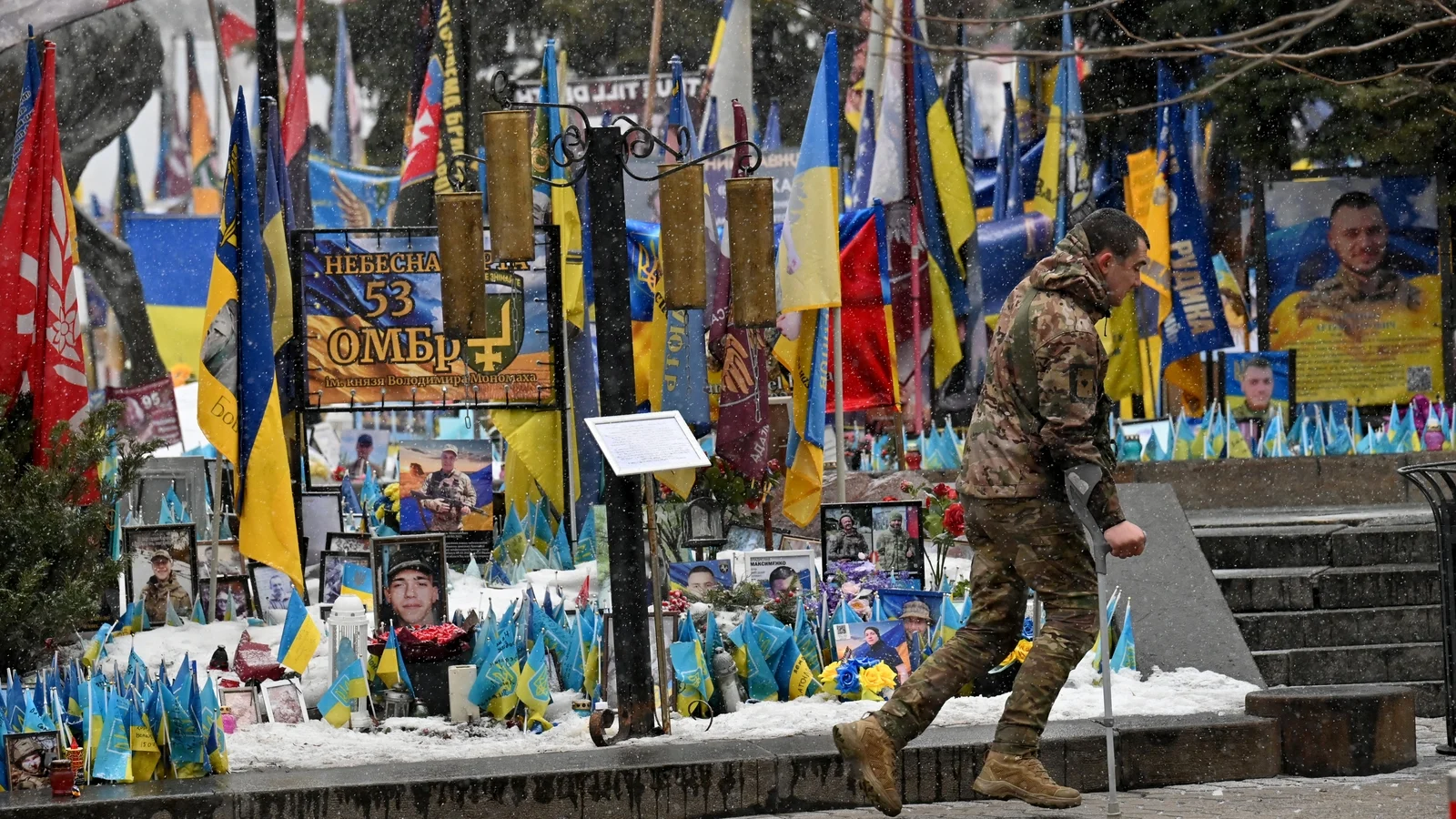
The rhetoric at the table is matched by action on the ground. Recent Russian strikes on Ukraine’s energy infrastructure have produced what Kyiv calls the worst energy crisis of the war: hundreds of thousands of homes plunged into cold and dark as temperatures dipped toward -20°C. Hospitals have run on generators, schools have consolidated classes into warmer rooms, and neighbors have become each other’s heaters—sharing hot tea, hot food, and something like hope.
Ukraine, meanwhile, has used drones to strike at elements of Russia’s oil and gas sector—targeted blows designed to choke funding streams that analysts say help sustain Moscow’s military effort. “These are not acts of vengeance,” said an independent energy analyst in Europe. “They’re tactical attempts to alter the calculus—if you can make it more costly to wage war, you change incentives.”
Numbers that matter
- Territory occupied by Russia: roughly 20% of Ukraine’s land area (including Crimea).
- Estimated human cost: tens of thousands of civilian deaths and hundreds of thousands of military casualties (estimates vary; counting remains contested).
- Households affected by energy outages: hundreds of thousands during peak bellicose strikes, with numbers rising in harsh weather.
Voices from the front and the homefront
In a recreation centre-turned-shelter near Dnipro, a woman named Kateryna held a thermos of tea as if it were an heirloom. “We stitch our children into warm clothes at night,” she said, looking at a photograph of a grandson whose face was still a memory on a cracked wall. “We joke, because if you stop joking you will only cry.”
At Geneva’s Palais des Nations, a Russian delegate—formal, clipped—told reporters: “Negotiations are a path. We are committed to discussing practical steps.” An American mediator, speaking on condition of anonymity, warned that “the room is small and every concession is heavy.”
“It’s winter in the north and war in the south,” said Mikhail, an academic who has watched peace talks for decades. “Geneva is a sensible place to talk, not because it magically makes agreements, but because its neutrality forces hard conversations.”
Beyond the table: why this matters to a global audience
If you live in a country far from Kyiv or Donetsk, you might ask: why should this particular negotiation keep you awake? Because wars don’t stay confined to borders. They reshape energy markets, reroute grain ships, fuel refugee flows, and test the resilience of international law. They also pose a philosophical question: when does the price of peace become a price of surrender?
Consider the supply chain disruptions that ripple into supermarket aisles from Europe to Africa; consider the spike in energy prices that can push households in distant countries into precarity. Consider, too, the precedent set when a powerful state is allowed, or not allowed, to secure gains by force.
Questions for the reader
- What is the threshold between pragmatic compromise and moral capitulation?
- How should democratic societies balance the urgency of peace with the demands of justice?
- What role should neutral forums—cities like Geneva—play in resolving conflicts in an age of polarized global politics?
What to watch next
Diplomacy is often slow; it is also fragile. Expect days of terse communiqués, phased agreements that test trust, and shadow talks where the real bargaining happens. Watch for three signals that would indicate progress: clear, independently verifiable security guarantees; a workable framework for phased withdrawal that protects civilians; and a credible enforcement mechanism that discourages future aggression.
“We will not trade our dignity for a headline,” said an adviser to Kyiv, a phrase that lingered in the corridors after a long session. “But there are ways to end a war that preserve honor and prevent future bloodshed.”
Closing thoughts
Geneva will give us theatre and perhaps traction. But peace is not delivered in conference rooms alone; it is stitched, slowly, into the fabric of daily life—repaired power lines, reopened schools, reconciled communities. For now, the world watches a careful dance of demands and concessions beneath the Alps, while in Ukraine people clutch hot mugs and each other against the cold.
How would you balance justice and peace if you were holding the pen that signs ceasefire terms? The answer may be different for every reader, but the question—urgent, human, necessary—stays the same.