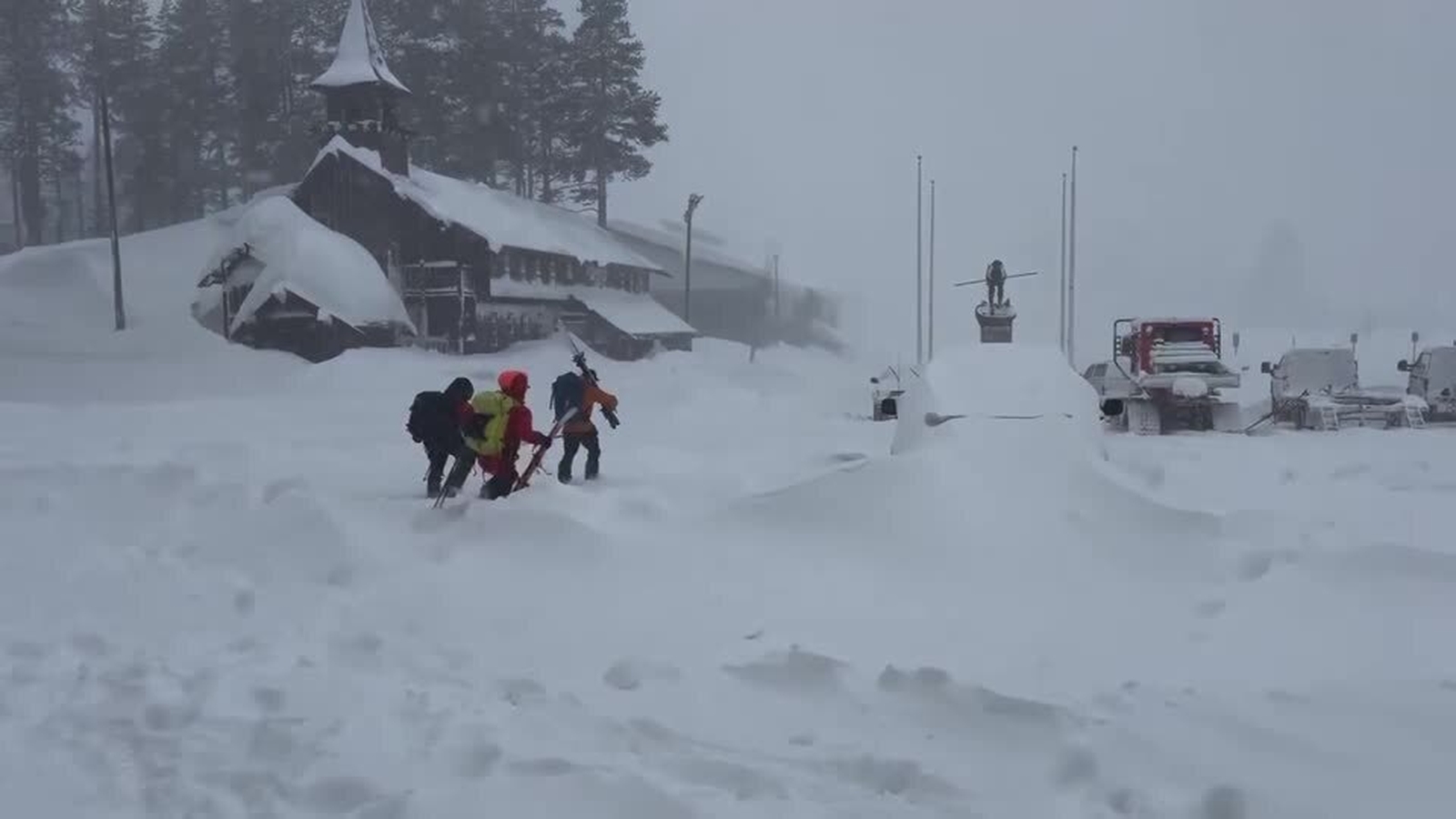
White-Out on Castle Peak: A Desperate Search in the Sierra
The mountains around Tahoe have a way of making you feel very small and very alive at once. This week, the Sierra Nevada showed both moods—wrapping slopes in blizzard white, then roaring down in a single, terrifying moment when snow broke loose and swallowed a party of skiers.
Rescue teams from Nevada County, Truckee Fire and nearby ski patrols spent a long night clawing through wind-driven drifts to find nine people unaccounted for after an avalanche on Castle Peak, officials say. Fifteen people had been on the trip when the slide struck; six were pulled out alive with “varying injuries,” and two were taken to hospital. The rest remain missing as the storm continues to dump heavy snow across the range.
The scene on the ridge
Imagine standing in a world where visibility drops to a handful of paces, where wind is not just noise but a force that can steer snow like an ocean wave. That is where rescuers were working—at the edge of daylight, in white-out conditions that make navigation as dangerous as the avalanche itself.
“It took several hours for rescue personnel to safely reach the skiers,” the Nevada County Sheriff’s Office said. Truckee Fire crews medically evaluated those brought down the mountain, while ski-rescue teams from Boreal Mountain and Tahoe Donner’s Alder Creek Adventure Center were some of the first on scene. In all, 46 emergency responders were involved in the operation, officials said.
“You hear the roar and then the world is muted,” said one volunteer ski patroller who requested anonymity because the search was ongoing. “We move by feel—probing, shouting names, listening for any sign of life. It’s brutal work, but there’s no place I’d rather be when people need help.”
Weather, warnings and a dangerous forecast
The storm that pummeled the Sierra was no ordinary winter bluster. The National Weather Service warned parts of the Sierra above 1,000 meters could receive as much as 2.4 meters of snow over a 48-hour stretch, with winds gusting to 90 km/h. Forecasters forecasted white-out conditions and near-constant avalanche danger.
The Sierra Avalanche Center put the backcountry avalanche risk at “HIGH,” bluntly warning: “Large avalanches are expected to occur… Tuesday, Tuesday night, and into at least early Wednesday morning across backcountry terrain.” In plain terms: the mountains were not forgiving.
“High danger means natural avalanches are likely and human-triggered slides are almost certain,” said Dr. Maya Ruiz, an avalanche scientist who studies snowpack dynamics. “Heavy, fast-loading storms like this create weak layers in the snow that can propagate fractures for miles.”
Voices from the valley
The people who live in and around Tahoe are no strangers to snow. Truckee’s downtown is lined with palatial pines and old-world lamp posts; wood smoke hangs low in the air and chains clack on plows. But even for locals, this storm felt different.
“We get big storms here, but this one came with a ferocity I haven’t seen in years,” said Nadine Morales, who runs a guiding service out of Truckee. “Guides are trained for risk, but there are limits. When the backcountry is flagged HIGH, you rethink your plans.”
Sheriff’s Captain Russell Green put it plainly on local television: “People go out and use the backcountry at all times. We advise against it, obviously, but I wouldn’t say that it’s uncommon. Not that it was a wise choice.”
A family member of one of the missing skiers described a surreal wait at a makeshift staging area where anxious friends and relatives huddled under emergency lights. “You try not to imagine the worst,” she said, voice breaking. “All we can do is hope the rescuers find them. They said the guides were experienced—maybe the storm just outmatched everyone.”
How rescuers work—and why it’s getting harder
Searches like this are a choreography of skill and stamina: probe lines, avalanche transceivers, shovels, and the kind of muscle memory that only comes from years in the mountains. Ski-rescue teams use specialized sleds and harnesses to move victims; every second matters when hypothermia and injuries are on the clock.
But rescues are becoming more complex. Popular backcountry terrain has seen a surge in users over the past decade—part tourism, part pandemic-era shift to outdoor recreation—pushing more people into hazardous places. At the same time, extreme weather events are becoming more pronounced.
“We have more people in the backcountry than we used to, and storms that deposit large loads of snow in short periods,” said Dr. Ruiz. “That’s a recipe for higher avalanche activity and more frequent, complicated rescues.”
- 46 emergency responders involved in the current search
- 15 people on the outing; 6 rescued, 2 hospitalized, 9 missing
- National Weather Service: up to 2.4 meters of snow possible in 48 hours
- Sierra Avalanche Center: HIGH avalanche danger across backcountry terrain
Context: a season of risk
Across the western United States, avalanches have been deadly in recent winters. The Colorado Avalanche Information Center reported six avalanche fatalities so far this season, including a January death on Castle Peak—an ominous reminder that these slopes can turn lethal in an instant.
Experts stress that winter recreation has a steep learning curve. A user with a transceiver who doesn’t practice under pressure can still be rendered helpless in a fast-moving slide. That’s why many local organizations emphasize guided outings, avalanche education courses, and checking forecasts religiously.
What does this mean for the future?
When the snow clears and the search concludes, communities will likely be left with a calculus familiar in mountain towns: how to balance access to wild places with the responsibility of safety. This isn’t just a local dilemma. From the Alps to the Andes, increasing weather extremes and booming outdoor recreation are forcing new conversations about infrastructure, rescue capacity, and public awareness.
“We have to be honest about risk,” said Morales, the guide. “Skiing in the backcountry isn’t the same as skiing at a resort. The margin for error shrinks dramatically in storms like this.”
Ask yourself: when you’re tempted by the pull of a pristine ridge or an untracked line, what price are you willing to pay for that solitude? How do we as a community—global or local—support those who answer the call when catastrophe strikes?
For readers and travelers
If you are planning winter travel to mountainous regions, heed the following common-sense measures shared by avalanche centers and rescue groups:
- Check local avalanche forecasts before you go and throughout your trip.
- Carry and know how to use essential rescue gear: beacon, shovel, probe.
- Take an avalanche safety course and practice companion rescue drills.
- Consider guided trips in severe conditions; experienced guides carry knowledge that can save lives.
- When authorities warn of HIGH danger, the safest choice is to stay out of the backcountry.
The mountains will always call. They will also always demand respect. Tonight, in a valley lined with lamplight and worry, rescuers keep searching—because that, for many of them, is how you answer nature’s harshest moments. We watch, we wait, and we hope they bring everyone home.