When Leaving Becomes a Lifeline: Ukraine’s Young Men and the New Geography of a War
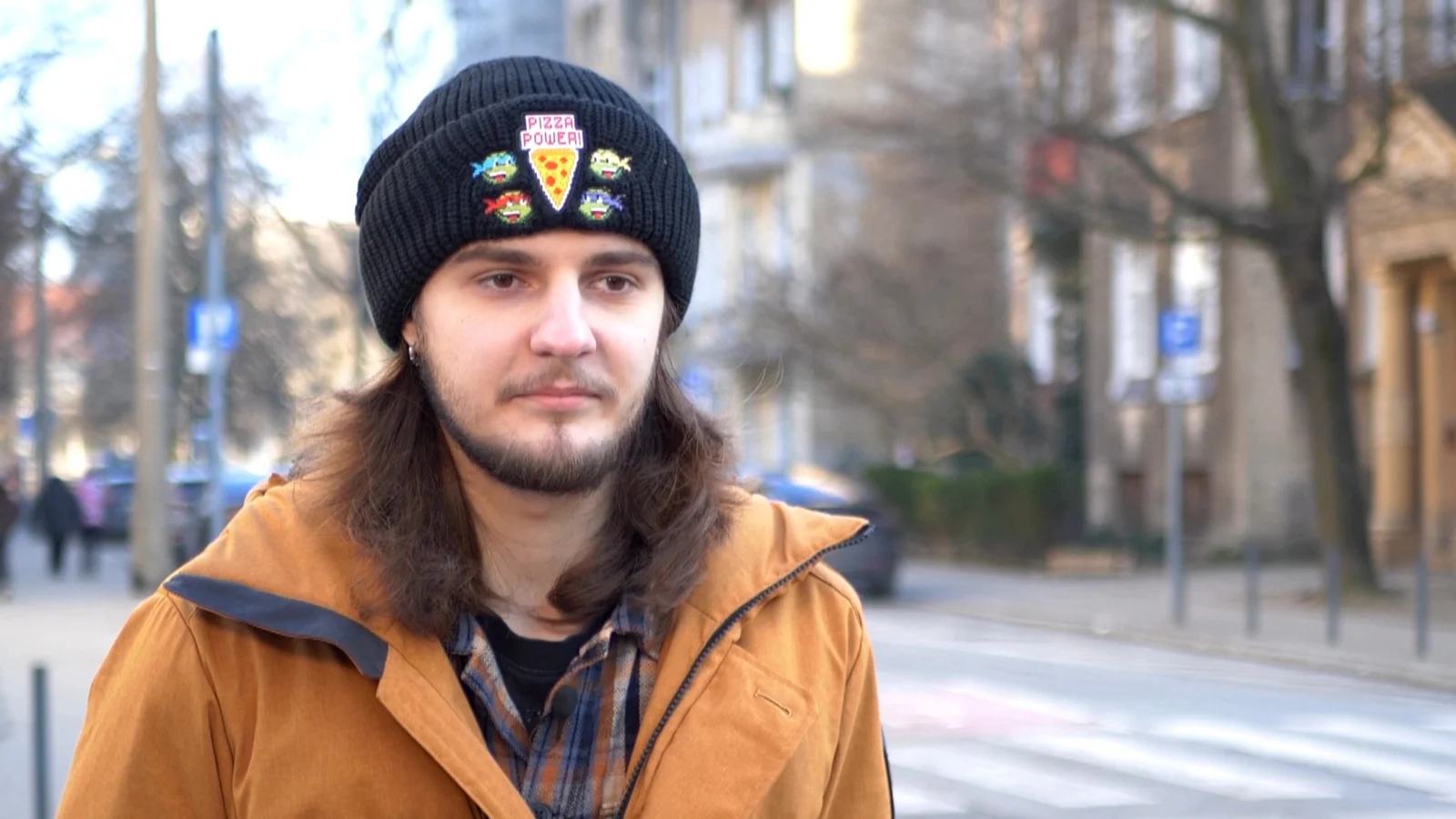
On a cold afternoon in Warsaw, a young man in a work vest steps out of a tram, carrying a paper cup of coffee and a battered sketchbook. He looks like any student eking out a living in a foreign city — until he says his name and where he came from. “Chernihiv,” he says, with a small, crooked smile. “I haven’t slept through a night without the sound of sirens in years. Here, I can breathe.”
This is not a story of mass desertion or easy escape. It is a story of a generation trying to reclaim the simple rites of youth — study, work, a first apartment — amid the strangest of times. Since Kyiv quietly relaxed its rules last August to allow men aged 18–22 to travel abroad for the first time during the war, a surge of young Ukrainians has flowed across borders seeking that breath of normalcy.
Numbers that ripple
Polish authorities recorded roughly 184,000 crossings by Ukrainian men aged 18–22 between September 2025 and the end of January, according to the Polish Border Guard — a figure the agency notes includes repeat trips and short stays. Even accounting for that, it is roughly six times higher than the same period a year earlier. For young men who had been effectively stuck for years, that change in policy has opened a new chapter.
“The policy was framed as a way to let young people study and gain useful skills abroad — things that Ukraine will need when it rebuilds,” said a Kyiv official involved in the decision, who asked not to be named. “But we also knew it would be controversial.”
Frontlines on two maps
Ukraine continues to conscript men from age 25. In practice, the country’s armed forces now count close to one million people in uniform, with about 300,000 deployed at the frontlines. Kyiv has publicly said that any sustainable peace settlement will require an armed force of roughly 800,000 — a target that many defense analysts say is achievable but will be stretched thin by demographics.
“Ukraine has been facing certain demographic problems for years now,” says Marcin Jedrysiak, a Ukraine specialist at the Centre for Eastern Studies in Warsaw. “There was a birth-rate trough between 1996 and 2006. That gap is now showing in manpower shortages.”
Population decline in the decades since the Soviet collapse — from around 51 million in the early 1990s to estimates today between 28 and 35 million — has only compounded the problem. The war has accelerated emigration and created a new generation whose formative years were lived in air raid alerts and displacement.
People in transit: stories from cafes and camps
I sat with several of these young men over coffee, in shared flats and at the entrances to Polish logistics warehouses. Each story was different. Each voice carried the same undertow: fatigue, hope and a complicated loyalty to home.
“If the government didn’t give me the chance to leave, I probably wouldn’t have considered it,” said Vadym, 22, who arrived in Warsaw in December and quickly found work with a Ukrainian logistics company operating in Poland. “I might have stayed because that’s what we do in war — we wait. But now I can only think about what lies beyond its borders.”
When I asked if he feared being drafted back home, he didn’t mince words. “Of course I don’t want to be there,” he said. “I know people who were killed. The war affected everyone in its own way.” Yet, he added with a wry shrug, “Maybe one day — when it ends — I’ll go back. I don’t know.”
In Poznan, 21-year-old Maksym, a graphic design student from Kyiv, described a similar calculus. “Poland is safe, it’s affordable, and there’s space to study. I want a life where the loudest thing at night is a party, not an explosion,” he told me. “Maybe I’ll return to Ukraine, but that feels like a promise I can’t make yet.”
Vania, a 22-year-old cybersecurity graduate originally from occupied Luhansk, had spent three months in a refugee camp in northern Sweden before moving to a small studio near Stockholm. “When you read the news all the time, when your friends are gone or your house is gone, it gets into you,” he said. “Here, I can sleep. I can search for a job. That’s enough for now.”
And yet not every young person abroad has abandoned the dream of returning. A different Vania, 20, who fled with his mother to Poland in 2022 and has built a life in Warsaw, says he can “definitely see my future life in Ukraine.” He studies, works and thinks daily about Dnipro, his hometown. “As soon as the war ends, I’ll go back,” he told me over black coffee in a busy café. “I even think about going back during the war because I miss it so much.”
Politics, anxieties and the European response
Not everyone in Europe welcomed the change. Politicians on the political right and far-right in Germany and Poland criticized Kyiv for allowing more young men to leave at a time when Ukraine needs manpower. Bavaria’s Markus Söder said pointedly, “It helps no one if more and more young Ukrainian men come to Germany instead of defending their homeland.”
Those concerns exist alongside a competing reality: these young people are not only potential soldiers; they are students, workers, engineers-in-the-making and, perhaps, future entrepreneurs who might help rebuild a country devastated by war. For many parents in Ukraine, allowing sons to study abroad felt like a lifeline rather than a betrayal.
“This is not simply a military question,” an NGO worker in Lviv told me. “It’s about whether a generation gets to grow up at all.”
What will reconstruction ask of a generation abroad?
There is a deeper, more unsettling question under all of this: when the guns finally fall silent, who will be there to raise the cities? Analysts warn of possible social fractures between those who remained through the war and those who left. Returnees may find homes changed; communities may have shifted. Yet diasporas historically have been central to post-conflict recovery — sending remittances, investing in housing and starting businesses.
“We see two possible futures,” Marcin Jedrysiak told me. “Either a divided society where resentments fester, or a dynamic, outward-looking Ukraine that harnesses returnees’ skills.”
That crossroads is not unique to Ukraine. Across the globe, wars, climate crises and economic shifts are forcing migration at younger ages. What makes this moment striking is how intimate it is: the debate is not about boardrooms or ballots alone but about who the country’s youngest adults will grow up to be.
Questions without easy answers
So what should we ask as readers and observers? Should a young man’s right to learn, love, and work be weighed against a nation’s need for defenders? Can a country hold fast to its borders and, at the same time, let its people gather skills abroad? And what responsibility do host countries have to nurture rather than merely accommodate these lives in transit?
There are no tidy answers. There are, however, people — each carrying their own map of hopes and debts. As one young man I met said, watching a tram thread the Warsaw skyline, “I’m not running away. I’m buying time.”
That sentence lingers. Because in the years after the war, Ukraine — and the world — will have to decide whether that time was squandered or invested. For now, these young men carry kettles, laptops, and dreams across borders. They carry also the weight of a nation that must reckon with both the losses of war and the choices of a generation on the move.