When a Promise Meets a Gavel: Trade, Turmoil, and the Thin Line Between Law and Deal-Making
Brussels woke to a familiar ache this week — coffee cups clinking, bicycles weaving past the glass-and-steel façade of the European Commission, and officials huddled around screens trying to recalibrate a fragile optimism. Just a day earlier, the U.S. Supreme Court had undercut a major pillar of Washington’s recent tariff strategy by narrowing the president’s authority under the International Emergency Economic Powers Act (IEEPA). And then, in an act that felt like both defiance and damage control, the White House announced a temporary global tariff increase to 15% on many imports into the United States.
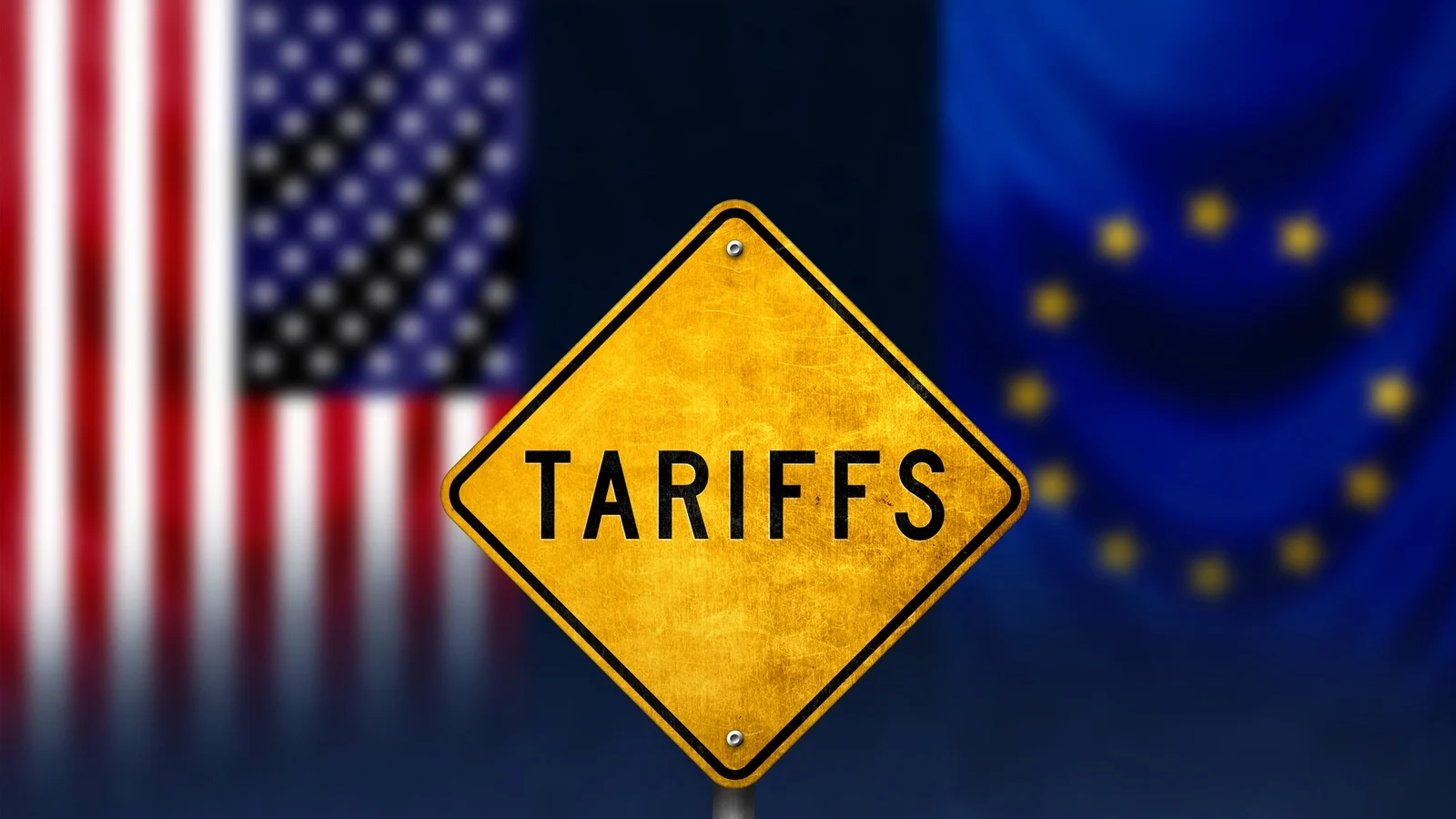
The result: a deal struck only last year — one that placed an explicit 15% ceiling on most American duties for European goods — suddenly felt less like a binding truce and more like a tentative handshake over quicksand. “A deal is a deal,” said a spokeswoman for the European Commission in a statement that rippled through trade desks and dining tables from Lisbon to Ljubljana. “We expect the United States to honour the commitments in the Joint Statement, just as the EU stands by its commitments.”
At the heart of the corridor
Walk down Rue de la Loi and you can hear the story of Europe’s relationship with America in small, human details. A Belgian pastry chef frets about the cost of Canadian flour that comes through U.S. ports. An Estonian tech start-up worries that a 15% levy could steamroll margins it had carefully built. “If uncertainty is the new normal, you can’t plan,” said Clarisse Dupont, who runs a sustainable clothing brand in Brussels. “We price, we forecast, we invest. Tariffs like this are a fog that swallows those plans.”
For many governments and businesses, the question is less about who is right and more about what happens next. The EU’s trade commissioner, who has been in continuous contact with his U.S. counterparts, asked Washington for “full clarity” on intended steps now that the Supreme Court decision has altered the legal landscape. “Tariffs applied unpredictably are inherently disruptive,” the Commission added. “They undermine confidence, destabilize global markets, and rattle international supply chains.”
What’s actually at stake?
To anyone who thinks trade is only about numbers on a spreadsheet, take a closer look: container yards, factory floors, and store shelves all tell the human story. The United States and the European Union are each other’s largest trading partners; their economic relationship touches millions of jobs, companies, and households. The joint market is a backbone of global supply chains — auto parts, pharmaceuticals, machinery, luxury goods, agricultural products — and that backbone has grown increasingly intertwined over decades of investment.
Tariffs, even modest ones, are seldom neutral. Economists routinely point out that duties are often paid by someone — and more often than not, that “someone” is the final consumer. “Tariffs are taxes with different packaging,” explained Dr. Laila Hassan, an international trade economist. “They can push up prices, distort incentives, and prompt firms to reroute supply chains. All of this happens faster when decisions appear unpredictable.”
On the ground, the ripple effects are already visible. A small car parts supplier in southern Germany said orders from the United States were being re-evaluated overnight. A farm cooperative in Andalusia is nervously watching commodity brokers. “What’s terrifying isn’t today’s hike; it’s the message that rules might change on a whim,” said Javier Martín, who runs a family-owned olive-pressing operation. “We export olive oil on narrow margins. You add a tariff and margins disappear.”
The political tug-of-war
Politics is never far from policy in transatlantic affairs. The European Parliament’s trade committee had been scheduled to approve the EU-US deal this week. That decision now faces a pause; the committee’s leader has signalled he will ask colleagues to hold off until legal implications are assessed and clear commitments are made. “We cannot move forward into a framework built on shifting legal sands,” he said, calling the recent American moves “pure tariff chaos.”
Across the Atlantic, lawmakers and industry groups have their own concerns — from preserving strategic national security tools to protecting domestic industry. But even among voices sympathetic to a stronger U.S. stance, there is unease about the method. “You can pursue policy objectives and still be predictable,” a former U.S. trade official told me. “Markets crave predictability, and trade thrives on rules.”
Why the Supreme Court decision matters
The court’s ruling on the IEEPA did more than curtail a legal instrument; it struck at the heart of presidential discretion in economic statecraft. By finding limits to the executive’s ability to unilaterally impose sweeping international tariffs under emergency powers, the justices raised immediate questions about the legal basis for many of the tariffs introduced in recent years.
That legal uncertainty now bleeds into diplomatic commitments. If a tariff proves legally vulnerable, what binding force does a cross-Atlantic deal retain? The EU insists that the agreement to cap tariffs at 15% was not a hopeful suggestion but a practical ceiling meant to shield businesses from surging duties. “EU products must continue to benefit from the most competitive treatment,” said a Commission official. “No increases beyond the clear and all-inclusive ceiling previously agreed.”
Practical consequences — and simple human fears
Beyond the legalese, there is a simple human calculus: will my job, my pension, my small business survive renewed uncertainty? Small and medium-sized enterprises are particularly vulnerable. They lack the legal teams and hedging instruments multinational corporations use to navigate tariff storms. Banks might pull back from lending for cross-border projects. Investment plans could be put on ice.
“We are seeing letters from clients who are delaying orders,” said Marianne Lind, a freight forwarder in Rotterdam. “A single 15% tariff on a manufactured good can alter the decision to ship across continents.”
Looking beyond the headlines
So what should we watch for next? First, clarity — from Washington about whether the temporary 15% hike is intended as a broad policy shift or a stopgap response to a legal ruling. Second, legislative moves — will the U.S. Congress, or American courts, step in to redefine the authority to set tariffs? Third, diplomatic follow-through — will a transatlantic dialogue translate into renewed certainty, or will it devolve into a tit-for-tat cycle that global markets can ill afford?
And to you, the reader: how do you feel when faraway trade policy translates into price tags at your grocery store or delays on a package you expected? Can we accept volatility as part of a new global order, or do we demand that leaders repair the scaffolding of international commerce so families and businesses can plan once more?
Big legal rulings and abstract trade deals might seem far removed from daily life, but the truth is they touch our lives in small, cumulative ways. When agreements are respected, when law and diplomacy are aligned, people can build futures with confidence. When they are not, the cost — economic, social, and human — is paid in slower growth, frayed relationships, and uncertain nights for entrepreneurs and workers alike.
For now, Brussels is waiting for a call. Washington has made a move. And across warehouses and ateliers, in cafés and on factory floors, people are watching to see whether promises will become policy — or whether history will record another lesson about the fragility of trade in an unpredictable world.