Guadalajara at a Crossroads: Football Fever Meets the Shadow of Violence
The smell of grilled carne asada and the bright shimmer of team jerseys are the things you expect when a city prepares to host the world. Guadalajara—Jalisco’s proud, music-loving capital, birthplace of mariachi and tequila traditions—should be pulsing with that familiar tournament electricity. Instead, in recent days, the city’s boulevards and beach towns have been punctuated by the staccato snap of headlines about roadblocks, burning vehicles, and tense standoffs between security forces and criminal groups.
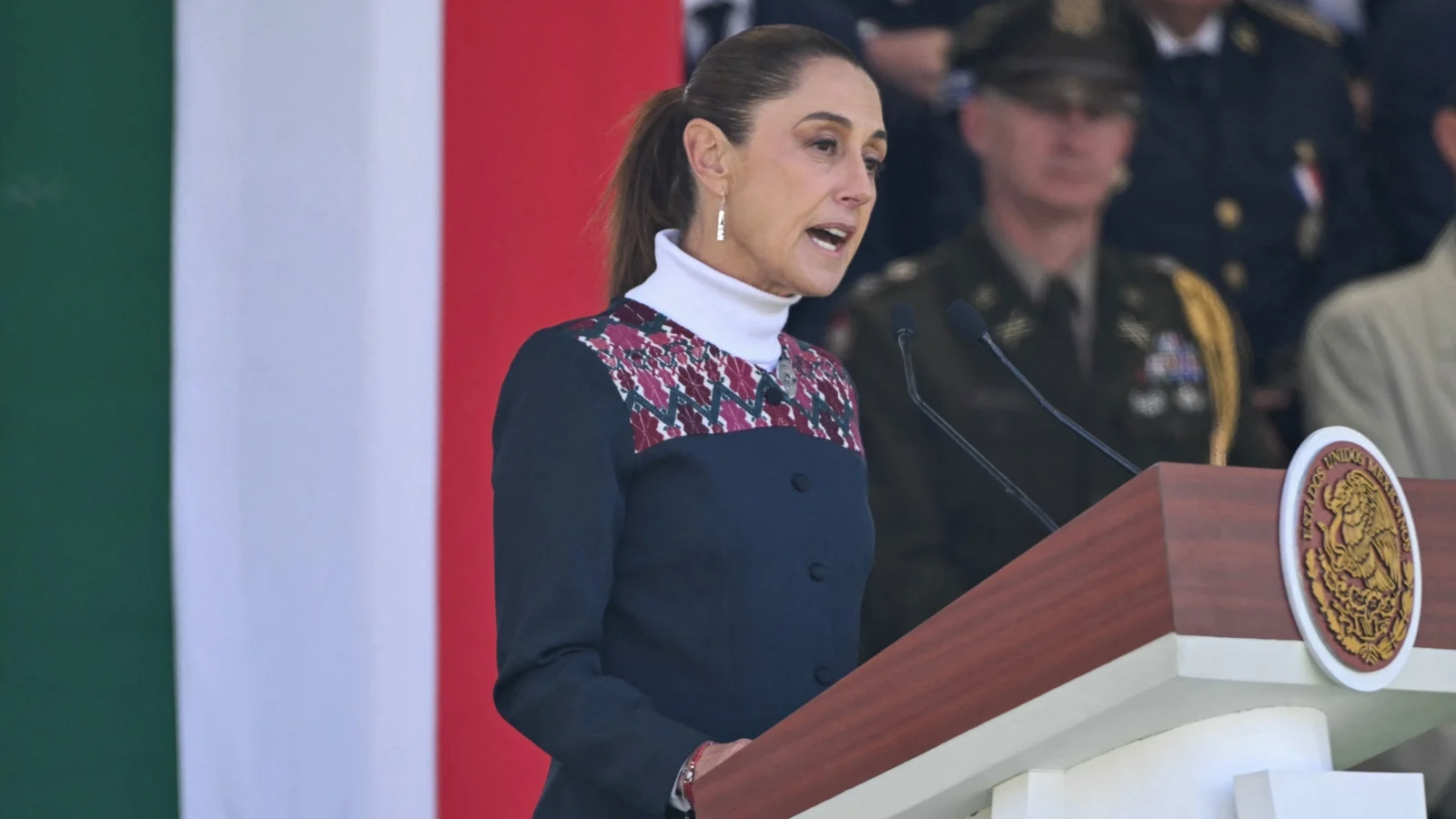
“We want people to come,” President Claudia Sheinbaum told reporters, repeating a phrase that officials have leaned on since the violence flared: “no risk.” It’s a simple, forceful sentence, and she doubled down, promising “all the guarantees, all the guarantees” that tourists and football fans will be safe when the World Cup arrives in June.
Her assurance came after a dramatic military operation that wounded and ultimately killed Nemesio “El Mencho” Oseguera, the leader of the Jalisco New Generation Cartel (CJNG). The cartel’s response—coordinated attacks, burning highways, and public shows of force—has been swift and visible, if uneven in both timing and geography.
The scene on the ground
I spoke with Rosa, a street taco vendor who has stacked tortillas in Guadalajara’s Centro for two decades. “Everyone is scared,” she said, stirring a pot as if the motion could settle nerves. “But I still have to open. If no one comes, my family doesn’t eat.” Her words sounded like a plea, but also like a declaration of ordinary courage that you find in cities used to living with risk.
Along the Pacific coast in Puerto Vallarta, drone footage released by local stations showed columns of smoke rising over commercial districts—images that made tourists on social media question whether their tropical vacations were safe. Local soccer leagues postponed matches over the weekend as a precaution, a reminder that this is not only an international story; it has immediate local consequences for players, their families, and the small businesses that depend on weekend crowds.
What the numbers and history tell us
Mexico’s security landscape is not new to the world. For several years the country has recorded tens of thousands of homicides annually, and the rise of heavily armed cartels that operate across state lines has forced authorities to rethink strategies. Large-scale captures or strikes against cartel leaders have historically triggered violent reprisals, and the response to El Mencho’s death followed that pattern: an immediate, if chaotic, spasm of violence intended to rebuff the state and signal continued strength.
For the World Cup, the stakes are peculiarly high. Mexico is slated to host 13 of the tournament’s 104 matches, with Guadalajara responsible for four games. The global spotlight will shine on stadiums, fan zones, airports, and hotels—and on the nation’s ability to provide security for the tens of thousands of fans who will travel from across the globe, including contingents that may arrive should countries like the Republic of Ireland qualify through the playoffs.
Officials, fans, and the global gaze
FIFA, the world body that organizes the World Cup, said it is closely monitoring developments and “in close contact with the authorities,” a spokesperson told journalists. That measured line—designed to reassure without promising too much—mirrors a pattern seen around major events: international organizers leaning on host governments for guarantees, while keeping contingency plans in their back pockets.
At a fan zone cafe near Guadalajara’s Arena, an Irish supporter named Liam wrapped an emerald scarf tightly around his neck and admitted he felt torn. “I love Mexico—great crowds, great food. But yes, I’m nervous. When you see burning tires on the freeway, you think: do I book the ticket or not?” he asked. “For every fan like me who worries, there’s another who says life goes on. It’s complicated.”
Security strategies and political continuity
President Sheinbaum’s response is also a political signal. She has largely followed the approach of her predecessor, Andrés Manuel López Obrador, who campaigned on social programs and an explicit pivot away from militarized anti-drug campaigns with the slogan “hugs not bullets.” That emphasis on addressing poverty and structural causes of crime remains a through-line, even as Sheinbaum has overseen targeted operations against high-level cartel figures.
“This is not an easy trade-off,” said Ana García, a security analyst at a Mexico City think tank. “On one hand, you need to demonstrate that the state can act decisively against the most violent actors. On the other, every leadership vacuum or high-profile strike risks triggering reprisals. The real test is whether Mexico can protect civilians and critical infrastructure—especially during an event as internationally visible as the World Cup.”
What fans and visitors should expect
If you are thinking about making the trip: expect enhanced security in and around stadiums and transport hubs. Authorities will likely deploy coordinated federal, state, and local forces to protect match venues, and private security firms will supplement those efforts at hotels and fan zones. Officials say they’re working to restore normalcy where recent unrest disrupted daily life.
- Mexico will host 13 of 104 World Cup matches; Guadalajara will host four of those games.
- Local football fixtures have been postponed in areas affected by recent unrest.
- FIFA and local authorities say they are coordinating closely on security arrangements.
Bigger questions: tourism, resilience, and the cost of spectacle
Major sporting events are mirrors that show more than the game: they reveal political choices, social cleavages, and the economic calculations of cities and nations. For Guadalajara and Mexico, the World Cup promises billions in exposure and tourism revenue—but it also poses a gamble. Can the city protect visitors while maintaining its everyday life? Can authorities dismantle criminal capacity without igniting cycles of retaliation that harm ordinary people?
“Our lives are layered,” said Dr. Jorge Velázquez, a sociologist who studies urban resilience. “There’s the festival life—music, food, sport—and then there’s the subterranean life of illegal economies. The question is whether the festival can flourish while we untangle deeper problems. The two aren’t mutually exclusive, but it requires patience, coordination, and resources.”
What would you do?
So I ask you, reader: would you book the match, take the flight, root with thousands under a Guadalajara sky? Or would you wait on reports, let the news settle, and travel later? There is no right answer, only a weighing of risk, desire, and the very human urge to be part of something larger than yourself.
For locals like Rosa, the World Cup is not an abstract geopolitical spectacle. It’s a chance for customers to come back, for families to regain income lost in a week of cancelled games and closed streets. For officials, it’s a test of governance. For the world, it’s a reminder that even as we cheer from afar, real lives and real fears fill the stands behind the matches’ bright lights.
Whatever happens between now and kickoff on 11 June, Guadalajara’s story will be told in more than goals and trophies: it will be told in the resilience of its people, the decisions of its leaders, and how a city reconciles its love of life with the shadow of organized crime. That is a story worth watching—and worth listening to, closely and without flinching.