In the Quiet of Chappaqua, a Storm Overpowering the Small-Town Calm
The day the Clintons sat for depositions in a modest arts centre in Chappaqua felt like a town meeting that had swallowed the national conversation whole.
Journalists, camera crews and local residents funneled into that leafy Westchester hamlet as if a magnet had been dropped into a swimming pool: ripples outward, everyone converging on the centre. The Secret Service strung up metal barricades. Press vans clustered like migratory birds. Somewhere nearby, a deli owner wiped down the counter and shook his head at the spectacle.
“You usually come in for coffee and a crossword,” said Maria Hernandez, who has run the corner café for 18 years. “Now it’s ‘Did you see who walked by? Did you see the barricades?’. It feels unreal — like we’re in a movie about people who made a movie about people.”
Why the Depositions Matter
At the heart of the proceedings is Jeffrey Epstein — the late financier whose criminal conduct and connections have continued to ricochet through the corridors of power. Epstein pleaded guilty in 2008 to state charges related to soliciting prostitution, including accusations involving underage girls. He later faced federal sex-trafficking charges before his death in a New York jail cell in 2019, which authorities ruled a suicide.
This is not just about the man who died; it’s about the files, the flight logs, the photographs and the networks — and what they say about wealth, influence and accountability.
Republicans on the House Oversight Committee, armed with new disclosures from the Department of Justice that they describe as “millions of documents,” say they are trying to understand who moved in Epstein’s orbit and why. Democrats warn that the current probe is more about scoring political points against President Donald Trump than about seeking survivors’ justice.
Who was questioned, and why it matters
Hillary Clinton testified before the panel first, delivering an opening statement in which she pushed the committee to call President Trump to testify as well. “If this committee is serious about learning the truth about Epstein’s trafficking crimes,” she said publicly, “it would ask him directly under oath about the tens of thousands of times he shows up in the Epstein files.”
The following day, former President Bill Clinton took his turn. He is more entangled in public perception, having acknowledged several flights on Epstein’s private plane in the early 2000s for humanitarian work linked to the Clinton Foundation, but he has insisted he severed ties long before Epstein’s 2008 conviction and denied ever visiting Epstein’s private island.
Neither Hillary nor Bill Clinton has been accused of criminal wrongdoing in connection with Epstein. Mere mention in documents does not equate to criminal culpability. Yet the appearances were demanded under threat of contempt of Congress — two former first family members summoned into a moment that blends the personal and the political.
Images, Logs and the Weaponization Claim
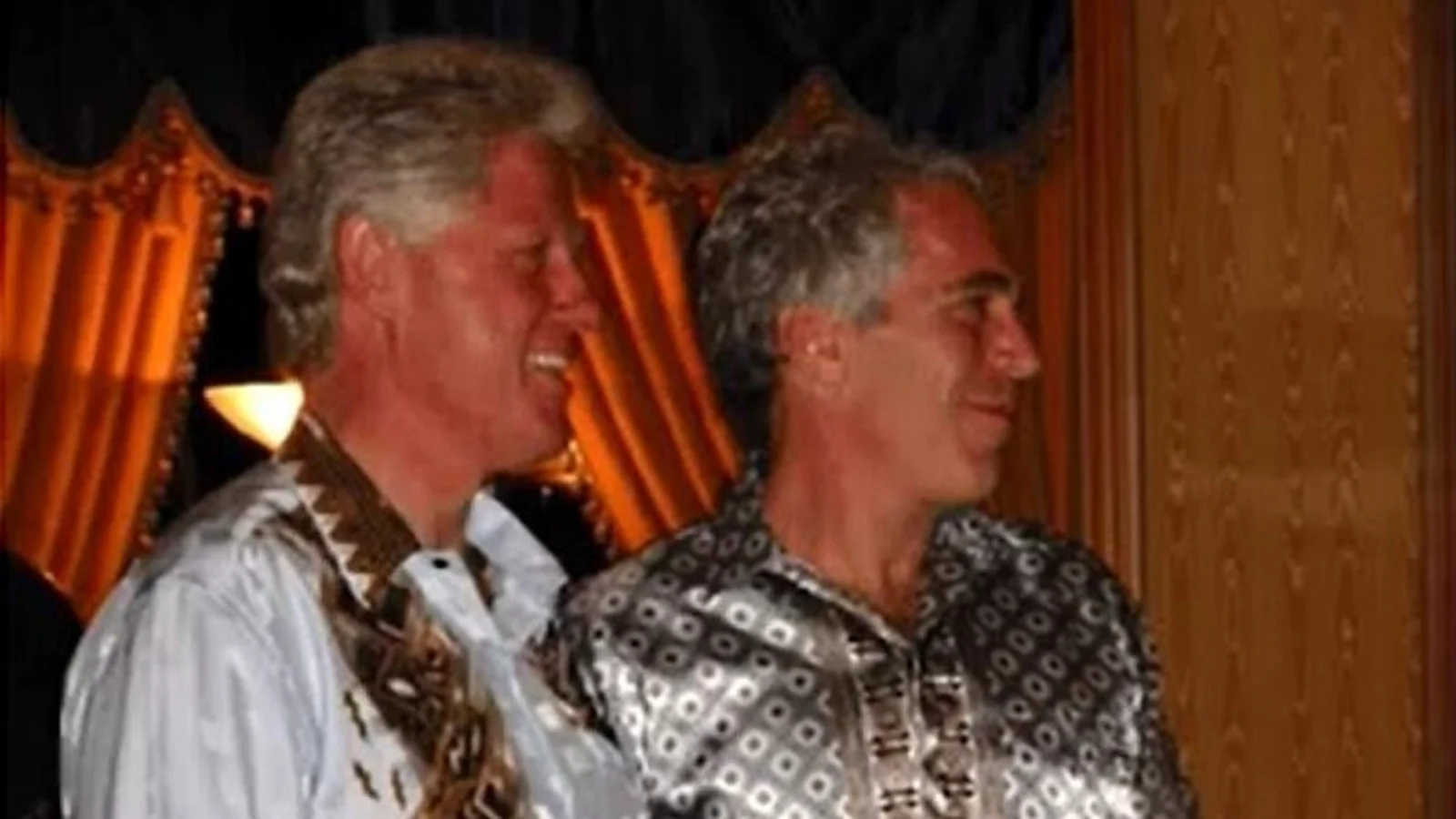
Among the trove released by the Justice Department were photographs and travel logs that set off renewed public curiosity. One image included in the files — obscured by a black rectangle to protect parts of the photograph — showed Bill Clinton reclining in a hot tub. Another picture appeared to show him swimming beside a dark-haired woman widely identified as Ghislaine Maxwell, Epstein’s alleged accomplice. Such images, whether grainy or pixel-perfect, are potent: they require no legalese to elicit a reaction.
“Photos have this strange power,” observed Dr. Lena Morales, a media studies professor at Columbia University. “They compress complexity into a moment and let our imaginations rush in. That’s why they’re central in political theatre, even if they tell an incomplete story.”
For Democrats, the whole inquiry smells of a partisan fishing expedition. “This is being used as a cudgel,” said Representative Aisha Carter, a Democrat on the committee. “We should be focused on victims. Instead, we are weaponizing trauma for political theater.”
For Republicans, the push is an accountability exercise. “The public deserves answers,” said Committee Chair James Comer. “We are following leads and documents. No one is above scrutiny.”
Chappaqua’s Uncomfortable Spotlight
Inside the arts centre, the mood was tightly controlled, but outside, neighbors struggled to reconcile the relaxed rhythms of their community with the gravity of what was unfolding. A retired teacher named Harold Peck, who moves easily between newspaper clippings and neighborly greetings, lamented how national debates arrive without knocking.
“Chappaqua is a town of book clubs and PTA meetings,” Peck said. “We like to think we can keep our lives small. But power has ways of collapsing distance.”
The depositions were held behind closed doors — a choice that angered the Clintons, who had asked for open hearings and even televised testimony, only to find themselves in a quiet room away from the public gaze. Bill Clinton called closed hearings akin to a “kangaroo court.” That line — sharp and performative — landed differently depending on one’s political lens.
What This Reveals About Power and Accountability
Beyond the personalities and photographs, the hearings invite deeper questions. How do wealth and access shape legal outcomes? How does public curiosity about the rich and famous intersect with the real needs of survivors seeking justice? And when political actors put their own interests ahead of victims’, who holds them accountable?
There are concrete numbers that help frame the scale. Epstein’s 2008 plea deal allowed him to serve 13 months in a county jail with work-release privileges — a sentence widely criticized as lenient. Civil suits connected to Epstein and Maxwell have alleged harm to dozens of women, and various legal settlements and claims have resulted in millions of dollars paid to victims, illustrating the monetary dimension of the fallout even as many survivors say money cannot be justice.
“We must not let spectacle eclipse substance,” said Naomi O’Connell, director of a nonprofit working with survivors of trafficking. “Investigations should be survivor-centered. Too often, they become about personalities and not accountability.”
Readers, what do you think?
Do high-profile hearings like these bring us closer to justice, or do they gratify a national appetite for scandal while leaving systemic problems untouched? When the cameras leave Chappaqua, will anything meaningful have changed for those Epstein wronged?
- Epstein’s 2008 conviction: state charges related to solicitation of prostitution; served roughly 13 months.
- 2019 federal charges: Epstein was facing sex-trafficking charges when he died in custody; death ruled a suicide.
- Ongoing scrutiny: DOJ releases of documents have provided new leads and renewed political debate.
Closing Thoughts: A Community, a Country, a Conversation
The tiny town of Chappaqua, with its maple-lined streets and Sunday farmers’ market, may one day shrug off the attention. But the questions raised by these depositions are not local; they are national and global. They speak to how institutions respond when allegations implicate wealth and proximity to power, and whether public inquiry can evolve into meaningful reform.
As the sun set on the arts centre and the last of the press vans rolled away, Maria at the café poured one more coffee. “People will forget details,” she said, stirring sugar into a cup. “But stories like this hang around in the town like a smell. They make you notice things: who you trust, how you listen. Maybe that’s the point.”
So we keep watching, probing, asking. Because history is not only what powerful people do when no one is looking — it is also what we, as a society, insist upon seeing when we finally look back.