A Life Built of Shadow and Ceremony: The Enigmatic Figure at Iran’s Pinnacle
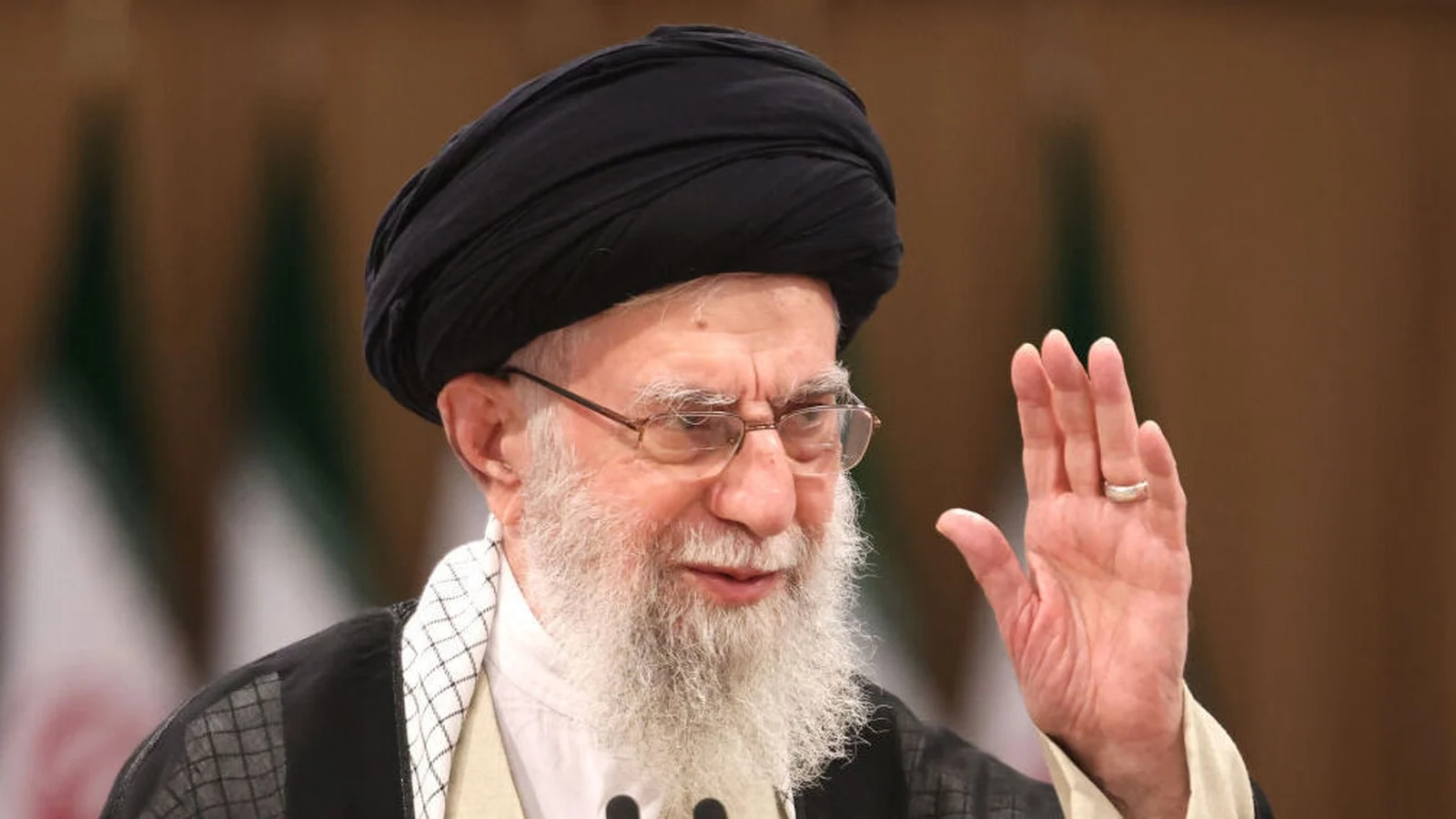
I have watched Iran from afar for decades and up close for years. Few figures have shaped its modern story as thoroughly as the man who has sat at the apex of its theocratic system since 1989: a cleric whose supply of rituals, edicts and sealed-off appearances made him at once omnipresent and impenetrable.
In recent days a flurry of dramatic online posts — including a message on Truth Social by Donald Trump that called him “one of the most evil people in history” and claimed his death — set off a storm of speculation. Reports also circulated that American and Israeli strikes had struck sites across Iran. At the time of writing, many of those claims remain unverified; in a world of instant messages, images and propaganda, certainty is hard-won.
From Seminary Halls to the Supreme Office
He rose from the seminaries of Mashhad and Qom, a product of the mid-20th-century clerical intelligentsia that blended religion and politics. He was long a figure in the revolution’s inner circle, repeatedly detained in the years of the Shah for anti-imperial agitation and later fighting on the frontline during the Iran-Iraq war.
When Ayatollah Ruhollah Khomeini died in 1989, the Assembly of Experts chose his successor in a decision that surprised many. The man initially resisted the nomination — an image that was frozen in the national memory, an elder cleric murmuring, “I am opposed,” as the room pressed on — and yet history took him to the center of power, where he remained for more than three decades.
As supreme leader he became the ultimate arbiter: the commander-in-chief of the armed forces, the overseer of the judiciary, the guardian of the revolution’s ideology. He was, in many ways, the state’s constant while presidents came and went — reformers and hardliners alike — working with six elected presidents who sometimes tested, sometimes chafed at his limits.
Surviving Waves of Dissent
To watch the trajectory of Iran under his watch is to watch a country in perpetual tension. The late 1990s and the early 2000s saw student movements and reformist pushes. In 2009, disputed presidential elections provoked mass protests — the Green Movement — and the state’s response hardened.
More recently, in 2019 and again in 2022–23, streets across Iran were filled with voices chanting for change. The “Woman, Life, Freedom” movement that crystallized after the death in custody of Mahsa Amini carried echoes of a deepening social struggle: many young Iranians pushing against strict dress codes and a system that tightly polices public life.
“We were not asking for revolution,” an organics seller in Tehran told me at a cramped market stall, nodding toward a group of customers wrapped against winter. “We were asking for a place to breathe. For dignity.”
Human rights organizations documented hundreds killed and thousands detained during waves of unrest; others put the figures higher. The protests did not topple the regime, but neither did they disappear into silence. They reshaped the politics of a country where a growing share of the population is under 30 and where social media — despite extensive filtering — is a powerful forum for dissent.
Security, Ceremonial Life and the Unseen
He lived like a man in a fortressed realm. Public appearances were tightly choreographed, never broadcast live and rarely announced in advance. He never set foot abroad after becoming supreme leader — a precedent harking back to Khomeini, who returned from exile with a triumphant procession in 1979. His last known foreign trip had been many years earlier, when he visited North Korea.
There were telltale signs of an older body. His right arm was often inert — a reminder of an assassination attempt in 1981 that left a permanent mark. He was a cleric who also acted as a political general: president in the 1980s after a succession of violent attacks within the revolutionary movement, then the ideological linchpin of a republic that blurred faith and statecraft.
“He has always been the axis,” said an exiled scholar of Iranian politics in Paris. “Even those who disagreed with him calibrated their language around his influence. That created stability of a sort, but it also concentrated the pressure: any fissure beneath the top becomes seismic quickly.”
The Family, the Backstage Power and the Question of Succession
Power in Iran has always been complex, a mosaic of institutions, networks and personalities. He had children, but only one — Mojtaba — ever reached public prominence, a figure that Western sanctions singled out in 2019 for his influential role behind the curtain. Family disputes spilled into public view at times: relatives who fled during the Iran-Iraq war, a sister whose children became critics abroad — reminders that private fissures often mirror political ones.
Who might succeed a supreme leader remains both a constitutional and a political question. The high clerical body, the Assembly of Experts, is technically charged with selecting and supervising the supreme leader. In practice, a successful transition requires the alignment of security organs, religious elites and political factions. Will the next era be more open? Or will the system reinvent itself around a new figure who doubles down on the old approach?
Lines on a Map, Lives in the Streets
Walk through Tehran’s grand bazaar at dawn and you hear saffron and cardamom, tea mugs clinking, merchants bargaining — the rhythms of daily life that persist under the political drama. Go to a university courtyard and you find younger Iranians speaking English, studying algorithms and migration patterns, planning futures that might take them abroad. Two Irans coexist: one rooted in revolutionary institutions and ritual; another impatient, connected and outward-looking.
“When I teach, the students ask about freedom, about whether they can shape their lives,” said a humanities professor at Tehran University. “They do not talk about ideology the way their parents did. They ask practical questions: Can I open a business? Can I travel? Can my daughter marry the person she loves?”
What This Moment Means — For Iran and the World
Whether the recent internet storm signals a definitive end to an era or simply another chapter in a long-running drama, the broader story matters. Iran is home to roughly 85–90 million people, a regional power with deep global entanglements — nuclear diplomacy, regional alliances, economic sanctions and a vast diaspora who watch events with bated breath.
So ask yourself: how do we understand change in an age when social networks can declare an event before governments confirm it? How do external powers influence internal dynamics without misreading the texture of local life? And, crucially, how do the men and women who live their days in Tehran, Shiraz, Mashhad or Isfahan imagine their future amid the reverberations of high politics?
In the end, this is not a story of one man alone. It is a story about a system and the millions who live under it — about resilience and repression, about longing and calculation. The rituals will continue, as will the bargaining of power. The markets will keep humming, poets will keep writing, and young people will keep trying to carve out space for their lives. That, perhaps, is the most vivid truth beneath any headline.