When a Kingpin Falls: The Midnight Shootout That Shook Mexico and the Long Shadow of the CJNG
There are moments when a single headline feels like a thunderclap—splitting the sky and leaving everyone beneath it blinking into a new world. Last weekend was one of those moments for Mexico. The man known to many only as “El Mencho”—Nemesio Oseguera Cervantes—the long-sought leader of the Jalisco New Generation Cartel (CJNG), died after a predawn confrontation with Mexican forces. What followed was not simply celebration or relief: it was a raw, combustible mix of fear, defiance and the gnawing question of what fills a power vacuum inside one of the planet’s most violent criminal empires.
The raid and its immediate aftermath
Authorities called the operation precise; intelligence officials said it was years in the making. U.S. and Mexican agencies exchanged tips and tracked movements that culminated in the confrontation. But the scene that unfolded across cities and highways in the hours after the announcement looked less like a neat victory and more like a warning.
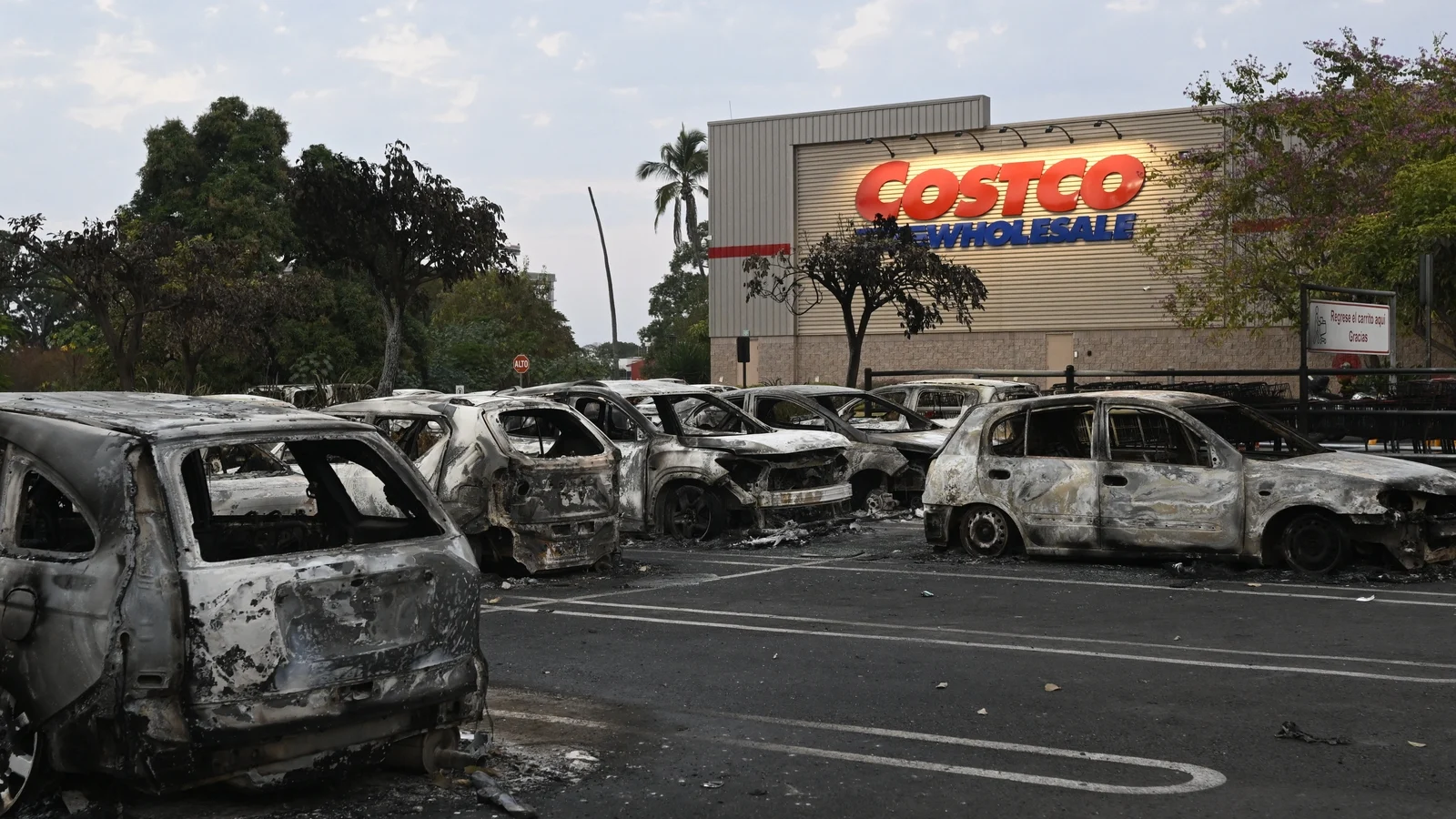
Across at least 20 states, trucks were set aflame, highways were blockaded, public buildings were attacked and, in several places, the sickening crack of gunfire punctured the night. In Guadalajara and its suburbs, residents described roads choked with smoke and the sound of sirens becoming a grim, familiar rhythm.
“We woke up to a city on fire,” said Elena, a bakery owner in Zapopan, who asked that only her first name be used. “I saw a bus burning on the highway. We hid in the bakery until the army told us it was safer to go home. My children cried. I don’t know if we should leave.”
Organised chaos: a cartel’s violent reflex
Those post-raid actions were not random: they were the work of a criminal organisation exercising muscle, signaling that it remains a force capable of shaping daily life. The CJNG has evolved from a regional trafficking group into a sprawling transnational business—one that U.S. agencies estimate employs tens of thousands of members and operates in scores of countries.
Beyond drugs, the cartel has diversified into extortion, fuel theft, kidnapping, illegal logging, mining, migrant-smuggling and sophisticated financial fraud, U.S. commentators and intelligence assessments have argued. In areas where the state is thin or absent, these groups can act as shadow governments—collecting “taxes,” enforcing order, and brutally policing their own ranks.
“When you remove a leader, you don’t remove the organisation,” said Dr. Ana Rivera, a Mexico-based specialist in organized crime. “You disrupt networks, but you also provoke immediate attempts to test the group’s cohesion and seize land, routes and markets.”
Succession in the shadowlands
Cartels are not corporate boardrooms; they are dynasties, coalitions and coalitions within coalitions. In the CJNG’s case, analysts say El Mencho had been delegating much of the day-to-day command to a council of regional commanders—partly because of ill health—and that structure may blunt the immediate shock of his death. But it also lays the ground for internecine rivalry.
“There will be contenders,” said Carlos Méndez, a security analyst in Guadalajara. “Some are family, some are trusted lieutenants, others are ambitious regional bosses. The first weeks are when the map gets redrawn.”
When the Sinaloa Cartel’s top figures were removed from the board—first Joaquin “El Chapo” Guzmán, then the aging Ismael “El Mayo” Zambada—the organisation splintered into factions that fought across the borderlands. The CJNG now faces the same challenge: keeping a sprawling empire together when the person who symbolised its rise is dead.
Life under fire: local voices
On a quiet street near a market in Guadalajara, a university student, Diego, described how life has a mechanical calm that hides tension. “You see people selling fruit, kids on bikes, but everyone knows the sound of danger here. When the cartel shows power, it is not just about drugs—it’s proving who runs the streets.”
A local priest, Father Miguel, has found his church filling with people seeking guidance or simply somewhere to feel safe. “People ask me whether they should stay or go. They don’t want to leave their homes, but they can’t explain the fear. It’s like standing under a sky that could fall any moment.”
Brutality and recruitment: a paradoxical growth
The CJNG’s reputation for brutality is not propaganda. Reports from investigative outlets and security think tanks have documented public executions, beheadings and other horrific acts used to intimidate rivals and control populations. There have even been accounts—shocking and difficult to verify fully—of ritualised violence used to bind recruits to the group.
Yet the cartel continues to recruit. Why? Because violence is only one part of a broader social contract they offer in certain communities: jobs (however brutal), a paycheque in places where formal work is scarce, quick justice, and sometimes a perverse form of social order. Combine that with the ceaseless demand for drugs—especially synthetic opioids whose ingredients and markets are global—and you have a corrosive economic engine.
Global connections and consequences
This story is not Mexico’s alone. It is a mirror to global consumption and geopolitics. The flow of fentanyl, methamphetamine and cocaine into the United States fuels the cartel’s revenue; international money laundering networks obscure profits; and the global demand for illicit goods continues to feed violent supply chains.
“Reducing violence in Mexico requires more than arrests,” noted Dr. Rivera. “It requires demand reduction policies, international financial cooperation, and serious investment in communities that have been hollowed out by decades of neglect.”
What happens now?
In the short term, expect more—perhaps unpredictable—violence, as rivals test boundaries and local commanders assert control. In the medium term, the cartels’ adaptability, diversification and financial networks mean that removing one leader seldom dismantles a network. At best, it redirects the fight. At worst, it draws new actors into a bloody scramble.
And what of the people living in the crossfire? They continue to bake, teach, worship and parent under conditions most can hardly explain to outsiders. They make choices every morning: go to work, close the shop, keep the children home. Those small acts of courage are, in their own way, a defiant refusal to be edged out by violence.
So, what do we, as distant observers and consumers of an interconnected world, do with this knowledge? Do we treat this as a law-and-order story broadcast in the dead of night, or as a reminder that our demands, policies and economic choices ripple far beyond our borders?
For the families in Guadalajara, the question is simpler and more urgent: how to sleep tonight without fear. For policymakers, it is more complex. And for the rest of us, the moment asks us to look up from headlines and ask—what kind of global community do we want to be, and how do we stop the next thunderclap?