At the bus stop in Nikopol: the ordinary interrupted
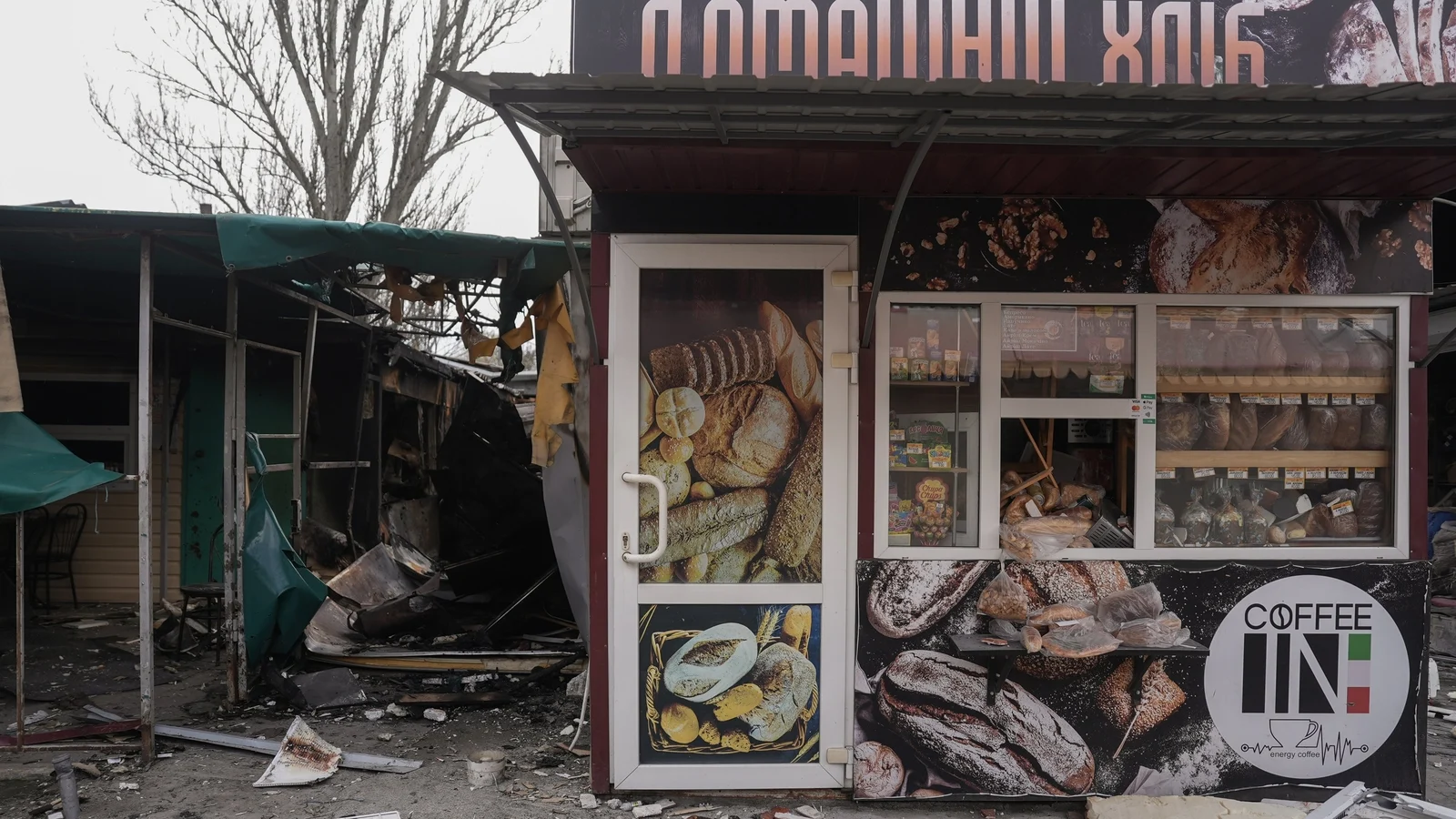
It was a late-spring morning in Nikopol—shopkeepers sweeping the crumbs from doorsteps, the air smelling faintly of diesel and fresh bread, the clatter of a city that has learned to keep moving despite the war. Then, as a city bus slowed to let people on, the world contracted to a single, terrible point: an FPV drone slammed into the vehicle and the crowd at the stop.
“Three people were killed and another 12 injured,” Oleksandr Ganzha, head of Dnipropetrovsk’s military administration, posted on social media. “The enemy attacked a city bus with an FPV drone right in downtown Nikopol. It was pulling up to the stop—there were people both on board and at the stop.”
Witnesses describe a scene that could be lifted from any modern war diary: smoke curling up between pastel apartment blocks, shards of glass scattered across the pavement, a child’s shoe by a bench. “There was a woman who had been waiting to go to work,” said Mykola, a local baker who gave his name and then fell silent for a long moment. “I tried to help. We wrapped a blanket around someone and carried them to the pharmacy. There was blood on the asphalt. I still can’t believe it.”
Wider ripples: more victims, more grief
The carnage was not confined to Nikopol. In the southern city of Kherson, regional officials reported three elderly residents killed and seven wounded after Russian shelling struck residential areas. In the Vladimir region of Russia, governor Alexander Avdeev said a drone strike on a residential building left three dead, including a 12-year-old boy. “Two adults and their son were killed,” Avdeev wrote on Telegram, adding that the couple’s five‑year‑old daughter was hospitalized with burns.
In Dnipropetrovsk, authorities said an 11-year-old boy died and five others were wounded when a house caught fire after a strike. Across both countries, children—those too young to understand geopolitics and too old to be spared its consequences—became part of the latest body count.
These incidents are the latest in a steady drumbeat of attacks that have come to define this conflict: nightly missile and drone strikes, unpredictable and deadly. Russia’s Defence Ministry told state media that it had shot down 45 Ukrainian drones overnight. In turn, Ukrainian officials say Russian drones struck “four districts of the region more than ten times,” according to Ganzha, sparking fires, knocking out power lines and damaging an administrative building.
On the ground, in the lines
Where statistics and statements end, the human detail begins. An ambulance driver in Nikopol named Oksana wiped her eyes and said, “You feel helpless when you see a grandmother holding her purse and you know you’ll take her to the hospital, but she won’t come back the same.” A volunteer with a white headband and paint-splattered boots handed out bottled water from the back of a van. “This is what we do now,” he said. “We carry the living and bury the dead, and we keep the lights on as best we can.”
Energy as a battlefield: pipelines, ports and geopolitics
As the human cost mounts, another front has intensified: energy. Ukraine’s recent strikes on Russian energy infrastructure, Kyiv says, aim to choke a major source of revenue for Moscow at a moment when global oil prices have been nudged upward by conflict in the Middle East.
Russia countered with a claim that Ukrainian forces struck facilities at the maritime transshipment complex in the port of Novorossiysk—damage that Moscow said affected a mooring point and sparked fires at four oil product reservoirs. The target is sensitive: the Caspian Pipeline Consortium (CPC) terminal, located southwest of Novorossiysk, handles roughly 80% of Kazakhstan’s crude exports.
“The work of our oil sector is stable and CPC exports continue to be stable,” Sungat Yesimkhanov, Kazakhstan’s deputy energy minister, told reporters. For a country whose economy leans heavily on hydrocarbons, stability at the CPC is both an economic need and a geopolitical lifeline.
To put the volumes into perspective, the Tengiz–Novorossiysk pipeline’s throughput rose to about 70.5 million tonnes last year—roughly 1.53 million barrels per day—up from 63 million tonnes the year before, a material increase in flows that global markets notice. Major energy companies, including Chevron and ExxonMobil, are among the CPC’s shareholders, binding Western commercial interests to a corridor that runs through the murk of regional politics.
Why a pipeline matters to someone in London or Lagos
When a storage tank burns in a Black Sea port, it ripples outward: traders watch supply expectations, refiners change their nominations, and retailers in faraway cities adjust prices at the pump. Oil is not just a commodity; it is the bloodstream of industry, logistics and personal mobility. Interrupt it, and you feel it in heating bills, supermarket shelves and government balance sheets.
“Attacks on energy infrastructure are a form of economic coercion,” said Dr. Elina Petrov, an energy analyst who studies Eurasian pipelines. “They’re not purely military targets. They alter the calculus of markets and of allies. The CPC outage would be felt as both an immediate supply shock and a signal that the war can touch the arteries of the global economy.”
What drone warfare tells us about modern conflict
We have, in a sense, outsourced the dirty work of frontline violence to small, hard‑to-detect machines. FPV drones—tiny, fast, guided by the operator’s viewpoint—offer plausible deniability and tactical surprise. They are cheap enough to deploy in numbers and precise enough to hit soft targets in crowded urban spaces.
“The psychological effect is disproportionate,” an international humanitarian expert, Mark Sutherland, told me. “People can live with a distant missile threat, but something that buzzes into a bus stop is intimate, invasive. It changes how people move through cities.”
Those buzzing machines also complicate the laws of war. When the line between military and civilian targets blurs, the legal and moral responsibility grows heavier—and so does the chance of miscalculation.
Where do we go from here?
There are no easy answers. Emergency services will dig survivors out of the wreckage. Diplomats will trade condemnations. The markets will try to price in the disruptions. Meanwhile, families will bury their dead and volunteers will knit temporary communities out of the raw material of loss.
What should alarm us is not only the increasing reach of violence into everyday life, but the way warfare now extends into economic arteries. If a port or pipeline can be weaponized, what becomes sacred? What remains off-limits?
As you read this, think of the people on the bus in Nikopol—workers, students, elders—whose lives intersected on an ordinary morning and were altered in a single instant. Think of the children who will grow up with the sound of drones in their memories. What obligations do distant consumers, investors and policymakers owe to them?
For now, the trains keep running and the ambulances keep answering calls. The news cycle will move on; the grief will not. If this conflict has taught us anything, it is that modern war slides fast from battlefields to bus stops, and from storage tanks to supermarket shelves—touching everyone, everywhere.