The Guest, the Incumbent and the Polls: A Morning in Budapest That Felt Like an Election in Miniature
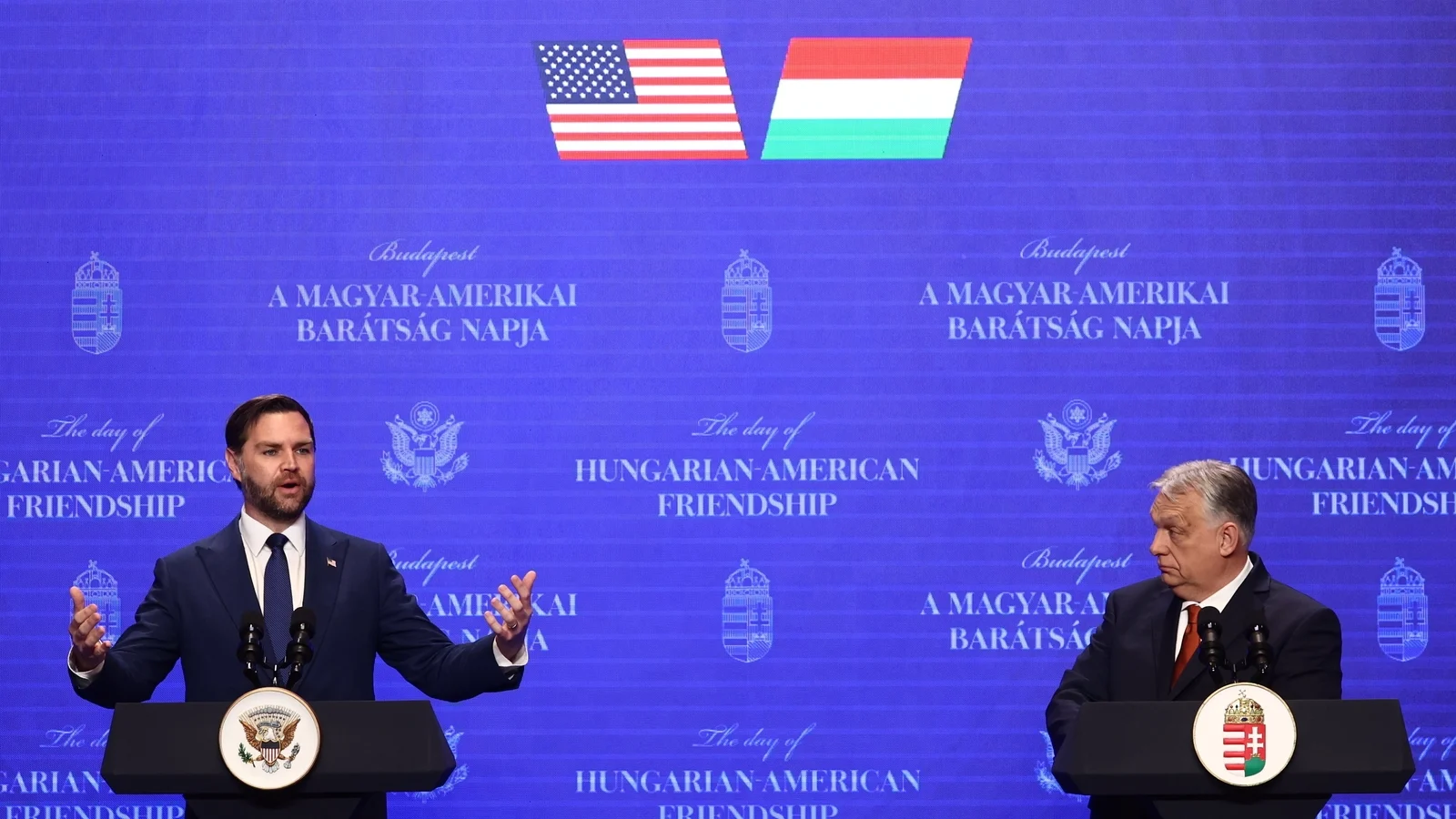
Budapest woke up like it always does—tram bells, the distant clatter of dishes in cafés, the sweet, smoky tang of chimney coffee—but there was an extra electricity in the air the day US Vice‑President JD Vance stepped onto Hungarian soil. Flags fluttered, cameras gathered beneath the statue of a statesman no one could agree on, and the question that has been tugging at this city for weeks—who will run Hungary after 16 years of Fidesz rule?—hovered like morning mist over the Danube.
On the surface, the visit was billed as a routine diplomatic stop: two days in Budapest to “bolster ties.” Underneath, the choreography was unmistakable. The real purpose was political theatre—an American vice‑president lending muscle to a beleaguered ally, Prime Minister Viktor Orbán, as Hungarians queued at the ballot box for perhaps the most consequential election in recent memory.
Why This Moment Matters
For 16 years Fidesz has been the dominant force in Hungarian politics, winning four consecutive parliamentary elections and shaping the country’s institutions in its image. But the political landscape has shifted. Polls published this week put Orbán’s party about nine percentage points behind the main centre‑right opposition, the Tisza coalition, led by 44‑year‑old lawyer Péter Magyar—an ex‑insider who has recast himself as the anti‑corruption candidate the fatigued electorate has been craving.
Nine points might not sound like an insurmountable chasm on the page, but in a country where CV‑building national campaigns move like tightly wound clockwork, it’s a gulf. With only days left to sway undecided voters, every handshake, every televised endorsement, every carefully worded compliment carries extra weight.
Words, Warmth and a Political Endorsement
At a joint press conference in Budapest, Vance left little to interpretation. “The President loves you, and so do I,” he said to Orbán, in words that landed like a benediction to the prime minister’s supporters and a provocation to his critics. He called Orbán “one of the true statesmen in Europe,” a leader capable of speaking with Washington one day and Moscow the next.
“This is more than diplomacy,” said Dr. Anna Kovács, a political scientist based in Budapest. “This is signal‑sending: to voters here, to leaders in Brussels, and to the American conservative base that has long admired Orbán’s style of governance.”
Beyond the Rhetoric: Economy, EU Cash and Voters’ Concerns
But compliments cannot conceal the hard arithmetic of an economy that, by many measures, underperforms its Central European neighbors. Jobs have been created, yes—but growth has lagged behind Poland and the Czech Republic, and the EU’s decision to withhold roughly €18 billion in cohesion and recovery funds has been a double blow. Those funds, frozen over concerns of rule‑of‑law backsliding, were intended for infrastructure, hospitals, and development projects—projects the public notices when they don’t arrive.
“My grandson could’ve finished that school in Debrecen if the money had come,” said Erzsébet Kovács, a retired teacher, as she shaded her eyes in a square lined with election posters. “We’re tired of promises and missing sidewalks.”
Péter Magyar’s emerging coalition has seized on this fatigue. His platform centers on transparency, anti‑corruption measures, and a promise to mend fences with Brussels—an appealing message in a country where many worry their children’s futures are being mortgaged to political patronage.
Fear as a Campaign Tool
Fidesz is fighting back with its own vivid narrative. The party has made opposition to the government in Kyiv a centerpiece of its campaign, painting the Tisza coalition as a potential tinderbox that could drag Hungary into the war in Ukraine. It’s a tactic designed to tap into a deep, conservative wariness of instability—old fears dressed in new frames.
“They tell us: ‘Vote for us or you get war,’” said Bálint, a 32‑year‑old IT worker who’s leaning toward Magyar. “It’s heavy—fear is heavy—but I want someone who will fix corruption more than someone who tells me to be afraid.”
International Chessboard: Russia, the US and the Making of Alliances
Orbán is one of the few European leaders who still speaks to Moscow with a direct line. Since Russia expanded its invasion of Ukraine, Orbán has met President Vladimir Putin multiple times, and he has courted a posture of pragmatic engagement that appeals to voters uncomfortable with confrontation. It’s the same trait that drew praise from segments of the American right: in 2024 former US President Donald Trump called Orbán “a truly strong and powerful leader” in a video message to CPAC Hungary.
That kind of transatlantic affinity matters. A win for the Tisza coalition would not just be a domestic upset; it would reverberate through Western capitals. The United States, under the current administration’s tilt towards populist allies, has invested political capital in Orbán. For Washington, the stakes are both ideological and strategic—retain a friendly voice in central Europe, or accept the loss of an ally who has bridged east and west on his own terms.
Voices on the Street
“I remember voting for stability back when my children were small,” said István, a factory foreman in his fifties. “But stability cannot be a word if our hospitals are falling apart. I don’t love all of the opposition’s plans, but I do want someone who won’t treat Hungary like a personal fiefdom.”
A young café owner, Anna, wiped a spoon and said: “We read foreign news, we travel. We want respect in Europe and money here at home. If Brussels won’t give the funds because of how politics are running, maybe the politics need to change.”
What This Election Means for Europe and for Us
Globally, the Hungarian ballot is a mirror. It reflects longstanding tensions about the meaning of liberal democracy, the tradeoffs between sovereignty and European integration, and the persistent appeal of nationalist narratives in times of economic unease. It also demonstrates how foreign endorsements—enthusiastic or reserved—can inflame domestic contests. When a visiting vice‑president praises a leader with the gusto of a campaign surrogate, it begs the question: where is diplomacy and where does campaigning begin?
Are democracies enhanced when external actors cheer from the sidelines? Or does international praise for controversial figures further erode public trust?
After the Ballots Are Counted
There are reasons to think the visit might not be enough to tilt the outcome. A nine‑point deficit with only days remaining is steep. The math is unforgiving. Still, the spectacle of a US vice‑president standing shoulder to shoulder with Orbán shows how far some in Washington are willing to travel, politically and geographically, to defend ideological kin.
Whatever happens on election night, one thing is clear: Hungarians have spent weeks deciding not just who will run their country, but what kind of Europe they want to be part of—one stitched tightly to Brussels’ rule‑of‑law norms or one that charts a wilder, more independent course toward alliances with Moscow and other powers.
So, reader: when you look at this small country by the Danube, what do you see? A cautionary tale? A crucible for the future of democracy in Europe? Or something more complicated, messy and human? The answer will unfold in ballots, in café conversations, and in the slow, stubborn work of rebuilding trust—no matter which flags fly tomorrow.