Twenty-one Hours in Islamabad: When Diplomacy Met the Edge of a Strait
The city hummed like it always does—minivans threading Islamabad’s six-lane arteries, tea sellers calling across dusty corners, muezzin prayers folding into the heat. Then the city narrowed: checkpoints, armored vehicles, lines of soldiers. For a brief, fragile moment, the Pakistani capital was the stage for a conversation the world had not expected to hear.
At the center of that conversation were negotiators who sat across a table for 21 hours, paced hotel corridors at dawn, drank bitter tea, and argued over words that could stretch into years of peace—or collapse into more fighting.
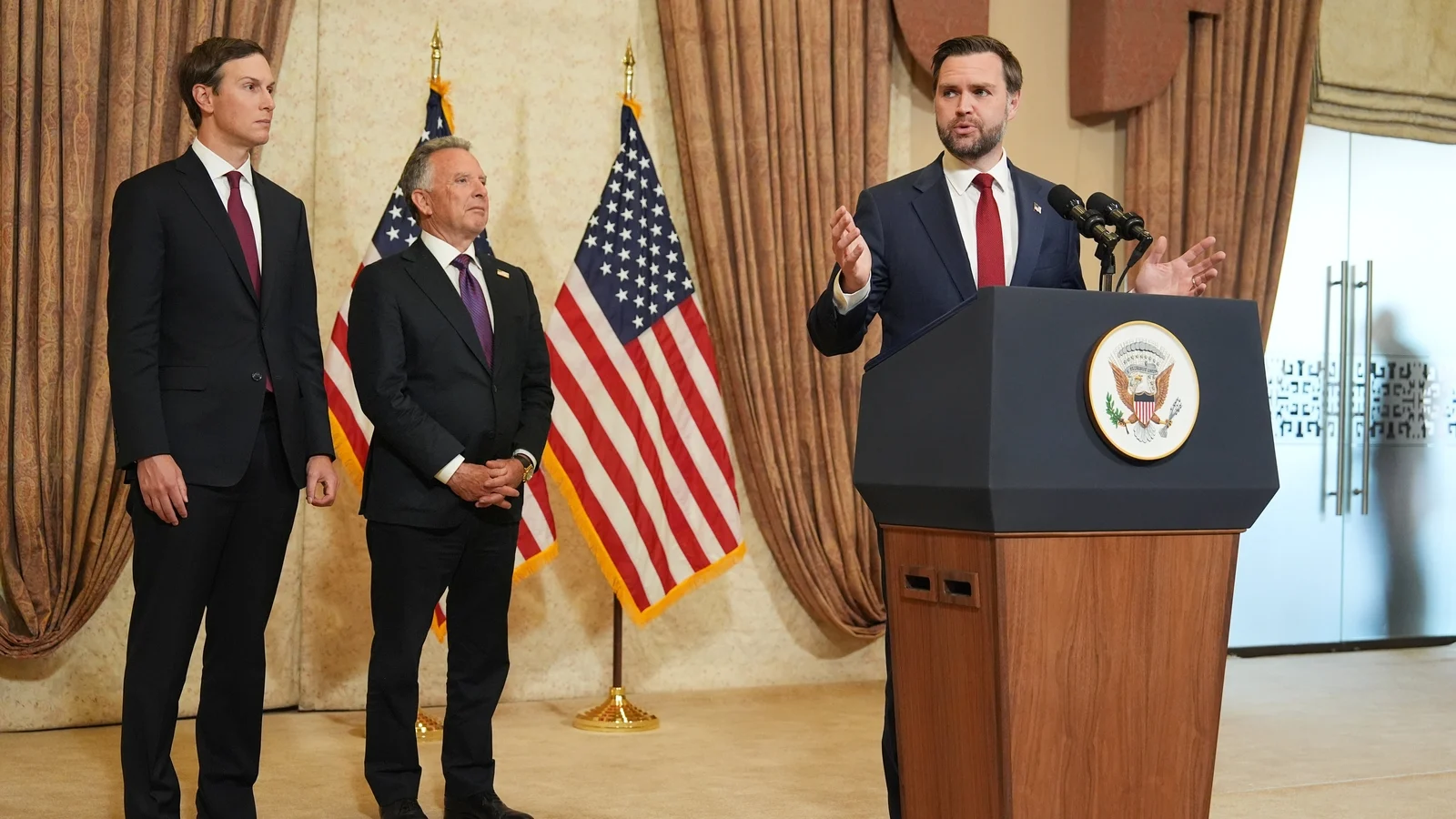
When the last papers were folded and the aides packed up, US Vice President JD Vance announced bluntly that the talks had failed. “We have not reached an agreement,” he told reporters, summing up what many feared and some had hoped would happen. “We’ve made very clear what our red lines are.” His team, he said, would return to the United States without a deal.
What Was on the Table
These were not casual discussions. They were the highest-level direct talks between American and Iranian officials since the seismic rupture of 1979, and the first face-to-face contact in more than a decade. At issue were questions that feel both immediate and existential: the future of Iran’s nuclear program, the reopening of the Strait of Hormuz, missing assets frozen abroad, and the fragile two-week ceasefire that has been the slender thread holding the region at bay.
From Tehran’s perspective, the demands were plain and uncompromising; from Washington’s, the red lines were equally stark. As one Iranian source later put it, “We wanted to protect the dignity and security of our people. They wanted guarantees.” An American official framed it differently: “We insisted on a verifiable end to nuclear enrichment capabilities and free passage through international waters.”
Key sticking points
- Iran’s demand for control or fees in the Strait of Hormuz, and payment of war reparations
- US insistence on crippling Iran’s nuclear enrichment to prevent weaponization
- The release of frozen assets held in foreign banks and alleged offers around funds in Qatar
- Scope and enforcement of a wider regional ceasefire, including Lebanon
Negotiation theater often hides what is unsaid. In Islamabad, both sides carried symbols: the Iranian delegation arrived dressed in black, mourning for those killed in the conflict, and reportedly brought with them shoes and bags taken from students killed in a strike next to a military compound. Emotions, the negotiators discovered, were not just political—they were personal.
Voices from the Room and the Street
Not every voice in Islamabad came from the conference table. Outside, a tea seller named Khalid lit a small brazier and watched the armored cars roll by. “We see delegations and cameras,” he said, smiling with a practiced fatalism. “But here, people want peace. We want to sell our tea in the morning and sleep at night.” His words were simple, but they carried the weight of civilians who have watched distant decisions ripple into their lives.
Inside, tensions spiked and eased. “There were mood swings,” one Pakistani source said, describing temperate outbursts and cold civilities in the first round of talks. A Pakistani diplomat who helped mediate the sessions said, “This is a turning point for Pakistan. A year ago we were largely sidelined; now the world knocked on our door.” The privilege—and danger—of hosting was not lost on anyone.
Iranian state media, meanwhile, blamed what it called “unreasonable demands” by the United States for scuppering progress. “We bargained continuously and intensively to protect national interests,” an Iranian official was quoted as saying. “Despite various initiatives from our side, the American position prevented progress.”
The Strait of Hormuz: A Narrow Waterway with Vast Consequences
What makes a diplomatic disagreement in a suburban hotel into a global concern is often geography. The Strait of Hormuz is one of those places where a few miles of water hold a quarter of the planet’s attention. Roughly one-fifth of seaborne crude oil—an estimated 20% of global energy supplies—flows through that narrow choke point. When Tehran announced it had blocked the strait, markets and militaries took notice.
During the Islamabad talks, the US military said it was “setting the conditions” to clear the strait, including moving warships through and preparing to deal with mines. Iran’s state media, however, denied any US ships had transited. The public posture of both sides was careful, but the undercurrent was clear: whoever controls the water has leverage beyond the tankers.
What Fails and What Might Follow
Now that the 21-hour push has ended without a signed text, what happens next is uncertain. Iran’s government announced that technical experts from both sides would exchange documents and that “negotiations will continue despite some remaining differences,” but it gave no timetable. Vice President Vance said he spoke with President Donald Trump multiple times during the talks and left underscoring US resolve: “We go back to the United States having not come to an agreement.”
For many observers, the failure of talks reveals something deeper than the issues on the table. “This isn’t just about oil or bank accounts,” said Dr. Laila Hassan, a regional analyst who has studied Iran for two decades. “It’s a crisis of trust. States are negotiating not only deals, but also narratives: who’s the aggressor, who’s the victim, who gets to tell the history going forward.”
And for ordinary people—the shopkeepers, the commuters, the families who lost children in strikes—the stakes are visceral and immediate. There are thousands of lives already lost in this war, thousands more at risk if the ceasefire buckles and broader conflict resumes. Economic disruption ricochets from ports to kitchens; spikes in energy prices can push staples out of reach for the poorest households.
Why This Moment Matters Globally
Ask yourself: can a single diplomatic meeting, in a city once on the periphery of global politics, change the trajectory of a regional war? History says sometimes it can. But it also warns that negotiations without mutual trust are like trying to mend a shattered vase with tape.
The Islamabad talks underscored another trend: the diffusion of diplomacy. Pakistan’s role as mediator marks a striking rehabilitation on the world stage. It also highlights a growing pattern where middle powers and neighboring states are increasingly central to resolving—or containing—conflicts that larger powers cannot solve alone.
As the world watches, the question remains whether the parties will return to the table with new flexibility, or whether the ceasefire will fray. “Negotiations are never linear,” Dr. Hassan observed. “You move forward, you step back, you test the other side. But the absence of a deal today does not mean peace is impossible tomorrow.”
For now, Islamabad settles back into its rhythms—teacups clink, traffic hums, soldiers stand down—but the shadow of those 21 hours will remain. Diplomacy is a long, slow weather that can clear a field or leave it scorched. The coming days will reveal which forecast is right.