Budapest at Dawn: What Viktor Orbán’s Loss Means for Europe—and for Hungary
The square outside the parliament in Budapest smelled like chimney smoke, coffee and something electric: a civic relief that felt almost audible. Flags flecked the morning light—red, white and green—and people who had learned to speak in clipped, careful sentences about politics were laughing aloud, hugging strangers as if they’d been carrying a weight for a decade and suddenly put it down.
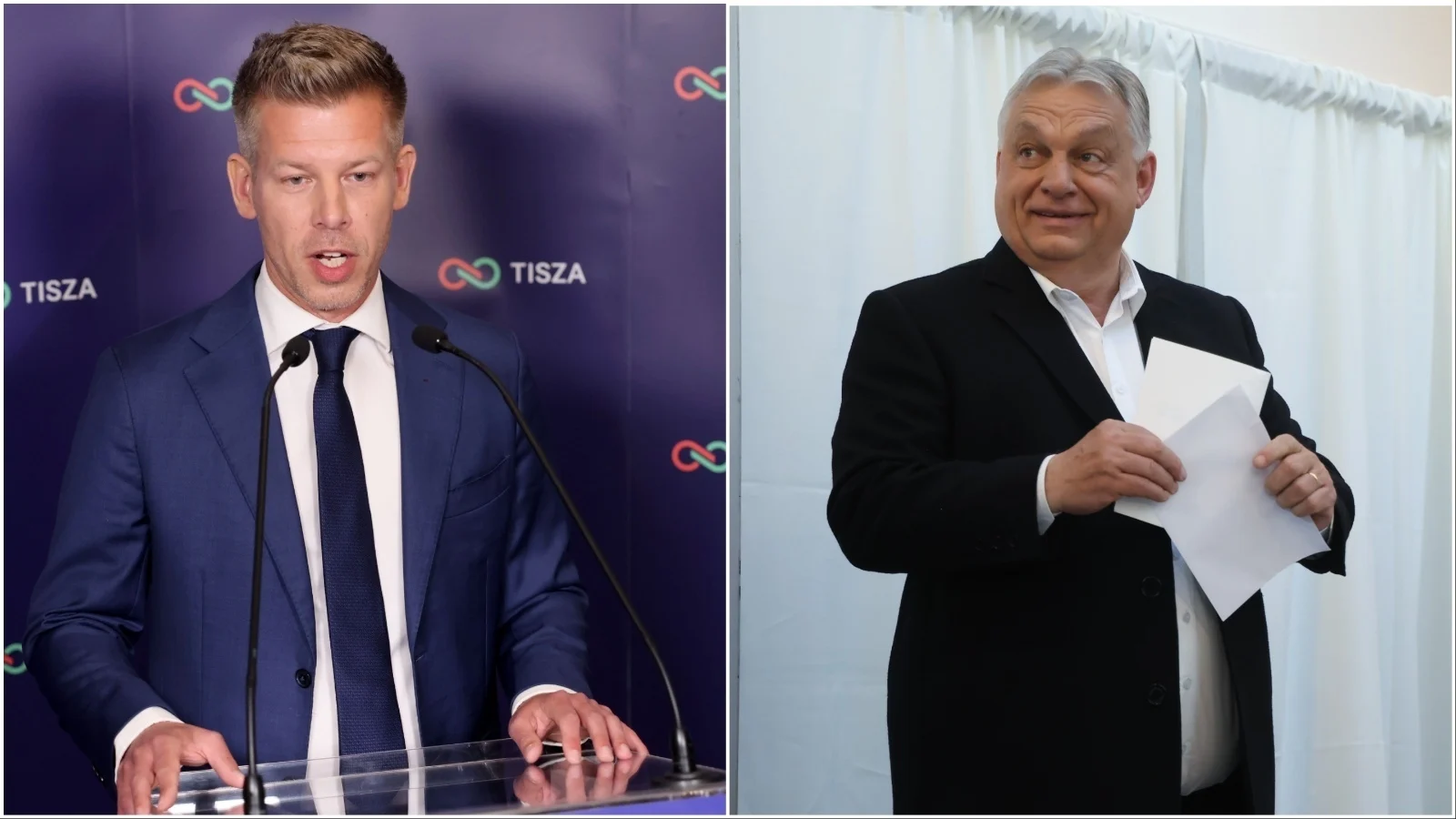
Viktor Orbán’s defeat in the recent parliamentary elections landed like a thunderclap across Europe. For many the mood was less triumphalist than deeply, quietly hopeful—an exhale after years of standoffs, vetoes and bruising rhetoric. Orbán, who shaped Hungary’s political life for more than a decade, leaves behind a country that still bears the imprint of his nationalism, but also a European Union relieved to have one of its most stubborn dissenters walk off the stage.
“It’s not just about one man,” said Anna Kovács, a high-school teacher who voted for change. “It’s about whether the country will choose to join the conversation again. To me, that feels like coming home.”
Five dossiers that Brussels will be watching
European capitals are already making lists. The machinery of the EU will not reset overnight, but Hungary’s new premier, Peter Magyar—a conservative who rose from inside the old guard but campaigned as a reformer—has the chance to peel back several blockages that have stalled EU policy. Here are five dossiers that could move quickly, or not at all, depending on how Budapest chooses to play its cards.
- €90 billion loan to Ukraine
- Sanctions on Russia
- Ukraine’s EU accession process
- Frozen EU funds to Hungary
- The tone at the EU summit table
1. The €90 billion lifeline for Ukraine
Nothing was more emblematic of the last government’s brinkmanship than the decision to hold up a €90 billion EU loan for Ukraine. The veto came after repeated delays and a diplomatic row over a damaged pipeline that had become tangled with nationalist rhetoric. For Kyiv, the money is not an abstract number—it is fuel, salaries, and a buffer for an economy at war.
“We were told this would be a simple procedural step, and then it wasn’t,” a Brussels diplomat said, asking not to be named. “Now we have an opportunity to fix what should never have been fixed in the first place.”
Magyar is not a zealot for immediate full-throttle support of Kyiv—his campaign included cautious language—but he has an opening to signal to Brussels that Hungary will stop using financial dossiers as bargaining chips. If he moves to unblock the loan, he could win goodwill fast. But there’s a second actor in this dance: President Volodymyr Zelensky. Any thaw will require tact around the pipeline dispute and, perhaps, a softening of rhetoric on both sides.
2. Sanctions on Moscow: thaw, stall, or swerve?
Orbán’s Hungary repeatedly delayed EU sanctions against Russia, cultivating relationships in Moscow at a time when many EU capitals hardened their stance. That put Budapest in a lonely spotlight, often prompting whispers that the country was acting as a “Trojan horse” inside summits.
“You can see how these personal ties complicate collective action,” said Márton Székely, who runs a small import business in Debrecen. “But what I want is stability. Businesses want predictability, not geopolitics.”
If Magyar signals a pivot—backing a fresh sanctions package against Moscow—that would leave Slovakia’s Robert Fico more exposed as one of the few EU leaders still flirting with a softer stance toward Russia. Conversely, if Magyar continues to hedge, the EU’s unity on sanctions will remain brittle.
3. Ukraine’s EU membership bid: clusters, referendums and political theater
Horizon-dreaming about Ukraine’s EU membership has been one of the more fraught elements of post-2022 European diplomacy. Orbán vetoed progress on negotiating “clusters” that Brussels says Kyiv was ready to open. Magyar has promised a referendum on Ukraine’s accession—an open invitation to more debate back home.
“Hungary’s full-throated opposition kept other reluctant countries hidden in the shadows,” said an EU official in Brussels. “Now those voices will have to reveal themselves.”
Expect a slow, procedural dance: opening clusters, legal reviews, and political bargaining. Even if Magyar lifts Budapest’s formal blocks, accession remains a long game—years of economic, judicial and administrative alignment. But politically, moving even a little could change the tone of EU-Ukraine relations—and the signal that Europe is, however haltingly, still capable of enlargement.
4. Frozen funds and economic pressure
Here is where Magyar could score tangible, domestic wins. The EU has withheld roughly €18 billion earmarked for Budapest over concerns about democratic backsliding, rule of law issues and controversies over LGBTQ rights. Another roughly €10 billion related to Covid recovery hangs in the balance, with a deadline for reforms approaching in August.
“Imagine walking into a meeting and coming out with €10 billion,” one EU diplomat shrugged. “You don’t need fireworks to win hearts when you can bring home the money.”
For a country of about 9.6 million people, those funds matter—a lot. They pay for highways, hospitals, school refurbishments. Magyar can show voters that mending ties with Brussels produces concrete benefits, not just diplomatic applause.
5. The summit table: gestures that rebuild trust
Beyond money and missiles lies something softer but no less important: tone. Orbán’s summit-style grandstanding eroded trust among EU leaders. He was loud, theatrical and unpredictable—perfect for domestic politics but corrosive for coalition-building.
“I think everyone will welcome Magyar with renewed enthusiasm,” an EU official told me between meetings. “But don’t mistake a smile for submission.”
Magyar has made it clear he won’t be a rubber stamp for Brussels. Expect robust debate—and that’s healthy. EU politics need friction. What they do not need is a member state that treats deliberation as a bulldozer. If Magyar can keep his independence without weaponizing vetoes, the bloc will be stronger for it.
What this moment tells us about Europe
Orbán’s loss is not a final chapter; it’s a turning of the page in an ongoing book. It prompts larger questions: Can the EU reconcile internal differences quickly enough when the continent is facing an active war on its borders? Will eastern and western members find new language to bridge historic mistrust? And at a human level—how does a society emerge from years of polarizing leadership and rebuild civic trust?
“Politics is the art of returning to the table,” said Ildikó Horváth, a civic activist who has organized community dialogues in Budapest for years. “The first weeks are a test: will we choose revenge or repair?”
For readers watching from afar: consider how fragile political compacts can be, and how important small shifts are. A veto lifted here, a tranche of funds released there—these are not just bureaucratic wins. They are pieces of a puzzle that helps democracies function, markets breathe, and neighbors feel less at war.
So what should we watch next? Will Budapest choose compromise and see the money flow back, or will old habits reassert themselves? Will Magyar find a way to speak both to wary Hungarians and to patient Europeans? And perhaps most pressingly—can a Europe shaped by larger-than-life personalities find its footing in the quieter work of rebuilding institutions?
There are no easy answers. But in a Budapest café at dawn, as people traded stories about ballot booths and buses and late-night TV panels, one sentiment stood out: ordinary life—schools, shops, pensions—keeps going, no matter the rhetoric. Politics may change the headlines. But it is the slow, steady work of governance that changes lives.
“We want to be part of Europe again,” Anna Kovács said, stirring her coffee. “Not because Brussels is perfect, but because the rest of Europe has things we need—standards, money, friends. That’s not shameful. It’s smart.”